


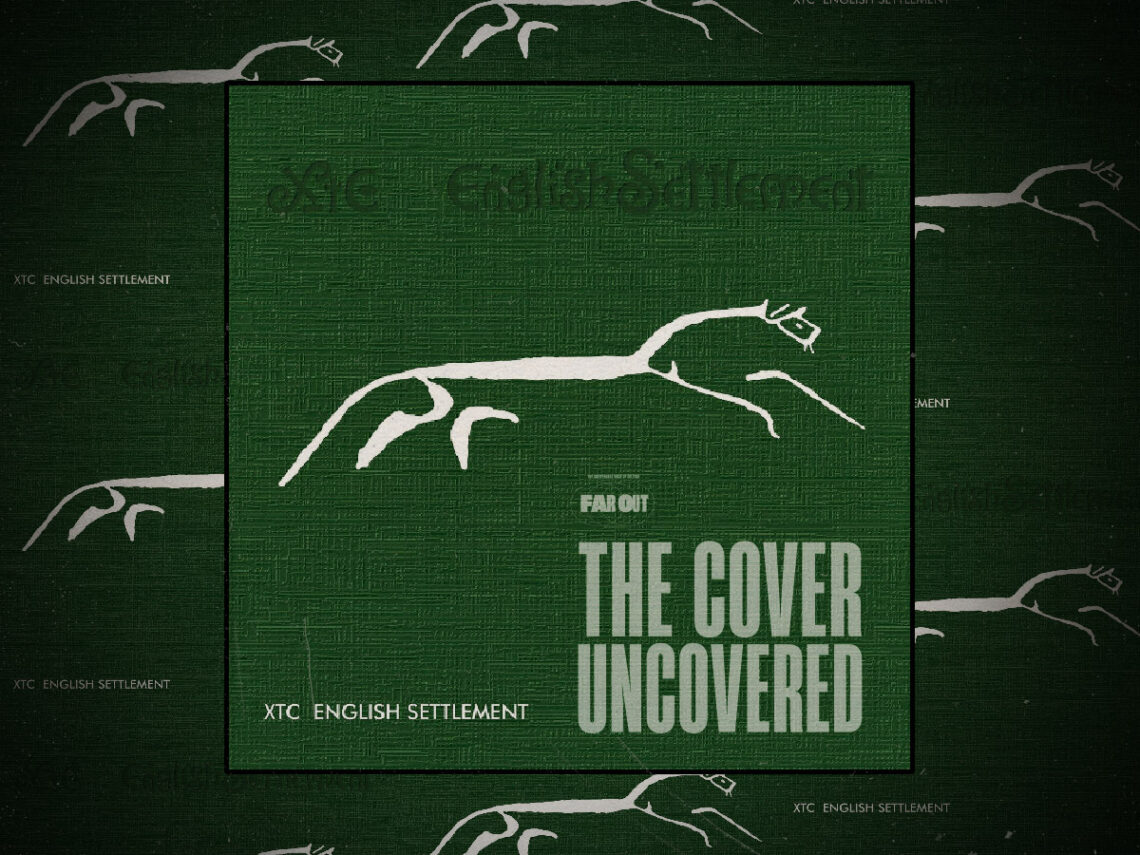
The Cover Uncovered: How XTC used ancient symbolism to embody ‘English Settlement’

At a time when the eyes of the world were turning to the art school-affiliated acts coming from New York City and performing in legendary clubs such as CBGB’s, it was unfair to dismiss the bands emerging from the UK in the late 1970s and early ‘80s as being beneath the likes of Talking Heads and Blondie.
While their popularity never reached the same heights in the US, XTC managed to solidify their cult status in the UK as being one of the most forward-thinking acts of an era, and the amount of influence they’ve continued to have over future generations of artful rock music from Britain and beyond is something that shouldn’t be argued with. Without XTC, there would arguably never have been Britpop in the ‘90s, a post-punk revival in the early 2000s, and there wouldn’t have been a handful of the finest records this country has ever produced.
Am I saying this as a biased Wiltshireman? Of course I am – but one album of theirs not only manages to encapsulate everything great about British popular music, but also exists as an homage to both their home and mine. On XTC’s fifth album, English Settlement, the Swindon band manage to balance the beauty of hailing from Middle England, but also aim to draw attention to the ugly underbelly of society and all of its flaws.
What better way to present the record than with a symbol so quintessentially British, yet without making itself appear so brazen in its patriotism or to be troublingly nationalistic? The Kinks, before them, had achieved something similar with their presentation of a village green as something emblematic of English culture, and while it may have been too culturally specific to make an impression on audiences around the world, it helped solidify their status as a group who used their national identity as a facet of their art.
Embossed on the green facade of English Settlement’s packaging is a chalk horse; a figure that can be seen carved into 16 different hillsides across the country, and something that represents both the rural area that the band hail from, with half of these figures being found in the county of Wiltshire alone. The specific horse on the front of the album is the Uffington White Horse, located in an Oxfordshire village just ten miles outside of Swindon.
The chalk horse is a symbol of pride in where the band originate from, but expresses this in a way that doesn’t feel entrenched in overt zealotry like the current waving of flags in migrant-populated areas demonstrates. It isn’t as universally recognised as the fried breakfast, nor is it as notable a landmark as something like Big Ben or Buckingham Palace, but it is unquestionably English in a way that shows awareness of heritage, rather than being co-opted as a vehicle for developing bigoted viewpoints.
English Settlement also addresses this dichotomy of patriotism in its content, with lyrics that both celebrate parts of English culture and denounce the hatred this pride can often breed. It’s important to note that the album came out in 1982 at the tail end of Margaret Thatcher’s first term as Prime Minister, which is now regarded as a time when Britain was at its most divided on the topics of class and race.
Songs like ‘No Thugs in Our House’ tackle this head-on, with its vehemently anti-racist sentiments coming from a character who has to deal with her son spewing hateful rhetoric, while ‘Ball and Chain’ focuses more on the economic hardships that Thatcherism had brought to the local area that the band were based in.
However, the album doesn’t just zoom in on the divisions created by the rising tide of conservatism, and also takes the opportunity to embrace the quirks of both suburban and rural life. ‘English Roundabout’ is an ode to Swindon’s god-awful traffic system that the town takes great pride in, while ‘It’s Nearly Africa’ encourages the listener to reject modernity and open their eyes to the beauty of the nature around them, something that rural Wiltshire treasures.
The band’s frontman and principal songwriter, Andy Partridge, explained in an interview with Progressive Media why they settled on both the cover and title for the record. “It’s our most English record,” he insisted, before going on to explain the deliberate ambiguity of the title and its juxtaposition with the imagery. “[The horse is] literally a kind of Iron Age advertisement for an English settlement that was on top of the hill when the first settlers came to England. And it’s us living here, settling here, and also the settling of viewpoints, when two people have a disagreement or a different view, and they get something settled.”
The Uffington White Horse may not be universally known, and the image of it certainly wasn’t understood by the band’s American audiences for all of its deeper meanings. However, to XTC, and those who grew up in rural England just like them, it’s an image that conjures both a yearning for the country, but also reminds us that we’re not as significant as the land around us.
The chalk carvings of horses on hillsides have existed for millennia, far longer than any flag designed to represent us, and they’ll outlive any fleeting sentiments that we have about our country, any building or statue erected to commemorate those who have contributed to the darkest periods of our history. They’re a symbol of Englishness in its simplest and most untouched form, and English Settlement is the perfect album to proudly display it on its cover as it denounces everything wrong with contemporary English life.
As much as albums by the likes of Bob Vylan, Sleaford Mods or Idles might bark on about how being English is shit, XTC created an album that observes the pitfalls of Englishness with a greater nuance, celebrates the parts worth celebrating, and reminds us not to tarnish its good name. The Uffington White Horse is a simple representation and reflection of English Settlement itself, doesn’t load it with any hidden agenda, and simply accepts itself for what it is; something that England ought to celebrate.
