


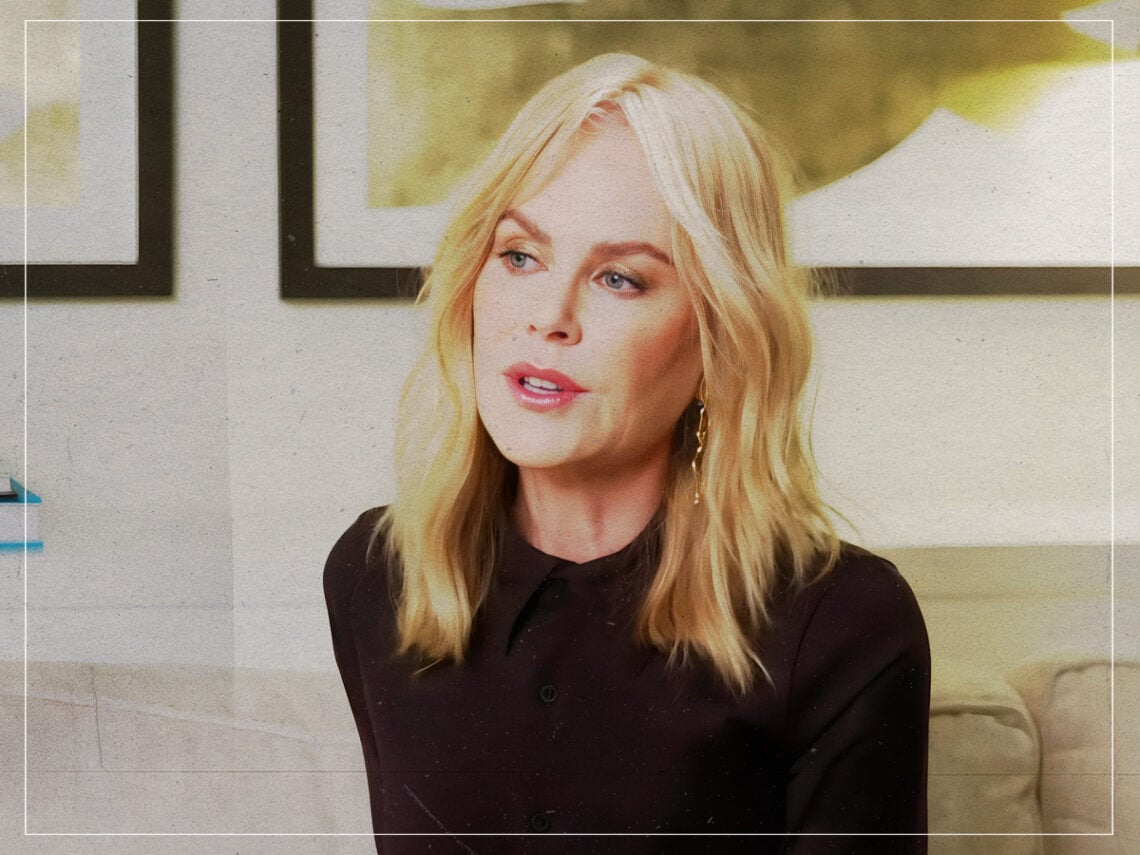
How the worst movie of Nicole Kidman’s career left her traumatised: “It’s getting to me”

As an actor, you don’t just have to worry about being traumatised by a shitty movie you’re attached to but also all the emotional baggage that your characters hold.
That’s something Nicole Kidman began to understand very well when she starred opposite Nicolas Cage on one of the worst projects she has ever been involved in. For those who are familiar with Kidman’s extensive body of work, it should come as no surprise that the Eyes Wide Shut star has often challenged herself with roles that are demanding.
From her incredible portrayal of a terrifyingly hollow woman who has a psychopathic obsession with fame in Gus Van Sant’s To Die For (which might just be her greatest outing ever) to Yorgos Lanthimos’ disturbing (so typical), cereberal thriller The Killing of a Sacred Deer, Kidman has never been one to back away from a challenge.
Even though her resumé contains collaborating with a hard taskmaster like Stanley Kubrick, Kidman actually felt like she was pushed to her limits on Trespass, a lacklustre 2011 flick from Joel Schumacher, which turned out to be his final directorial feature before his death. And unsurprisingly, it’s probably one of the last movies that gets mentioned whenever Schumacher’s filmmaking legacy is discussed.
Intended clearly to play on the many paranoias of the American bourgeoisie and their uniquely fucked up relationship with the vitriolic news cycle that blows crime statistics out of proportion to keep viewers hooked, Trespass features Kidman and Cage as a very wealthy couple whose lives and, more importantly, property, are threatened by home-invading extortionists. If that doesn’t sound like it evokes a lot of sympathy, Schumacher’s explanation doesn’t make it any better.
In an interview, the director said: “I think that’s probably most of our fears. That, in the middle of the night, you’re going to wake up and there’s somebody in your house or apartment. And we’ve seen it in all the news stories… And it’s a question of why are these people breaking in on this night and how did they know to do this at this time.”
While the artistic or sociopolitical value of such a movie was dubious to begin with, it also had a largely negative impact on Kidman’s psyche. During the conversation, Kidman revealed that she found herself inconsolably weeping after working on the project because of the inherent violence of the script, and the dark mental spaces that it pushed her into.
She elaborated: “I came downstairs the other night, and I was crying, and my husband was like ‘Why are you crying?’ and I realised it’s getting to me. The violence and abuse that I’m shooting on camera must have somehow permeated into my mind off the set. And he just held me, which was really sweet. I thought I had it delineated, like that’s my work and this is my home life, but I guess it kind of got to me.”
Although Kidman’s performance wasn’t to blame, looking back on it, I’m sure she probably feels worse about having a shitstorm like this on her CV than how the subject material ended up getting to her. And that says all you need to know about Trespass.
