


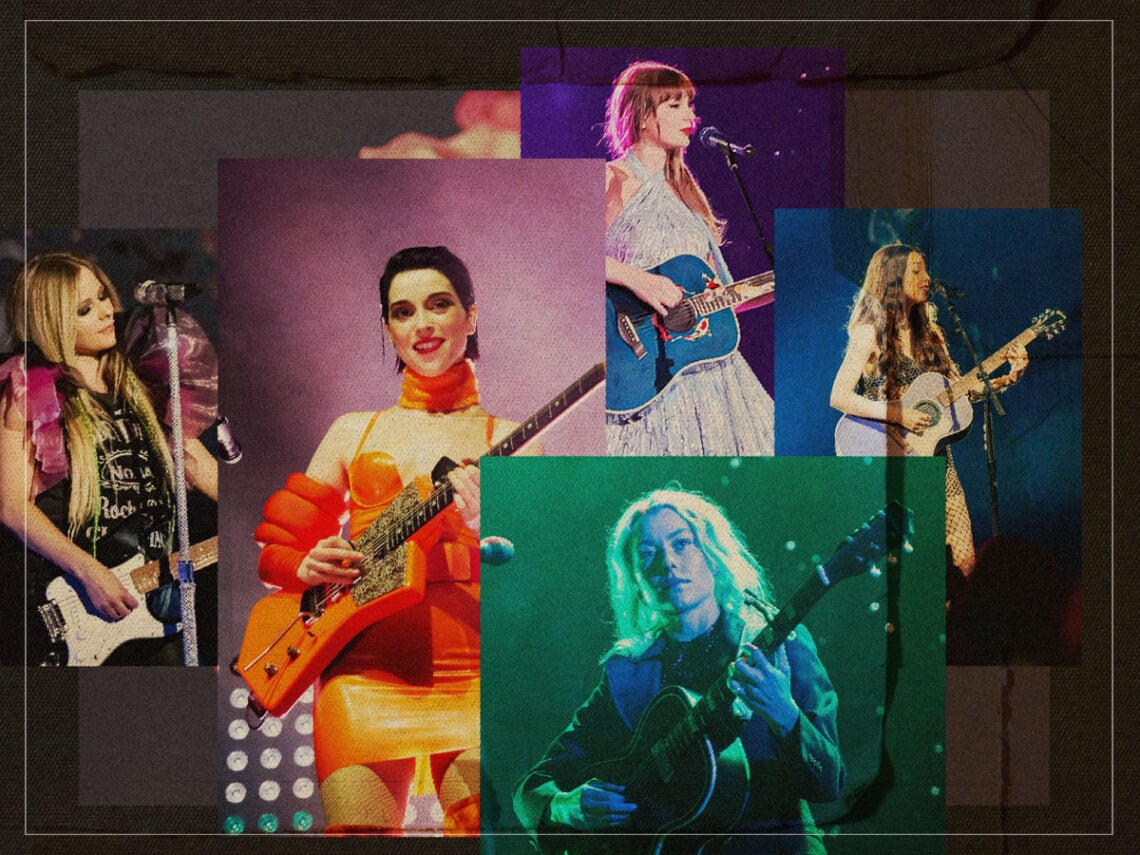
How women wrestled guitars away from the patriarchy

For years, there had always been an unspoken rule about rock and roll being a male-dominated genre. Even though some fans didn’t want to admit the obvious double standard for rock frontmen, it was safe to assume that there would be one woman with the charisma of Janis Joplin who got famous whenever 12 other male frontmen gained notoriety. While the odds were already stacked against female singers in the past, the next generation of rockers has seen the world of guitars dominated by the industry’s most spectacular women.
But this isn’t something that happens overnight. Even back in the cock-rock prime of the 1970s, people like Ann and Nancy Wilson of Heart and Stevie Nicks of Fleetwood Mac were making waves and crafting songs that could give the guys a run for their money. And when listening to the lyrical side of things, no other artist could have hoped to capture raw emotion in their lyrics quite like Patti Smith could.
Around that time, grunge started to take hold, but the riot grrrl movement also started to give way to more female voices in the world of rock. People were still blasting artists like Nirvana and Pearl Jam everywhere they went, but there was just as much of a chance that people would find their heroes in bands like L7, Hole, or alternative queen Alanis Morrissette.
And while there was a fleeting moment where butt rock seemed to become everyone’s favourite subgenre for some baffling reason, the biggest names in rock these days are still predominantly female. They may not get the same kind of adulation that comes to bands like Nickelback in their prime, but hearing people like St Vincent and Phoebe Bridgers dominate the cultural conversation today has a lot more to do with how the social framework of rock seemed to change.
Because rock and roll has always been made by the underdogs in some respect. The whole point behind the biggest names in the genre rising to prominence in the 1960s was to speak their minds against those who were keeping them down, and since the world is now dominated by straight white males who feel like they can get away with murder and still be untouchable, hearing someone like Taylor Swift talk about her real problems in the pop realm has helped open doors for women with acoustic guitars to write their own material.
While Swift could hardly be considered rock and roll, Fender CEO Andy Mooney has said that women buying Fender products are now more abundant than ever, saying, “In fact, it’s not. Taylor has moved on, I think playing less guitar on stage than she has in the past. But young women are still driving 50 per cent of new guitar sales. So the phenomenon seems like it’s got legs, and it’s happening worldwide.”
And listening to the biggest guitar-driven songs in modern rock today, a lot of them are able to twist the typical bluesy classic rock tropes of their head. Most everyone had become used to the Led Zeppelin school of playing, but artists like HER have made the kind of solos that Prince would be proud of, and Bridgers’s greatest songs, both solo and with Boygenius, have emphasised that kind of singer-songwriter approach that felt like Liz Phair if she was crossed with Elliott Smith.
Even in the pop sphere now, artists like Olivia Rodrigo have been able to become stars while writing pop-punk-style songs reminiscent of artists like Paramore or Avril Lavigne from the dawn of the 2000s. The idea of male-dominated rock and roll may have defined the conversation for years, but judging by who’s buying guitars, the playing field is starting to get evened out one player at a time.
