


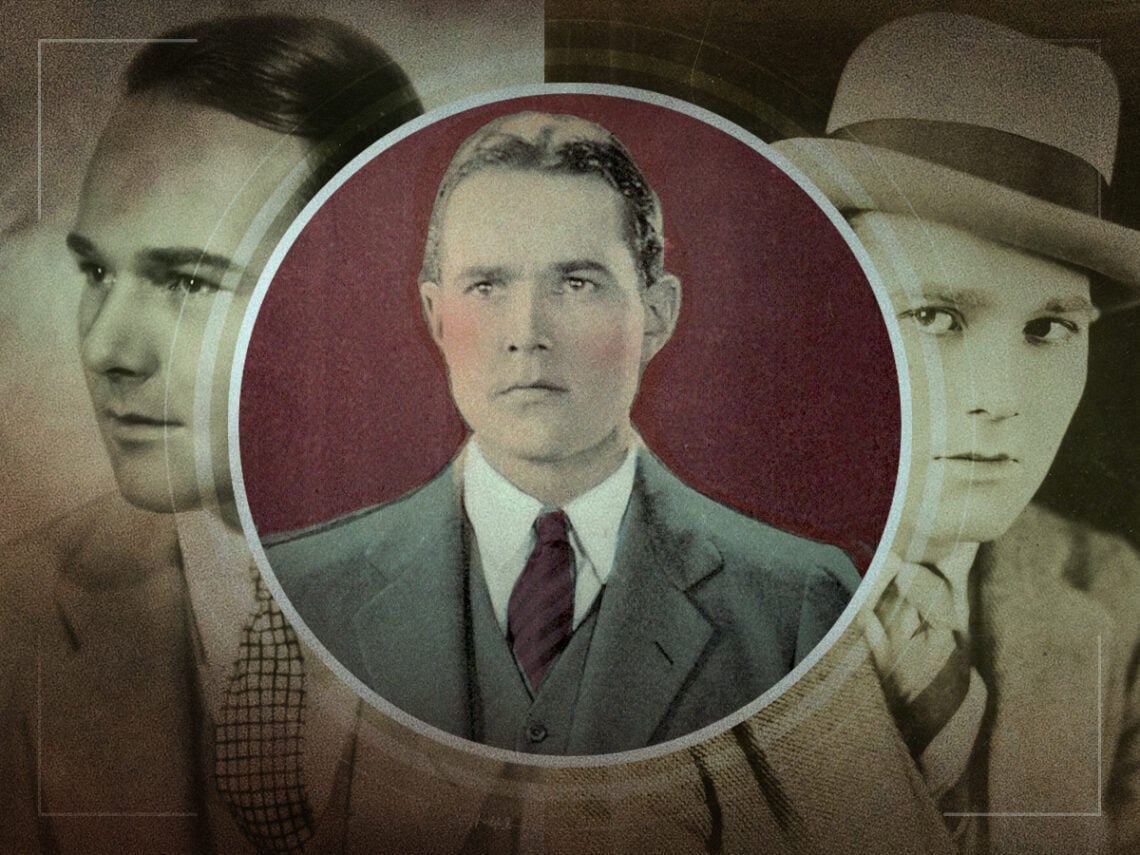
William Haines: The first openly gay Hollywood star

The story goes that in 1933, Louis B Mayer, the head of MGM, called top star William Haines into his office and delivered an ultimatum that either Haines break up with his partner, Jimmie Shields, or Mayer would destroy his career.
Without missing a beat, Haines responded, “I’m already married”, and walked away from movie stardom to live happily ever after with Shields. The most remarkable thing about this legendary exchange, as Haines’s biographer William J Mann attests, is how much truth there is to it.
While there were several extenuating factors and the precise dialogue is lost to time, Haines did indeed walk away from an illustrious movie career to be with Shields, and the two lived happily together until Haines’ death nearly five decades later. Joan Crawford, one of his closest friends, referred to them as “the happiest married couple in Hollywood”. Following his acting career, Haines didn’t slink away from the town that had built him and torn him down, and instead built a prosperous interior design business, shaping the homes of such luminaries as Warner Bros head Jack Warner, director George Cukor, and stars including Joan Bennett, Crawford, and Lionel Barrymore.
Long before such distinctions as ‘openly gay’ and ‘closeted’ were part of the American parlance, Haines and Shields barely tried to conceal their relationship. Decades before Rock Hudson made history and international headlines in 1985 when he revealed his Aids diagnosis, Haines was able to live happily and relatively freely as a gay man in Hollywood, even though he was forced to give up his movie career because of it, and a century later, his story is remarkably prescient, demonstrating how social mores fluctuate wildly even though the people they condemn or embrace remain the same.
Haines was born in Virginia on the night before the first day of 1900, and was tall and athletically built, which was probably why MGM was later able to claim that he had been educated at a local military academy. In truth, as a local reporter later wrote, he was more inclined to stay home with his mother making doll clothes than kick a football around with other boys. He did, however, have a wild streak, as at 14, he ran away from home with his first boyfriend to a nearby boomtown which had been hastily built to accommodate a gunpowder factory during World War I. Haines worked in the factory, earning a then astronomical salary of $50 a day before opening a popular dance hall. A fire and his anxious parents put an end to this early escapade, but it whetted his appetite for adventure and living large.
While still a teenager, Haines moved to New York, where he found work as an office boy at an investment firm, integrating into the vibrant scene of Greenwich Village, which was an early nexus of the Roaring Twenties. World War I had left a generation of jaded young people, determined to live every moment as if it were their last, hence free love, gender fluidity, and homosexuality were all welcome in Greenwich Village at the time, with drag shows drawing in tourists from around the country. In this environment, Haines embraced his sexuality without stigma, and it no doubt informed his attitude when he found himself in a much more conservative environment in Hollywood a decade and a half later.
After winning a ‘New Faces’ contest run by MGM, Haines went to Tinseltown, where he spent several years under contract with the studio, struggling to get noticed, but 1926 was his breakout year in more ways than one. On the career front, he was cast in Brown at Harvard, playing a cocky student athlete who is humiliated, humbled, and then redeemed, which was a hit and became the template for his professional formula. From then on, most of his successful pictures involved him starring as an arrogant good-time guy who is laid low, only to rise from the ashes as a better man who invariably gets the girl.
On the personal front, he met young Navy officer Jimmie Shields while on a brief trip to New York, their attraction instantaneous and passionate, and before he returned to Los Angeles, Haines had convinced Shields to come with him. As his career took off, the actor made sure that his boyfriend got work as an extra at MGM, and within less than a year, they’d bought a house together and were living, to all intents and purposes, as spouses.
At the time, Hollywood had a permissive attitude towards sex and homosexuality. Unmarried stars, such as Greta Garbo and John Gilbert, lived together openly, which would become a career-ending offence just a decade later. Stars like Clara Bow and Olive Thomas lived large, carrying on multiple affairs and partying with hard drugs and alcohol. Even homosexuality was tolerated, such as in the case of Gary Cooper, who would later become a top-tier man’s man of talking pictures, had a widely known relationship with actor Andy Lawler, and director Edmund Goulding was famous among his Hollywood peers for throwing bisexual orgies. Meanwhile, the Hollywood ‘sewing circle’ connected lesbian and bisexual actors, including Crawford, Alla Nazimova, Barbara Stanwyck, and Garbo.
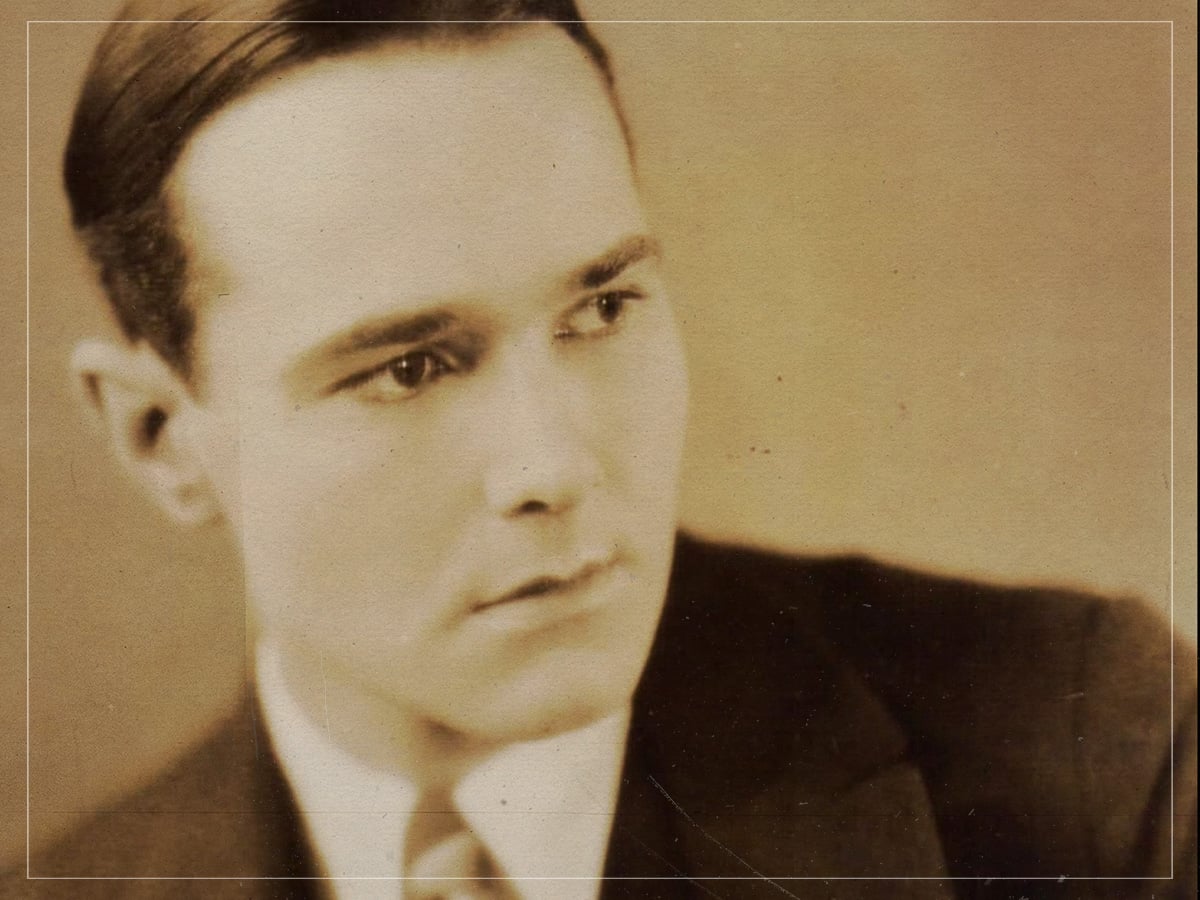
The press relied on the studios for stories, knowing that if they reported anything that cast the stars in a bad light, they would lose access. As a result, actors were allowed to live relatively freely, knowing that any behaviour that might offend their fans in Connecticut or Kansas would go unreported. Haines also had the advantage of being well-liked, for he was gregarious and witty and more than happy to answer questions about marriage with sly double-entendre instead of hostile obfuscation. The police in Los Angeles were also under the thumb of the studios. There have been plenty of rumours over the years that Haines and Shields were arrested at various times for picking up other men, but those police reports either didn’t exist or were destroyed.
Still, there were clashes with the studio; Louis B Mayer, in particular, was virulently homophobic and conservative, and pressured his wayward stars to enter heterosexual marriages, and some queer actors, such as Rudolf Valentino, Nils Asther, and Dolores Del Rio, did indeed choose this route to avoid upsetting their bosses. With his growing fame, Haines’s private life became a top concern for newspapers outside of Los Angeles, who weren’t as accommodating with the studios as the Hollywood press. In 1926, The New York Times announced his new movie with utmost pettiness: “William Haines, who is perhaps the most eligible film bachelor of them all inasmuch as he has never been married though he’s 26 and handsome, will star in a new film.”
Haines’s career was moving from strength to strength at the time, which made it hard for Mayer to blackmail him into leaving Shields for a suitable female star. By 1930, he was the highest-grossing actor in Hollywood, commanding a salary of $3,000 a week (nearly $59,000 a week in 2026 money), even helping pilot MGM into the sound era, not only making a leap that fellow stars failed to, but excelling at it.
Soon, however, his popularity dwindled. As he reached his 30s, his boyish, devil-may-care onscreen antics weren’t quite as cute as they had been a few years before, and the formula of his movies had gotten stale. A new generation of young actors, who were more ruggedly handsome than their delicately featured Roaring Twenties predecessors, were stealing hearts. Most importantly of all, however, was the intensifying Christian conservative movement that swept through the US and cast a pall over Hollywood’s creative freedom. The Hays Code, which had been co-authored by a Jesuit priest, was becoming more powerfully enforced, all but expunging sex, profanity, and any form of ‘perversion’ for the next three decades.
With dwindling box office returns, a new crop of emboldened press reporters, younger acting rivals, and a sudden crackdown on all forms of non-gender-conforming, non-heterosexual ways of life, Haines was in a precarious position. Actor Anita Page claimed that he proposed to her during this time in an attempt to save his career, but we only have her account of this exchange. Ultimately, Mayer did threaten to rip up Haines’s contract if he didn’t start masquerading as straight, and the actor turned him down.
What followed was four decades of success as Hollywood’s leading interior designer. Haines never lost his core group of friends, including Crawford, and he and Shields remained together until the former’s death from lung cancer in 1973. Bereft, Shields struggled to continue without his partner of nearly five decades, and less than three months after, he passed away from an overdose of sleeping pills. The note he left read, “Goodbye to all of you who have tried so hard to comfort me in my loss of William Haines, whom I have been with since 1926. I now find it impossible to go it alone, I am much too lonely.”
As much as Billy Haines’s story sheds light on an oft-forgotten point in American history when members of the queer community could live relatively openly and be celebrated for it, it also illustrates just how brutal, entrenched and persistent the backlash can be. Barely a decade after same-sex marriage was legalised in the US, a wave of conservatism and anti-LGBTQ+ sentiment is now sweeping the country. First, the focal point was trans rights, but the movement has been emboldened to encompass gay rights as well. In 2022, 71% of the US population believed that gay and lesbian relationships were ‘morally acceptable’, and four years later, only 62% do, and just 35% of Republicans.
History is a series of broadening social horizons followed by panicked retractions, and, like in the early 1930s, we are currently going through a retraction. As Haines and countless other pioneering queer figures remind us, however, better times are always ahead, as long as there are people (including allies) who refuse to fall into line.
