


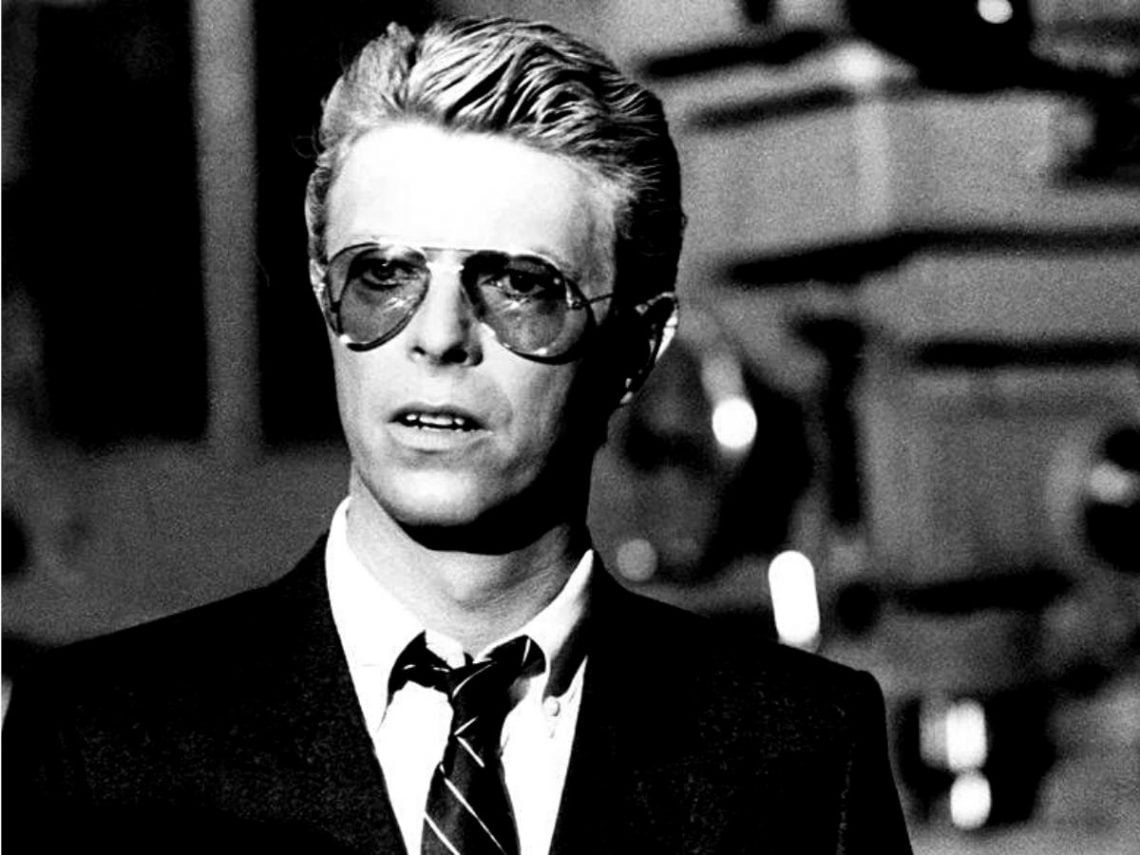
“I’ve got drama”: How theatre gave the world David Bowie

The universe that David Bowie established is a kaleidoscopic one. Musically, it touches on just about every single genre under the sun except for country, a form that the late Londoner loathed. While his oeuvre’s aural scope is a wonder, another glittering aspect of his efforts is the intensely theatrical style that underpinned it all. From the flame-haired Ziggy Stardust of the glam era to the vaudevillian spirit and aesthetic of Scary Monsters, without the theatre, David Bowie would never have been the icon he was.
The impact of the theatre on Bowie was nothing short of profound. After all, he had even attempted to break into traditional showbusiness as the fresh-faced Davy Jones before he resigned to take a more left-field approach to success. Duly, this came with a change in aesthetic. Famously, Bowie’s metamorphosis between this formative stage and the glam-rock hero of the early 1970s was still underway when he broke through in 1969 with the hit ‘Space Oddity’.
However, the process was hastened after he came into contact with an underground theatre troupe in 1971. This was the group of colourful characters working under storied New York stage director Tony Ingrassia, the man who had previously staged a young Patti Smith and Wayne County in the shows Femme Fatale and Island. It was when Ingrassia was directing Andy Warhol’s Pork at London’s Roundhouse in August 1971 that Bowie first came across this boundary-pushing set. This changed his trajectory completely.
The play was groundbreaking for the time. It thrived on surreal sexual content that was typical of Andy Warhol. While lapped up by those on the fringes, most of England, which was very much stuck in the cultural past, was outraged. “In London, the Tony Ingrassia tribe was really loud and vulgar,” actor Tony Zanetta, who played the Warhol character in Pork, told Little Village in 2016. “The first press conference we did was for News of the World, which we didn’t know anything about. So we were very outrageous, and we said things we should never have said to anybody from the press. So we got this reputation.”
After his initial meeting with Pork’s ensemble, Bowie became friendly with a lot of the members. “I had read about him because there was a little article in Rolling Stone a couple of months before,” Zanetta recalled, “when he had done a promotional tour of the United States. So I was intrigued by him because he was this guy in a dress. He looked like Lauren Bacall or Veronica Lake in the [Man Who Sold the World] album cover photograph.”
Of Bowie’s aesthetic at the time, Zanetta continued: “But in real life, he just looked kind of hippy-ish when he came to see Pork. He had long, stringy hair. He was actually kind of, not dowdy-looking, but he wasn’t particularly great to look at.”
However, after integrating himself into the world of Andy Warhol, Pork and experimental theatre, things would soon change for Bowie. This shift was enacted when he debuted his now-iconic Ziggy Stardust character in 1972, on the glam-rock masterpiece The Rise and Fall of Ziggy Stardust. Interestingly, after Bowie and Ziggy became the hottest property in music, Zanetta and some of the other cast of Pork were hired to run the New York HQ of MainMan, Bowie’s management firm that would devise his success in America. Although that’s a story for another day, it demonstrates just how indebted Bowie’s success was to the theatre.
Interestingly, Bowie’s manager between 1965 and 1970 was Kenneth Pitt, who sought to capitalise on his androgyny by pushing him as a gay icon. However, Bowie considered this old-fashioned, thanks in part to the lessons he learned from the Pork gang. They changed his perception of almost every significant facet of his life, including what it meant to be a performer. They broke down the barriers between the stage and audience, all with a dash of pansexuality mixed in. They embodied New York’s influential movement, the Theatre of the Ridiculous.
Elsewhere, Bowie’s early vision is indebted to his collaboration with Japanese designer Kansai Yamamoto, who crafted the costumes for his Ziggy Stardust and Aladdin Sane tours of 1972 and 1973. To help create the androgynous alien Ziggy Stardust, Yamamoto looked to his native land and the East for inspiration. He drew on Japanese kabuki theatre, which Bowie was already interested in, and married it with the musician’s love for role-play which emerged from his studies of mime and cabaret. Elsewhere, the cult performer, The Legendary Stardust Cowboy, was also used as inspiration.
Yamamoto told The Cut years later: “There was a clear distinction between David ‘onstage’ and David ‘offstage.’ The second he stepped on stage, there was an immediate shift in energy, unlike that of any other artist at the time.”
Of his connection to theatre, Bowie told CBC: “I wanted to define the archetype messiah rockstar. That’s all I wanted to do. I used the trappings of kabuki theatre, mime technique, fringe New York music — like my references were Velvet Underground, whatever… It was a British view of American street energy.”
Even after this early period, from the vaudeville of 1980’s Scary Monsters to his finale guise as The Blind Prophet with Black Star, the theatre would be present in everything Bowie did. Without it, there would be no David Bowie. As he sang in his swansong, ‘Lazarus’, “I’ve got drama, can’t be stolen”.
