


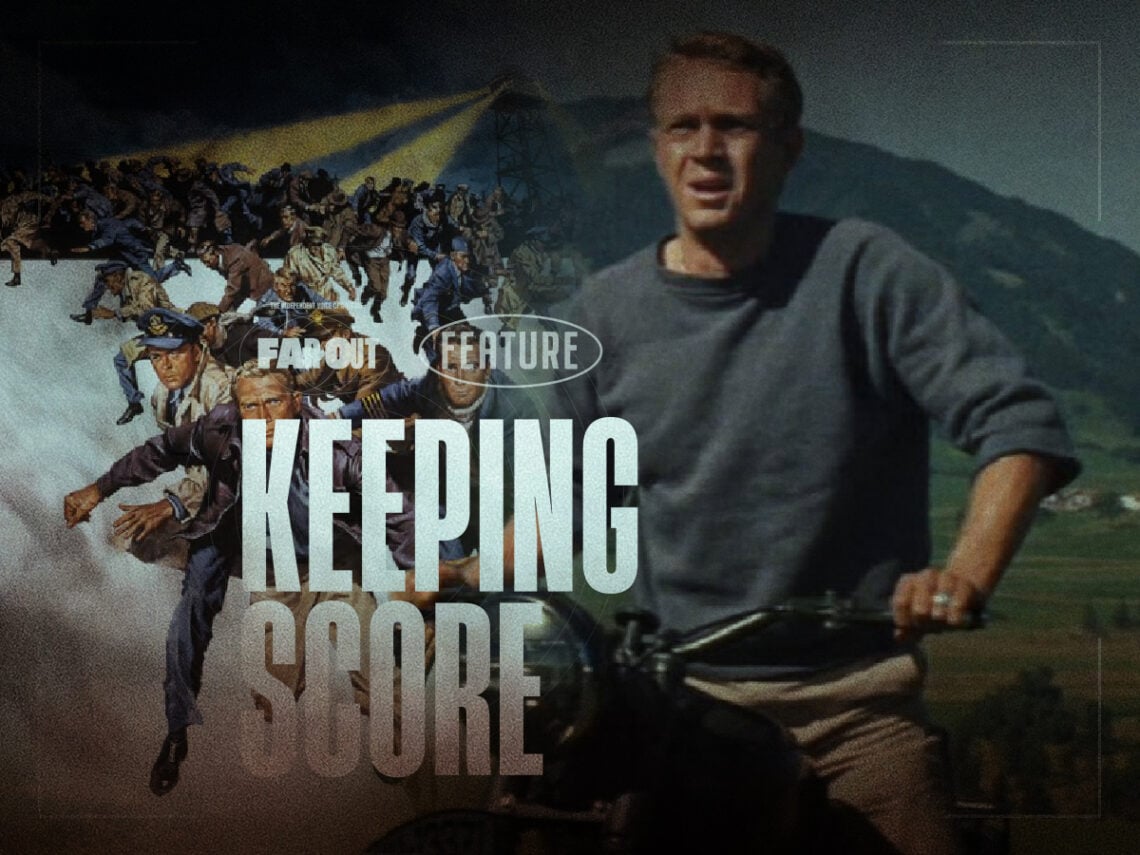
Keeping Score: How ‘The Great Escape’ theme sparks hope

A good movie theme should be recognisable from only a few notes, where, within seconds of hearing it, the audience should be immediately transported into the action.
Case in point, The Great Escape, whose iconic riff takes no time at all to worm its way into one’s ear, to immediately conjure images of World War II soldiers fighting for their freedom and of Steve McQueen soaring through the air on his motorcycle; it’s not only defined the film itself, but also an entire genre of prison breakout movies.
The film’s ‘Main Title’ (I wish it had a better name) was created by the great Elmer Bernstein, one of the most celebrated and acclaimed movie composers ever, but The Great Escape wasn’t the first time he had worked with director John Sturges, previously teaming up for the filmmaker’s remake of Akira Kurosawa’s Seven Samurai, The Magnificent Seven.
In fact, Sturges felt that Bernstein had done such a good job on the project that he didn’t even give him the script for The Great Escape, instead trusting him wholesale, which is absolutely bonkers.
Inspired by a real-life prison break from the Stalag Luft III POW camp in Germany, the story frames a group of Allied soldiers as tenacious innovators who use both brains and brawn to bust out. The risks facing the escapers were very real and very severe, yet Bernstein’s theme is surprisingly upbeat, in keeping with the most prominent theme of the film, which is hope. There’s an almost-jaunty quality to the ‘Main Theme’, like something you might hear at a village fête, and in being able to do that is where his true genius lies.
Bernstein combines a mixture of optimistic brass music with a traditional-sounding military march to great effect, while the steady beat of the piece firmly ties it to the war, the melody over the top is designed to keep spirits high.
This isn’t a dark and dingy war movie; it’s about a group of charismatic soldiers who never give up, and this juxtaposition is well represented in the theme track and is probably why it’s had such a long life outside of the movie’s runtime.
Bernstein created a sound that would be replicated many times over in similar movies, found just about everywhere, including, most notably in 1981’s Escape to Victory. Though not a direct clone, Bill Conti definitely borrowed more than a few elements for his celebrated score, and if you’re wondering whether Bernstein minded that his homework had been copied, not according to an interview with Soundtrack Magazine, where, as he put it, “Imitation is the best form of flattery”.
Sadly, not everyone who has used the theme did so in good faith. An almighty row broke out between the United Kingdom Independence Party (UKIP) and Bernstein’s children when the former used the piece as part of their pro-Leave Brexit campaign, his sons claiming to The Guardian that their liberal father would have hated the right-wing party using his work, and that The Great Escape “celebrated those who bravely saved Europe from a horrifically racist, nativist and violent regime”.
Regardless of who used it, the legacy of The Great Escape and its music remains untouched, with the soundtrack still held in high regard by some of modern cinema’s biggest names, and there’s nothing any scheming politician can do about that.
