


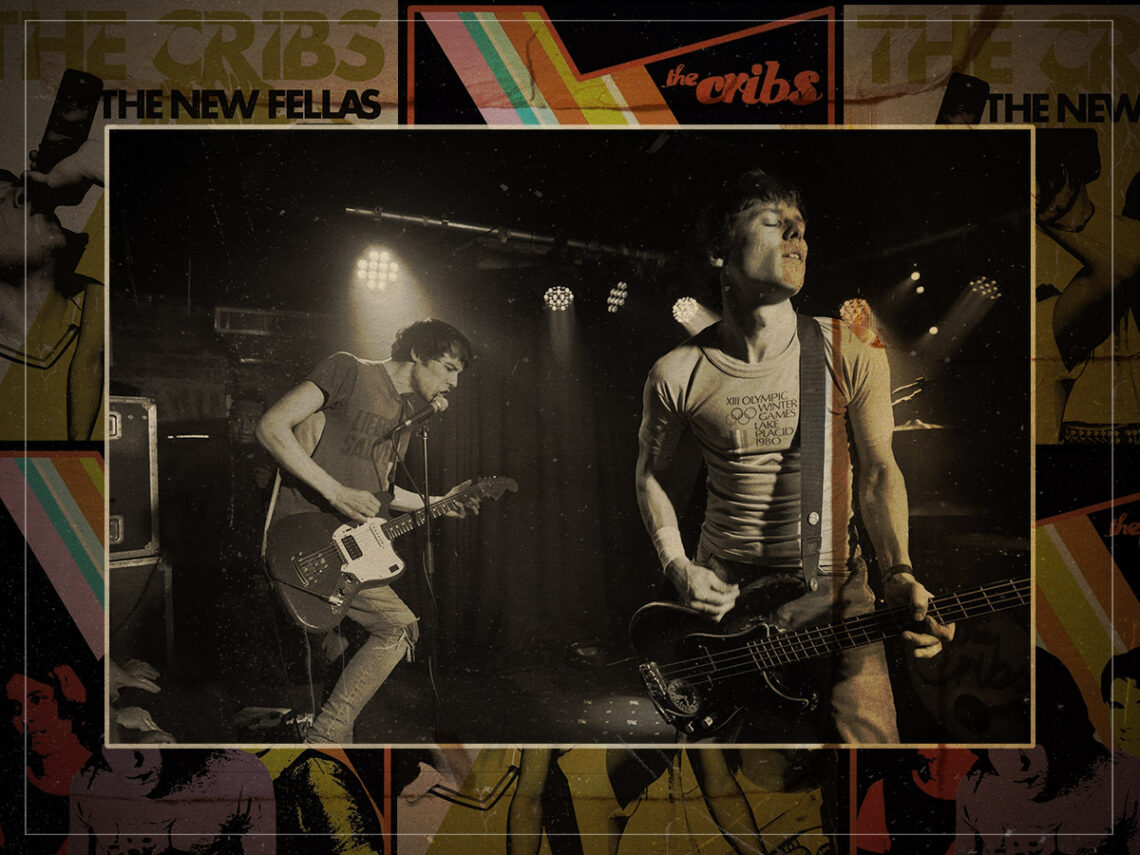
How did The Cribs wrestle indie away from London?

As creatives in literally any other part of the country will attest, the draw of London will forever be the thorn in your side. It’s the seemingly metropolitan Mecca of characters, culture and people in the know. It’s a paradise of opportunity which, if you’re sitting in a sleepy town somewhere up north, is the furthest cry from anything your little corner of the world could afford you. But The Cribs defiantly railed against that grain, bursting onto the indie scene with a refreshingly unjaded stance.
Hailing from Wakefield, the real-life band of brothers comprised Gary, Ryan, and Ross Jarman, though later joined by curveball Johnny Marr, really had few options but to stay rooted where they came from. 20-year-old twins Gary and Ryan were studying in a music course at a local Wakefield college back in 2001 when they came up with the genesis of the band, enlisting younger brother Ross, four years their junior, to play on the drums. Well, they needed to club their student loan money to buy him a kit first.
Honing their sound at college before going on to commandeer a recording headquarters at the heart of Wakefield, their unapologetic northern sound developed an indie-rock magnetism, especially in early hits like ‘You and I’ and ‘Another Number’ from their original 2004 demo. This garnered them an electric cult following as they then took to stages across their hometown, eventually venturing to the big smoke of Leeds.
Ultimately, The Cribs demonstrated that the genre’s height was far-reaching beyond the London microcosm. Once they had infused it with a certain northern character, it paved the way for other outfits like the Arctic Monkeys to also make their mark, irrevocably stamping their presence on British music history that, for once, wasn’t just limited to the South.
Much of The Cribs’ charm was rooted in the sheer basis of their craftiness. There were no airs and graces or big city pretences about these boys; they were just diamonds-in-the-rough natural talent who had the drive to go the whole way. Simplicity was key in that respect. When they did eventually make the leap to gigging and recording in London, their presence on the so-called sleazy circuit was a tonic to their Cockney counterparts like The Libertines; thus, The Cribs cemented themselves as Wakefield’s homegrown wonders.
While inevitably, the heights of Wakefield were never going to quite compare to the bustling scene of the capital, something about The Cribs’ charge at the music industry changed the fabric of the forgotten city. It awakened in it a slew of creative spirit that never would have come to exist if it weren’t for the brothers breaking free. They’re honoured with a star plaque in the town centre and widely lapped up as their greatest export—but that’s really no surprise. The change of indie tides is not anywhere full of glitz and grandeur, and instead proudly belongs in the north.
In this sense, the band wrestling away the mantle of indie sleaze from the London-centric circuits is bound to have played no small role in the seismic success of northern bands like the Arctic Monkeys a few years later. It also gave UK music a much more diverse array of talent from beyond the walls and confines of the big city. As Wakefield’s most celebrated sons, The Cribs can always lay claim to where they came from, even if the elder Jarman twins have long since fled the nest over the pond, because it goes without saying, there really is no place like home.
