


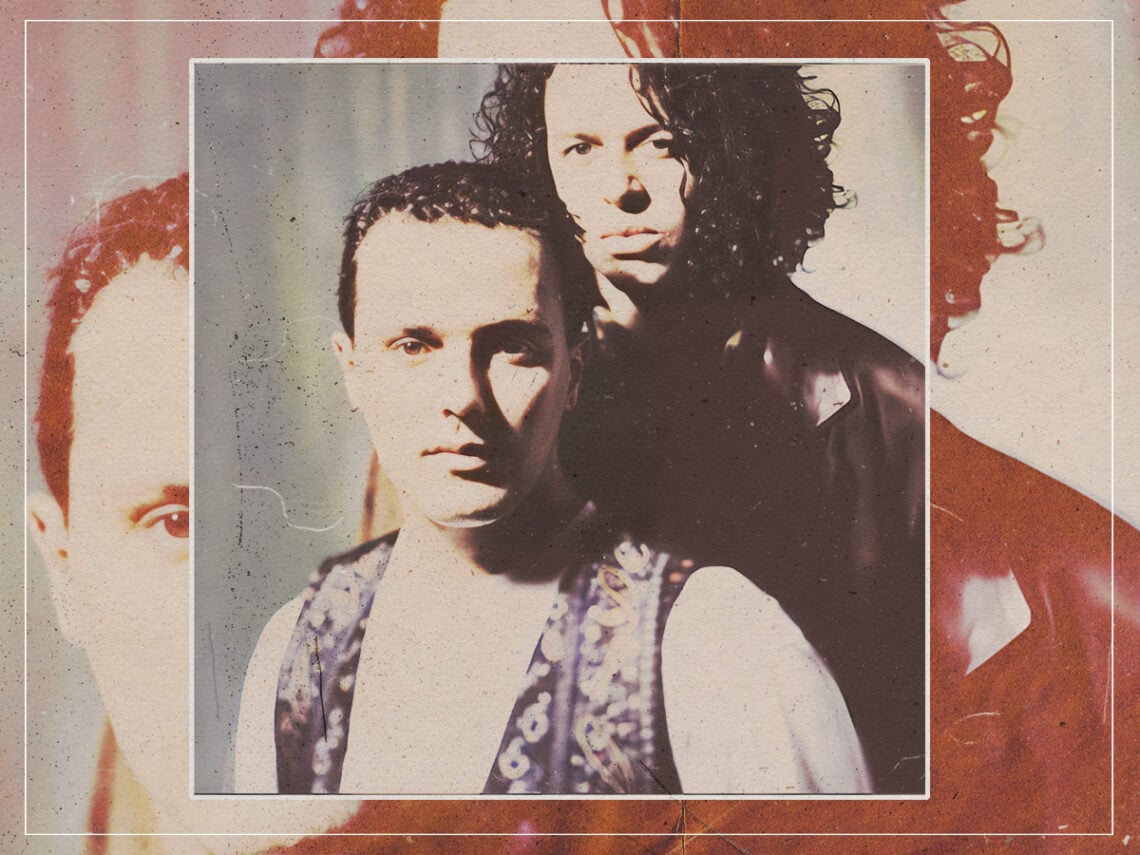
“We were wrong”: How Tears for Fears broke America with ‘Everybody Wants To Rule The World’

“Everybody wants to rule the world, must be something we get from birth,” sings Mick Jones in The Clash’s ‘Charlie Don’t Surf’. A few years later, Tears for Fears immortalised those enduring words in their career-defining track, ‘Everybody Wants To Rule The World’.
The initial sounds for what would eventually form the full track emerged at the end of the sessions for another of the band’s major UK hits, ‘Shout’. Although many of history’s greatest masterpieces often come with just as iconic backstories, ‘Everybody Wants To Rule The World’ was a fairly organic afair, developing after Roland Orzabal came up with the basis of the song’s progression.
From there, the song effectively wrote itself, flowing out freely in a considerably unremarkable way. As producer Chris Hughes later recalled, the whole thing was “simple” and “effortless”, so much so that there wasn’t really anything worth discussing about it other than how quickly it all happened. As he put it, “In fact, as a piece of recording history, it’s bland as hell.”
Lyrically, however, the song speaks for itself. Tackling melancholy themes, the song addresses the individual quest for power and control – in today’s climate, when it’s often too easy to feel uncertain and out of sorts, a song like ‘Everybody Wants To Rule The World’ captures that search for validity and belonging, as well as the disillusionment that comes with accepting your own fate.
“Welcome to your life, there’s no turning back,” Curt Smith sings in the first line, immediately reflecting that familiar state of entrapment, continuing, “Even while we sleep, we will find you,” and this resignation bleeds into the pre-chorus section as Orzebal then sings, “Acting on your best behaviour / Turn your back on Mother Nature / Everybody wants to rule the world.”
A far cry from Jones’ previous chaotic critique of American culture, ‘Everybody Wants To Rule The World’ was inspired by the general malaise felt across British communities, including what Smith described as the implications of warfare and “the misery it causes”. A fitting mantra for their listeners at the time, but apparently no match for venturing out into different markets.
At the time, the band had already gained success across the UK with ‘Shout’, though had little luck breaking out into more global spaces. And so, considering that ‘Shout’ was the song that strengthened their presence in the local community, it made sense to them that they’d try to break America with the same single. However, when they presented the idea, the label disagreed and instead felt that ‘Everybody Wants To Rule The World’ was better suited to those audiences.
Recalling these discussions in a later interview with Consequence of Sound, Smith said that it was an interesting moment for the band because it was one of the few times when the label was actually right. In his words, “[It was] interesting in retrospect because it was one of those times when the record company was right, and we were wrong, because for America, yes, it was a better first single.”
Considering the song’s sonic appeal and its universal lyrics, it makes complete sense that it would be the correct single for America – it was their first number one in the country, which demonstrated how suitable it was for audiences looking for an anthem for uncertainty and unease, as well as a song that sounded like a much-needed bastion of hope during dark times.
