


How Suicide chose violence in their quest to change the world

They may be one of the most influential groups that emerged from the bleak cultural hub of 1970s New York, yet Suicide almost shouldn’t have been so. The genre-transcending duo, comprised of frontman Alan Vega and instrumentalist Martin Rev, crafted arty electro-punk supported by a full-frontal live approach. Whilst this inherent confrontation would be crucial to their eventual success, it also established them as one of the most controversial acts of their generation.
As the duo made clear over the years, sheer violence underpinned their work, as they were determined to bring the uncompromising streets of New York to the stage. Regardless of Vega’s evident dedication to Elvis, or Rev’s jazz inclinations, it was through brutality that the two pushed boundaries and paved the way for many of the most challenging subsequent acts.
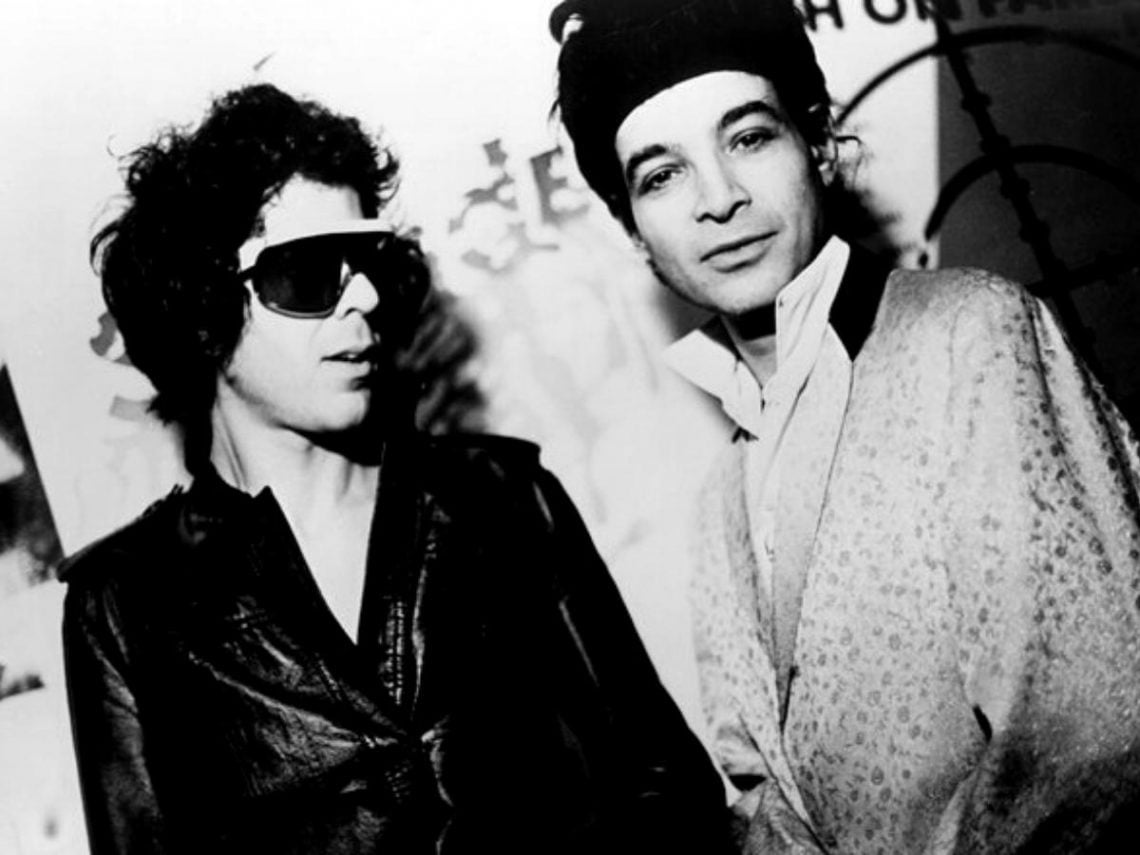
It remains significant that at their inception, Suicide was intended to be more of a performance art project than a traditional band. Vega and Rev sought to break down the barriers between performer and audience, creating an environment of total participation, regardless of whether the audience wanted to. In the early days, those who hated the band’s music and approach met this aggressive concept with a violent response. Clad in black leather like a pair of thugs from the realms of creative cinema, Vega and Rev’s art can be regarded as something of a musical counterpart to the New York Martin Scorsese depicted in 1976’s Taxi Driver.
Taking from socialist politics and the general attitude of Iggy and The Stooges, Suicide saw violence as a way to force a largely middle-class audience to pay attention to the social decay and inequality ubiquitous at the time. “The audience would walk through the door of the venue, and they’d be in hell,” Vega told The Jewish Chronicle in 2008. “We were saying, ‘Wake up, man. You’ve gotta change this shit!'”
“For a long time, we didn’t have songs as such,” Vega explained of the band’s creative violence to The Guardian in 2008. “So Marty would repeatedly kick his keyboard, and I’d hit the microphone stand with a broken bottle or make these horrible noises come out of a trumpet. Then I graduated to screaming, and eventually that led to writing actual lyrics.”
“People were looking to be entertained,” Vega said in the same interview. “But I hated the idea of going to a concert in search of fun. Our attitude was, ‘Fuck you, buddy, you’re getting the street right back in your face. And some.’ At one of our first shows, there was a guy in the audience who’d brought this trombone. I jumped into the audience, fell over and knocked the slide out of his trombone. These South Americans took real offence to that. So they immediately attacked us with chairs, tables, anything they could get their hands on.”
Describing the visceral scope of his personal violence, the frontman continued: “That became the norm. I started carrying a bicycle chain on stage, figuring if you can’t beat ’em, join ’em. If the violence got really bad, what I’d do was smash a bottle and start cutting my face up. That seemed to have a calming effect on the crowd. I guess they reasoned that I was so fucking nuts that nothing they could do would bother me. I figured out a way of doing it so that I drew a lot of blood, but I wouldn’t be scarred for life. I had it down to a fine art. Another ploy I had was to lock the exit doors so nobody could escape. That was the ultimate ‘fuck you’, as far as I was concerned.”
“I was convinced we were going to be as big as the Beatles,” Martin Rev added. “All the hostility we were getting did nothing to change that. Even when the violence was going on, and the blood was spilling, I’d be thinking that the crowd knew we were doing something from the future. But it wasn’t a future they wanted to know about. So the antagonism got stronger and stronger. The only reaction we didn’t get was being attacked by wolves. But that’s only because you weren’t allowed to take wolves into clubs.”
The band released their self-titled debut album in 1977. It is now hailed as one of the most consequential of the era, a progenitor of industrial, synth-pop and even post-punk. Yet, due to the extent of their boundary-pushing, the album and band took a while to embed themselves in the cultural fabric. Their 1978 European tour in support of Elvis Costello and The Clash is mentioned as a run where their violence was met with the same from the audience. The extent of it seems remarkable today, in a world of barriers at shows and heavy-handed security. The live recording 23 Minutes in Brussels captures what unfolded on their notorious stop in Belgium. The title communicates how long it took before the police tear-gassed the frenzied audience.
The tour’s opening night was at a science-fiction festival in Metz, France. It set a precedent for what was to come. The audience went crazy, unable to comprehend the sounds of Suicide and their equally as abrasive demeanour. A wooden chair and boots were thrown in vexation at the band. Speaking to The Guardian in 2017, Rev remembered: “After that, it was like going into the trenches.”
“Every night was like Brussels, and a lot of them were worse,” Suicide’s UK label rep, Howard Thompson, the man who recorded the Brussels show, remembered. “The Clash tour was pretty tough. Their fans mostly hated Suicide. A lot of them were plastic punks who just thought punk rock was guitars, safety pins and bin bags. Every night, Alan’s shiny purple suit would be so stained and covered with gobs of spit that it appeared black by the end of their set. Vega prowled the stage and got as close to the audience as he could. He wasn’t scared of anything. Everything that wasn’t nailed down got thrown at them: coins, shoes, beer glasses, ashtrays.”
It’s claimed that someone threw an axe at Vega in Glasgow, which narrowly missed his head. Vega recalled that the violence was so bad he thought he would die: “We were supporting the Clash, and I guess we were too punk even for the punk crowd. They hated us. I taunted them with, ‘You fuckers have to live through us to get to the main band.’ That’s when the axe came towards my head, missing me by a whisker. It was surreal, man. I felt like I was in a 3-D John Wayne movie. But that was nothing unusual. Every Suicide show felt like world war three in those days. Every night I thought I was going to get killed. The longer it went on, the more I’d be thinking, ‘Odds are it’s going to be tonight.'”
I don’t say it lightly, but Suicide’s decision to choose violence was more impactful than they could have imagined. Not only did it open the gates for many significant acts, but it also serves as a reminder that music and art can be so much more than the confines of your immediate four walls.

Never Miss A Beat
The Far Out Punk Newsletter
All the latest Punk content from the independent voice of culture.
Straight to your inbox.