


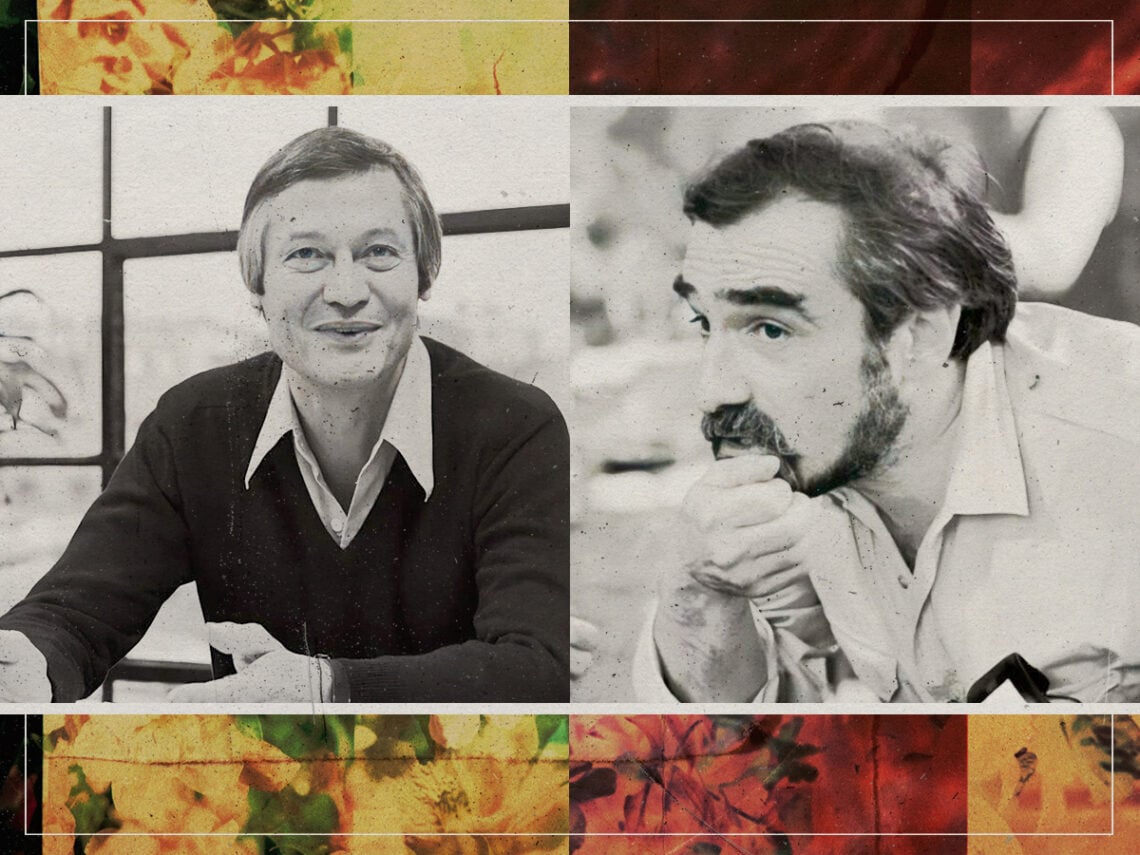
“A good director can direct anything”: How Roger Corman helped to put Martin Scorsese on the map

Ask anyone to name some of the most prominent modern filmmakers, and you’ll most likely hear Martin Scorsese’s name uttered. The director has been working relentlessly for decades, and as a result, he’s made some of the most acclaimed movies of all time, like Taxi Driver and Raging Bull, to name just two.
He has transformed Hollywood and certain genres within it, to. If you don’t think of Francis Ford Coppola’s The Godfather first when it comes to gangster movies, you’ll most likely think of Scorsese’s Goodfellas. Scorsese has maintained his success throughout the 21st century, impressing with titles like The Departed, Shutter Island, The Wolf of Wall Street, The Irishman, and most recently, Killers of the Flower Moon.
The filmmaker has even bagged many prolific awards, such as various Oscars and the Palme d’Or at the Cannes Film Festival. His accessible yet considered style has attracted a wide breadth of fans, both cinephiles and casual movie-goers alike seem to cite Scorsese as a pure genius.
Yet, he might not have become the Hollywood icon he’s known as if he hadn’t received an opportunity to work with independent movie titan Roger Corman. The legendary producer and filmmaker gave many stars a start in the industry, such as Jack Nicholson, James Cameron, and Ron Howard. Not only did he direct movies like The Little Shop of Horrors and The Wild Angels, but he was also a key figure in distributing many foreign titles in the United States from filmmakers such as François Truffaut and Federico Fellini.
He soon founded his own independent production company, New World Pictures, which helped to finance and distribute many B-movies and niche low-budget films, such as those which fell in the ‘biker’ and ‘female nurse’ sub-genres. Corman’s influence over indie cinema has been enormous, and Scorsese can thank him for giving him one of his earliest directorial opportunities.
Following the success of Corman’s Bloody Mama, which featured Robert De Niro in one of his earliest roles, producers American International Pictures wanted Corman to “produce and direct” another similar movie, he told Criterion. However, “By that time, I had my own company, and I said, ‘I’ll produce, but I don’t want to direct for another company.’” To compromise, Corman said he would choose a director to make the film – “and I picked Marty”. At the time, Scorsese had only made Who’s That Knocking At My Door as he was finishing university, which was completed in 1967, alongside a handful of short films.
Corman had faith in the young filmmaker despite the production company having doubts. “They were somewhat dubious and I said, ‘I don’t care. A good director can direct anything. That’s more or less true. Anyway, I convinced them to let Marty direct it.” The film was Boxcar Bertha, starring Barbara Hershey, which became a “solid success, both critically and commercially, and it started Marty’s career.”
While the movie isn’t remembered as one of his best films, it gave Scorsese plenty of experience, which he subsequently channelled into his next project, Mean Streets. Released in 1973, the film garnered significant acclaim and cemented Scorsese as a rising star. This wouldn’t have been possible without his influential relationship with Corman.
