


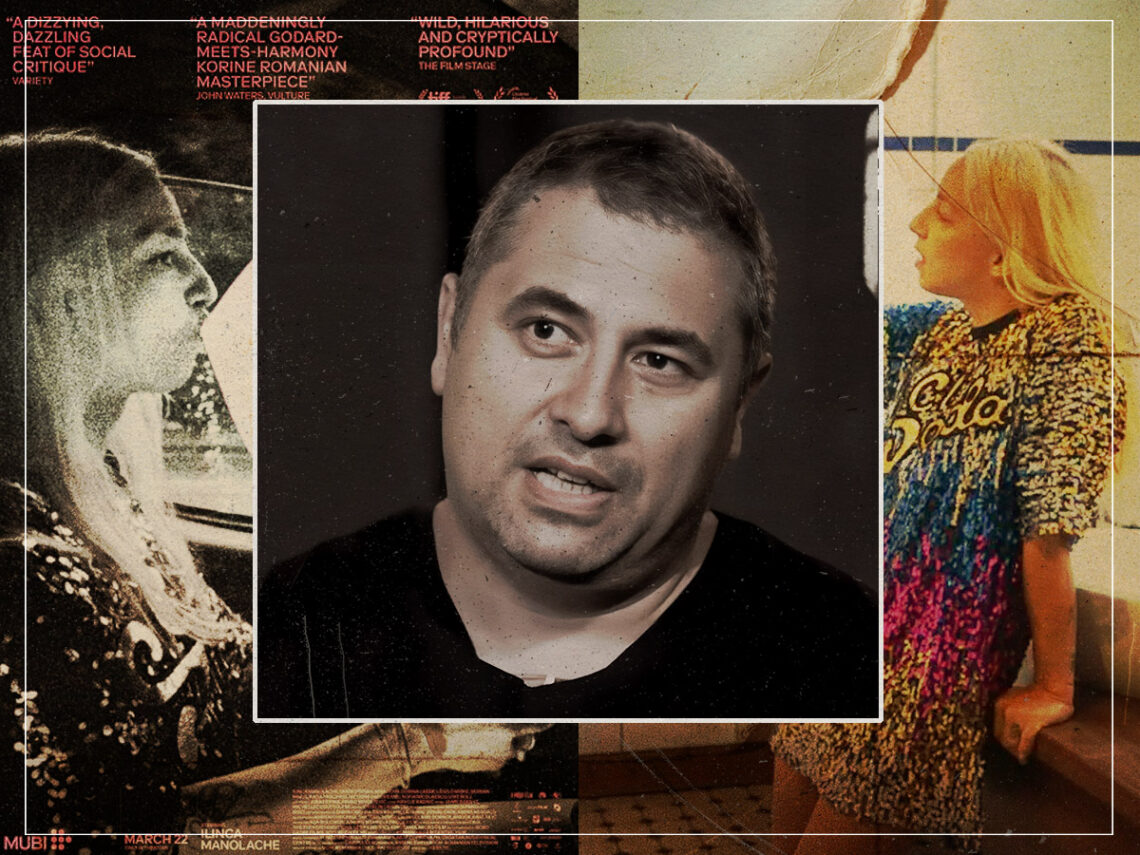
Radu Jude: the director who transformed Romanian political cinema

The ‘Romanian New Wave’ has evolved into one of the most creatively fertile periods in the country’s cinematic history, with Radu Jude positioning himself at the forefront by telling stories that range from absurd and poetic to haunting and achingly resonant.
The nation’s current golden period began in the 2000s and was popularised through realism and minimalism, but Jude continued exploring new corners of local culture, society, and history to continue broadening and diversifying both the appeal and intricacies of his work.
Political dissent has been integral to his work, and I Do Not Care if We Go Down in History as Barbarians fearlessly confronts Romania’s complicity in the Holocaust. Through a public re-enactment of the 1941 massacre that claimed tens of thousands of lives, the film exposes a wide range of attitudes towards past atrocities, especially in an era where the far right is alarmingly resurgent.
Bad Luck Banging or Loony Porn digs into the social media and technology era and the hypocrisies that come with it, as a schoolteacher finds herself being scandalised when her privately-made sex tape is widely circulated, leading her to become increasingly frustrated by the sexism, nationalism, and rampant consumerism that’s seeped into everyday Romanian society, where instant gratification and knee-jerk reactions take precedence over more thoughtful, measured, and reasonable approaches to both isolated incidents and life itself.
Black humour has always been a key component of Radu’s output, but it’s deftly balanced against very real and often-scathing insights into his homeland. Adhering to convention has never been something that’s particularly interested him, nor would it even serve as the best conduit for his distinctive style of politically charged and thematically resonant cinema that juxtaposes far-fetched and often absurdist situations with the cultural reckonings he believes his country has yet to face up to.
Although much of his work can be interpreted as satirical in nature, Jude regularly digs into the discrimination, antisemitism, and misogyny prevalent in Romanian society in years gone by, with the lingering after-effects caused by the 15-year dictatorship of Nicolae Ceaușescu prior to his overthrow and execution in 1989 and the nation’s historical fascistic tendencies making for very serious subject matter, but always injected with a sense of humour and the occasional shocking scene to keep audiences on their toes.
2015’s Aferim! was framed as a western set in Eastern Europe, with a constable hired by a member of the nobility to track down and apprehend an escaped slave who had an affair with the nobleman’s wife. It might be a 19th-century period piece, but the tales of corruption and misdeeds contained therein were as applicable to the year of its release as the one in which it was set.
Do Not Expect Too Much from the End of the World couldn’t be more different in terms of setting, aesthetic, and execution, underlining Jude’s continued evolution as a filmmaker in the space of less than a decade. Using footage from 1981 censorship film 1981 and cameos from infamous director Uwe Boll as part of its distinctive tapestry, it’s an insight into the taxing mundanity of modern life.
An overworked and underpaid driver struggles to make the most of the gig economy, which exists partially as several anthologised segments – which features the protagonist’s social media alter-ego, a road trip adventure, and the filming of a safety video to name but three – but coalesces into a provocative whole that takes aim at corporate culture, toxic masculinity, and the continued exploitation of workers regardless of how modern their professions may be.
In an interview with Jacobin, Jude explained his socio-political approach to cinema, which speaks to his filmography at large. “What I discovered when speaking about these experiences is that these were not only small anecdotes, they represented the new system that we ’embraced’ in Romania after the communist dictatorship ended in 1989,” he said. “The worst kind of capitalistic society with no social protection.”
That caustic outlook has served him well in becoming one of European cinema’s most exciting, dynamic, and daring voices, and he’s got plenty more stories left to tell.
