


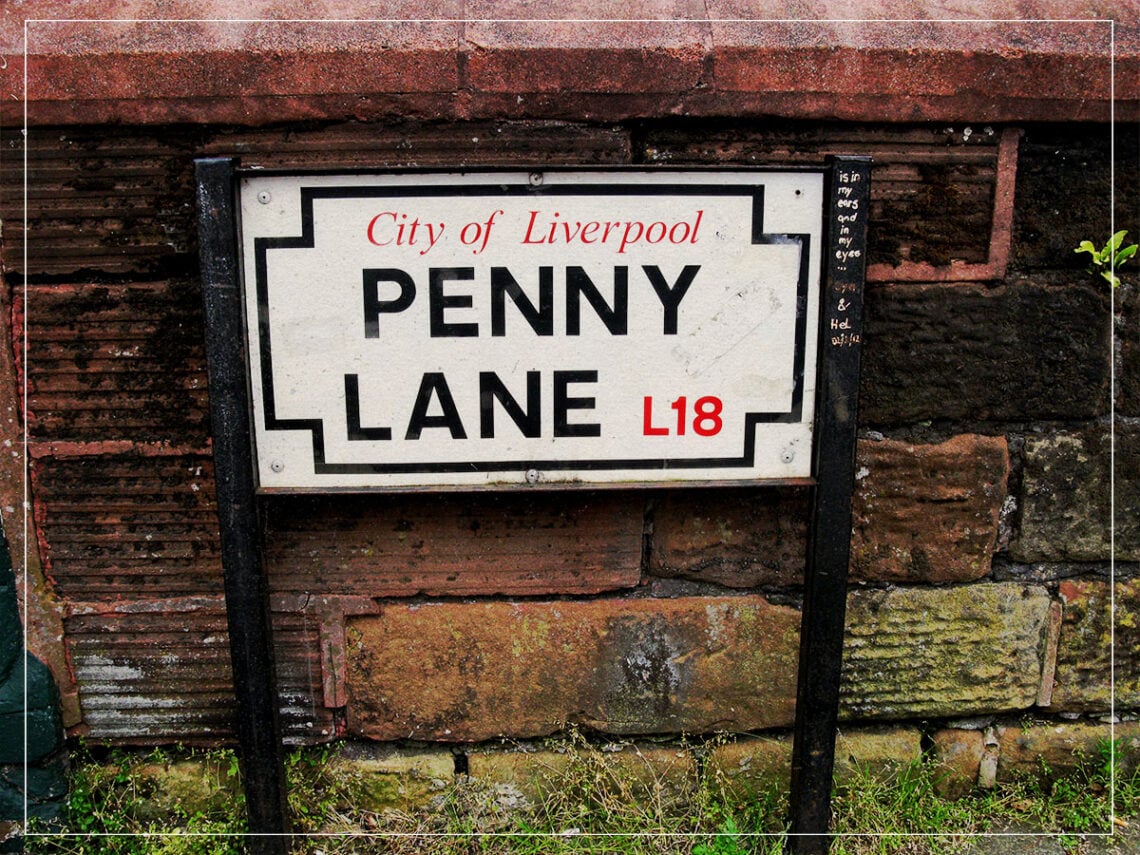
From bombs to brigades: How Penny Lane became Liverpool’s rock ‘n’ roll epicentre

America‘s cultural influence on Liverpool has a long and storied history. As a major shipping link with the US, many touring musician’s first port of call would be the Merseyside area, starting their UK live dates in the North West seaport. From the Virginia Minstrels who brought their blackface vaudeville in the 19th century through to Paul Robeson, Duke Ellington and Louis Armstrong all playing Liverpool early on in their tours during the 1930s, ’40s, and ’50s.
This trans-Atlantic musical import continued well into the Second World War. Local Scouse sailors would be called ‘Cunard Yanks’, derived from the steamship company name and the working schedule of departing overseas to North America, frequently returning with hard-to-find rock and roll and R&B records affording Liverpool a national reputation as the go-to for the latest slice of the American charts alongside London.
Due to its strategic asset to the British war effort as the largest port on the West Coast and the headquarters of the Battle of Atlantic’s defence of vital international supply links, Liverpool suffered heavily during the German aerial Blitzkrieg bombing campaign with a death toll second only to London at 4,000 people, and its surrounding suburbs such as Penny lane and the nearby Bootle had as little as 15% of its houses left.
All four members of The Beatles were born during this chaotic chapter of Liverpool’s history, John Lennon literally born on October 9th, ’40 as an air raid was taking place above.
Liverpool’s post-war recovery was swift due to its proximity to Burtonwood Airfield. Opened in 1940 and the largest in Europe, the United States Army Air Forces conducted major operations at the base and was home to 18,000 American servicemen by the end of the war.
Such a proliferation of GIs with generous pay packets and the latest rock ‘n’ roll 45s flooded Liverpool with economic stimulus and a spread of Elvis Presley, Little Richard, and Chuck Berry on a generation of kids growing up in post-war austerity. This rapid regeneration didn’t mask a city in ruins, and high unemployment stubbornly remained well into the ’50s as the teenage Lennon, Paul McCartney, and George Harrison first began playing skiffle as The Quarrymen.
As the grey rationing plagued their formative years, despite Burtonwood’s lion’s share of the Marshall Plan’s fiscal recovery, the American pop culture the young Beatles were exposed to was a technicolour window into a world unscathed by the Luftwaffe and suffering no economic hangover, enjoying a golden boom of capitalism and confidently emerging as a global superpower on the world stage. The allure was irresistible and influenced the young Lennon, McCartney and Harrison to cover Buddy Holly’s ‘That’ll Be The Day‘ in 1958, their first-ever recording together.
Burtonwood remained a key site for American army personnel throughout the Cold War, but as that era passed into the ’90s Nato requirements declared the air depot a military excess and was finally closed in ’94. Now the site of the RAF Burtonwood Heritage Centre, perhaps it’s long overdue an exhibit celebrating the airfield’s rich history of American pop culture’s grip on the UK via Liverpool’s great port.

Never Miss A Beat
The Far Out Beatles Newsletter
All the latest stories about The Beatles from the independent voice of culture.
Straight to your inbox.