


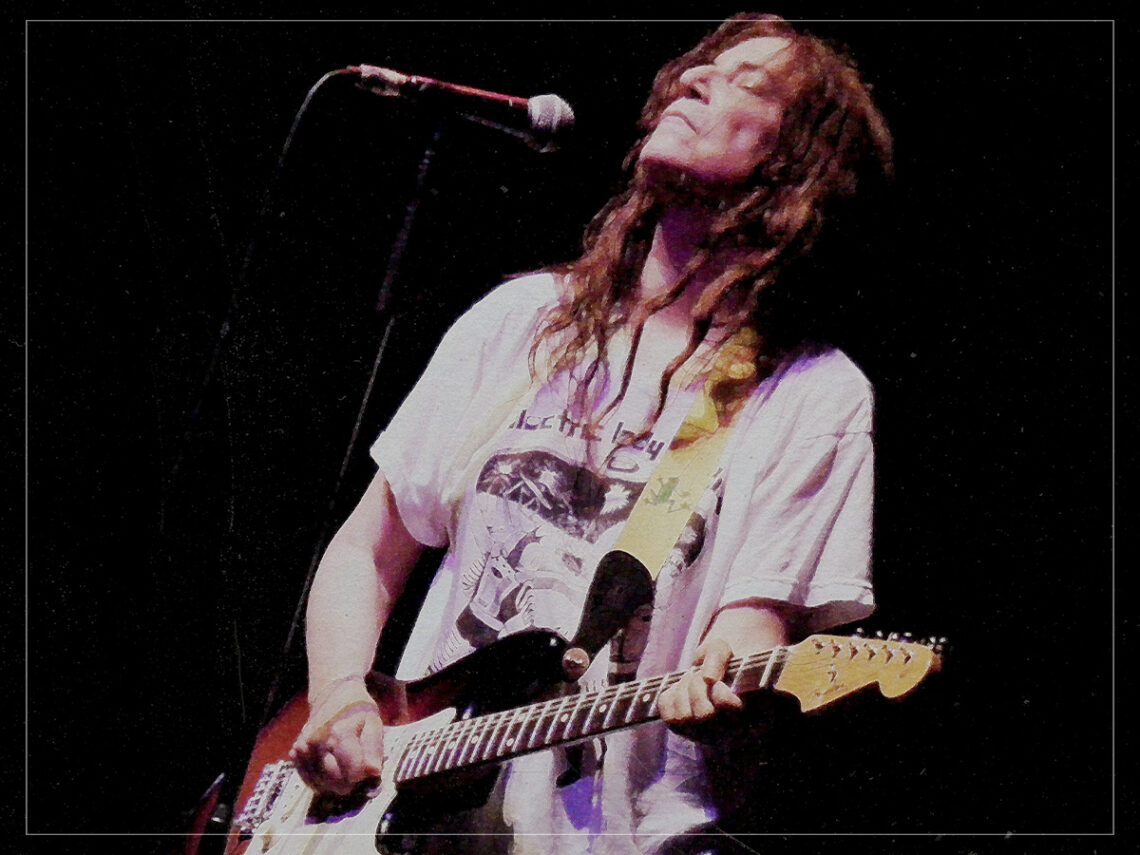
How Patti Smith levelled the field “between high and low art”

Patti Smith came to New York with nothing but a strong sense of self and her poems. As she started to earn money through her writing, someone decided to strum a guitar in the background, and suddenly, poetry became accessible to the masses.
You don’t have to be a literary academic to love poetry. Leonard Cohen and Bob Dylan showed the world that you can add music to accompany your literary prowess and the flavour of its meanings won’t be lost in the sounds, since you can apparently still get a Nobel prize in literature for them. But Patti Smith brought people who had never read poetry to love it.
The icon behind the Patti Smith Group made her poetry digestible and universal enough so as to attract the attention of passerby New Yorkers as she bared her heart out to them outside Manhattan churches.
Jaan Uhelszki from Creem magazine, where Smith had her work first published, remembers being struck by her word choices: “She always takes you further out than you expect. I’ve always really admired that about her…She’s got a direct channel to something the rest of us are too clouded to have.”
Philip Shaw wrote about her in the book ’33 ⅓ Patti Smith’s Horses’ to have been a mouthpiece of the past: “There are all these cultural reference points that Patti is throwing out in her lyrics: Rimbaud, Jean Genet, Baudelaire,” but her references aren’t obnoxious. “She was levelling the field between high and low art, making poetry that might be regarded as highfalutin or elitist, and channelling it through a medium, rock ‘n’ roll, that was populist. So, you could think and dance at the same time.”
The purity of her first album, Horses, really held that element of poetry without alienating the listener. The Godmother of Punk wasn’t trying to compete with the heated rock scene of the 70s, to make commercial success, or to start a movement that bore her influence until this day. As Uhelszki put it, “She views her rock ‘n’ roll career as military service. She’s there because she has a purpose. She identifies herself not as a writer, artist, or singer, but as a communicator.”
The simplicity in Horses’ humble production values would invite one to believe they recorded it as they would have sung it on stage, or in someone’s living room.
Audiences were invited to contemplate the album’s meanings and interpret them as they chose, from the thought-provoking religious: ‘Jesus died for somebody’s sins, but not mine’. Like the greats in poetry, Smith evoked a sense of dissatisfaction in the state of the world, but in a way that bridged the gap between the abstract artistic and calling things what they are. Uhelszki wouldn’t call it feminism, “it was just humanism. She was exercising who she was.”
Patti Smith never focused on building an alluring exterior; she was never prettified, she wasn’t a rock chick, “She was one of us” music journalist Caryn Rose wrote. Her album covers were never glamorous, her simplicity was in her words and in her look, just like the greats before her.
