


‘Touch of Evil’ and the opening shot that changed cinema forever

At this point, it’s a tired cliché to talk about the genius of Orson Welles, and the risk of overhyping male auteurs should not be underestimated. However, there is no denying that he had a profound influence on the language of cinema. Citizen Kane is the most famous showcase of his technical innovations. Deep focus cinematography, low-angle shots, and nonlinear storytelling are all part of what makes that film so influential, but Welles took things a step further nearly two decades later with Touch of Evil.
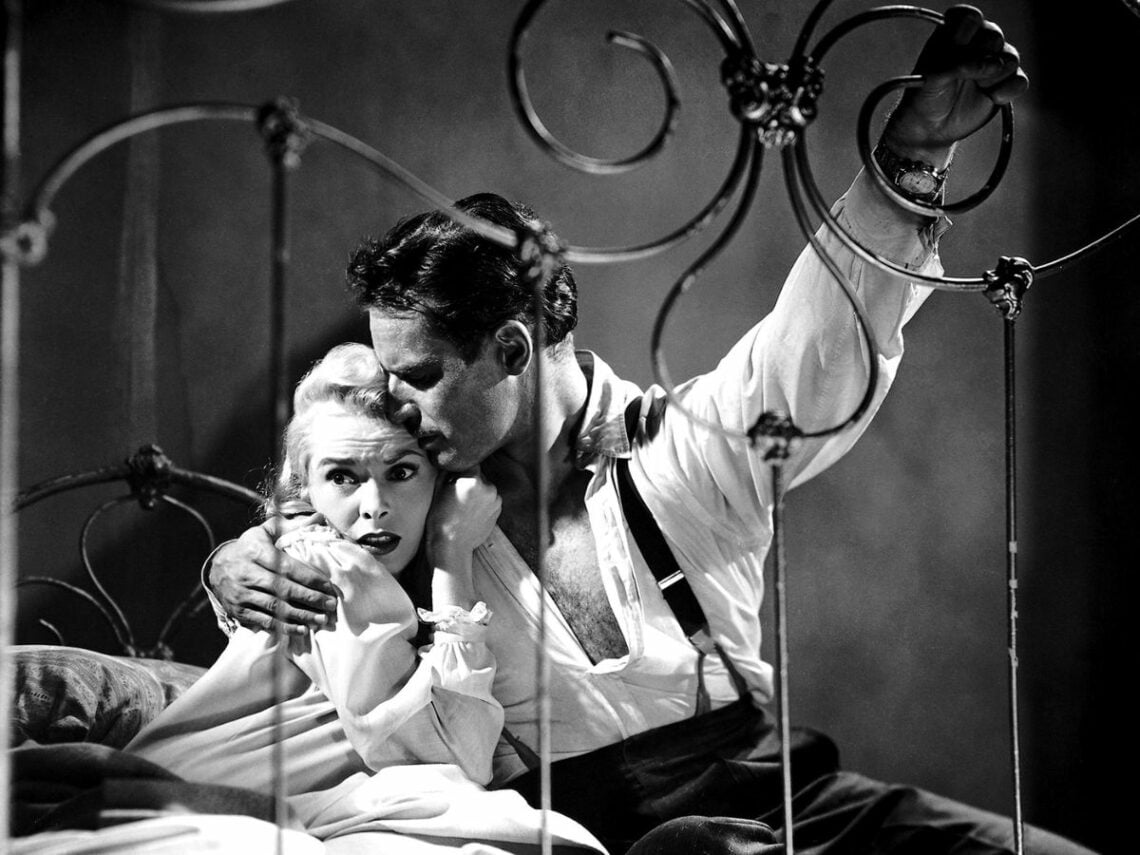
Released in 1958, Touch of Evil is a film noir set in a US-Mexico border town about a Mexican prosecutor, Mike Vargas (played by the very non-Mexican actor Charlton Heston) and his American wife, Susan (Janet Leigh), who are targeted by a gang involved in a case he is investigating. As they find themselves in increasing danger, the Vargases begin to suspect that the local police chief Quinlan (Welles) is not on their side.
Although the film was poorly received when it was released, it is now widely regarded as one of Welles’s best. The opening shot, in particular, has become one of the director’s most famous feats of storytelling, a three-and-a-half-minute tracking shot that deftly lays out the setting, story, and pace without a single cut.
It begins with a low-angle shot of a man putting a ticking bomb into the boot of a car before an older man in a suit gets in the car with a laughing young woman. The camera follows the car through the streets of the border town. Music pours out of the bars and storefronts, and people push carts across the road. A couple (the Vargases, it turns out) cross at the crosswalk, arm-in-arm. The car speeds past them toward the border crossing kiosk, but is held up when Mike and Susan strike up a conversation with the customs officer, who clearly knows who Mike is. After the Vargases are waved through, the impatient couple is also given the go-ahead. Just as Mike and Susan embrace, there is a loud bang and the scene cuts, for the first time, to the car erupting into flames.
One of the most striking things about this sequence is how suspenseful it is. Instead of creating a tense atmosphere with lots of frantic cutting, the way many films do, the suspense is created from the beginning with a literal ticking clock. The bomber sets the timer to three-and-a-half minutes, which is almost exactly the duration of the unbroken shot. The audience knows that there is a countdown, and forcing them to wait through every inexorable second of it draws out the tension.
The shot also shows the characters in their physical context, giving the audience everything they need to know about the atmosphere of the town. The brief bits of dialogue and body language also tell the audience that the Vargases are newly married, he is a renowned member of law enforcement on the trail of an infamous crime family, and the couple in the car is likely a wealthy American with his mistress.
Long tracking shots were not part of the usual filmmaker’s toolkit back then, though there had been several notable examples before Touch of Evil was released. Alfred Hitchcock’s Young and Innocent and Max Ophüls’ Le Plaisir both contained remarkable instances of long takes. However, neither captured the breadth of storytelling nor took as much time as Welles’s.
Martin Scorsese was a particular admirer of Touch of Evil and went on to employ a similarly lengthy, atmosphere-evoking tracking shot in Goodfellas when Ray Liotta’s character enters the Copacabana nightclub through the back entrance and the audience gets to see the bustling kitchens, illicit corridors, and theatrical main dining area. Robert Altman’s 1992 Hollywood satire The Player opens with an homage to Welles’s sequence and even name-checks the movie directly. “The pictures they make these days are all MTV: cut, cut, cut,” a character says. “The opening shot of Welles’s Touch of Evil was six and a half minutes long. Well, three or four. He set up the whole picture with that one tracking shot.”
Interestingly enough, Welles was pretty dismissive of his most famous opening sequence. “It’s one of those shots that shows the director making ‘a great shot,'” he said. “And I think that great shots should conceal themselves a little bit.”
Like it or not, that shot has become a touchstone for many filmmakers, and even if it wasn’t a direct inspiration, it is echoed in scenes from movies like Halloween, The Shining, Saving Private Ryan, and There Will Be Blood.
