


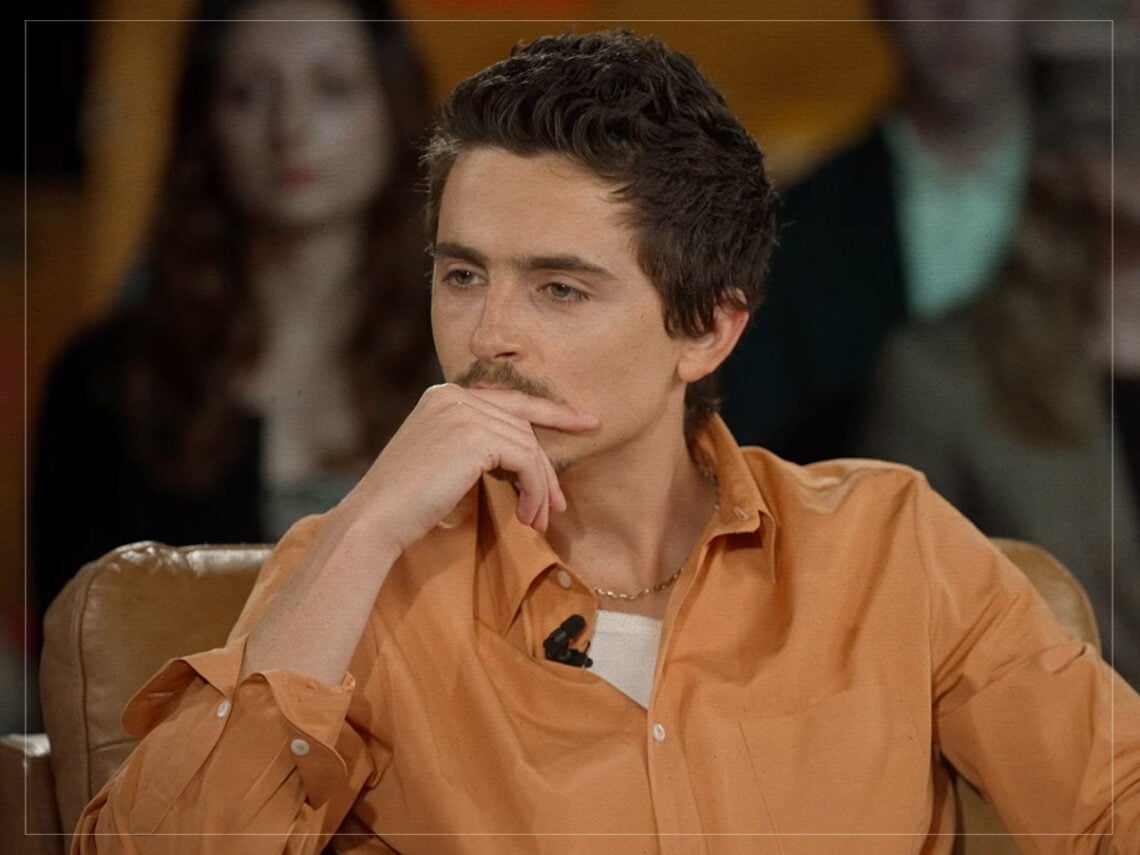
“I’m serious about that”: How one movie changed Timothée Chalamet’s life forever

Timothée Chalamet had his love for cinema shaped by someone with whom he would go on to work in the future.
One of the primary reasons why Chalamet is considered to be one of the most compelling young stars of his generation is his refusal to work with anyone but the top directors, such that at just over 30 years old, he has appeared in films by Josh Safdie, James Mangold, Greta Gerwig, Denis Villeneuve, Luca Guadagnino, and Wes Anderson. While they are all talented filmmakers, nothing can beat the opportunity that Chalamet had at a young age to work with Christopher Nolan.
Interstellar was, at the time, Nolan’s biggest gamble, as it was after the unprecedented success of his superhero trilogy that the director bet it all on an ambitious science fiction adventure that combined the intellectualism of Stanley Kubrick with the emotionality of Steven Spielberg.
While it was a hit upon release and drew polite reviews from critics, Interstellar has aged as one of the most beloved films among young moviegoers. Even though Chalamet had a relatively small role in the film as Tom Cooper, the younger version of the character played by Casey Affleck, he said that he was desperate to work with Nolan, based on going to see The Dark Knight when he was a teenager.
“When I was 12 years old, after attending one of my sister Pauline’s [ballet] performances, I petitioned my mom and grandma to see Christopher Nolan’s The Dark Knight with me,” he said, “We went to AMC Empire 25 in Times Square for a 7:30 screening. I left that theatre a changed man, and I’m serious about that.”
It’s now hard to overstate what a sensation the film was, as its success was completely unprecedented. While Nolan’s previous DC comics film, Batman Begins, had been well-received as a more serious take on the mythology, The Dark Knight more than doubled its box office run and was declared to be a modern masterpiece. Even if it was technically a superhero film, it spoke about themes of power, escalation, morality, and destruction that were essential within any of the classics within American cinema, such as The Godfather or Citizen Kane.
The primary effect that The Dark Knight had on young aspiring actors, like Chalamet, was the reveal of Heath Ledger’s performance as the Joker. While at the time there was trepidation on whether anyone could play the character better than Jack Nicholson had in the original Batman film from 1989, Ledger created a twisted, clever, darkly funny, and unpredictable antagonist who the culture became obsessed with, and his tragic death, six months before the movie was released, only shadowed it with more intrigue.
Among the major takeaways from the second part of the trilogy was that it was possible to make something that technically qualified as a ‘tentpole blockbuster’ and turn it into a true piece of art with something to say.
It’s a notable quality that Chalamet has certainly adopted within his own career; while he has wisely chosen to avoid superhero movies, he did commit to a different trilogy with his role as Paul Atreides in the Dune film. Nolan pulled off a rare feat of making three instalments in a trilogy that were equally as good, and whether the young actor can do the same will be dependent on whether this year’s Dune: Part Three lives up to expectations.
