


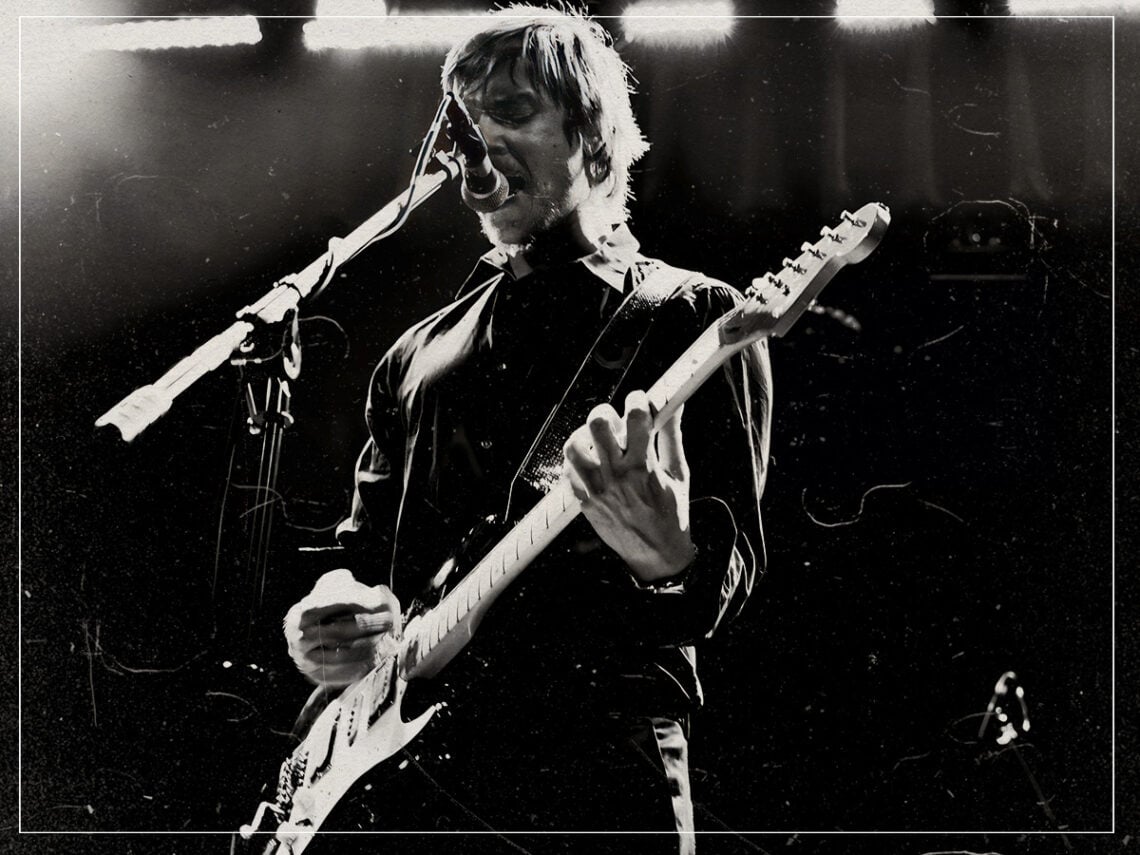
“Helped me understand”: how Nirvana shaped Interpol

Interpol have often been mischaracterised as simply an indie band, but their sound is a minimalist fusion of post-punk and goth, with influences spanning hip-hop to metal. While their aesthetic and layered arrangements define them, frontman Paul Banks has openly credited Nirvana as the cornerstone of his musical inspiration. Behind the band’s black suits, intricate guitar interplay, and complex rhythms lies a profound admiration for the grunge icons that made it all possible for him.
Although Interpol’s music doesn’t tend to be fast-paced and furious like Nirvana’s often was, all it takes is one listen to ‘Roland’ from their debut, Turn On the Bright Lights, ‘Evil’ from its follow-up, Antics, or even ‘The Heinrich Maneuver’ from Our Love to Admire, to hear the spirit of punk, and the darkness of grunge. They’d just pushed them through their collective chamber to get their unique twist on the essence. It must also be said that this constant toying with darkness and light is certainly one theme that unites them.
Even if the rawness of Nirvana and the refinement of Interpol still seem distinct, Banks has discussed the impact of the grunge trio on his person and art on numerous occasions. Born in Clacton-on-Sea, Essex, in 1978, and frequently relocating across the world with his parents, ranging from Michigan to Madrid, because of his father’s corporate role for an automobile manufacturer, his early life was out of the ordinary, to say the least. His experiences during these formative years and his age would make him primed for the rise of Nirvana, and just like every kid of a particular forward-thinking disposition, they changed his life.
Due to moving around with his family, Banks experienced oscillating fortunes. He’d hated school in America and had endured bullying, but when the family moved to Madrid when he was 12, he thought he’d found utopia. He spent his days drinking, smoking weed, and generally living the adolescent dream under the heat of the Iberian sun. However, reality eventually hit, and the family moved back to New Jersey for his junior year of high school. That was where he’d been bullied, and it felt like a sick joke. It stoked the fire of angsty rebellion in him.
It was lunchtime that saved him during this period. An everyman, sometimes he’d eat with the one cool jock in his year, other times with the raver girls, and when he felt like it, on his own. During one lunch, he met a girl who proved to be cooler than everyone else in the school. She had her own zine and introduced him to a lot of cutting-edge music and culture.
Speaking to Pitchfork in 2018, Banks recalled: “She took me to see a band play in a garage in a New Jersey subdivision, and I was like, ‘This is cool.'”
That band was Nirvana, and soon after, they’d release their era-defining, culture-shifting second album, Nevermind, in September 1991. Explaining how Kurt Cobain and the band-shaped his life, he said: “I discovered and became obsessed with them. I remember listening to Nevermind with my brother and my mom, and she was as into it as we were. Nirvana helped me understand that music was what I wanted to do with my life. When guidance counsellors called me in and asked what my plans were, I’d say, ‘I want to be a rock star.'”
At some point in the near future the Banks family moved to Mexico City. That was where Banks finished high school, and continued to delve into music and the arts. He was the co-lead in an adaption of South Pacific. By his own admission, he was terrible at it, but he realised that he liked singing by doing it. He might have still felt self-conscious onstage, but this was the start of a long road to success. He wouldn’t have done it without Nirvana.
