


“The leader of the free world”: How does music change under new presidencies?

In the 1980s, a one-time brush with fame propelled a real estate mogul to widespread recognition, with luxury and arrogance crossing over to symbolise a new era for business, power, and celebrity. Back then, no one could have predicted the long-term influence of Donald Trump on pop culture and music, but it was becoming more commonplace: the offhand comments in sit-coms, the caricature impressions across various media, and subtle lyrical references in songs all pointed towards a dominance that would permeate all corners of entertainment.
The difference, however, is that with controversial public or political figures, scrutiny or ridicule across film and music is usually delivered in the tongue-in-cheek sense with words—no matter how daring—uttered with an overt outer layer of protection from anything real or meaningful. Trump was always a criticised figure because he acted like he owned the world, but comments about his questionable character never really went further than surface-level jabs, particularly in media that wasn’t solely about the man himself.
However, his election as the American president in 2016, and now re-election in 2024, has plunged media facets into a new era of intense dichotomy and ambiguity, where criticism and satire can no longer exist in celebrity culture and entertainment spaces without often serving up some real headiness that often occurs when new leaders are chosen. In the music industry, in particular, this isn’t a new phenomenon and some of the changes are stark, but when a new leader is so immensely polarising, how does it change the musical output? And how often are these changes subconscious?
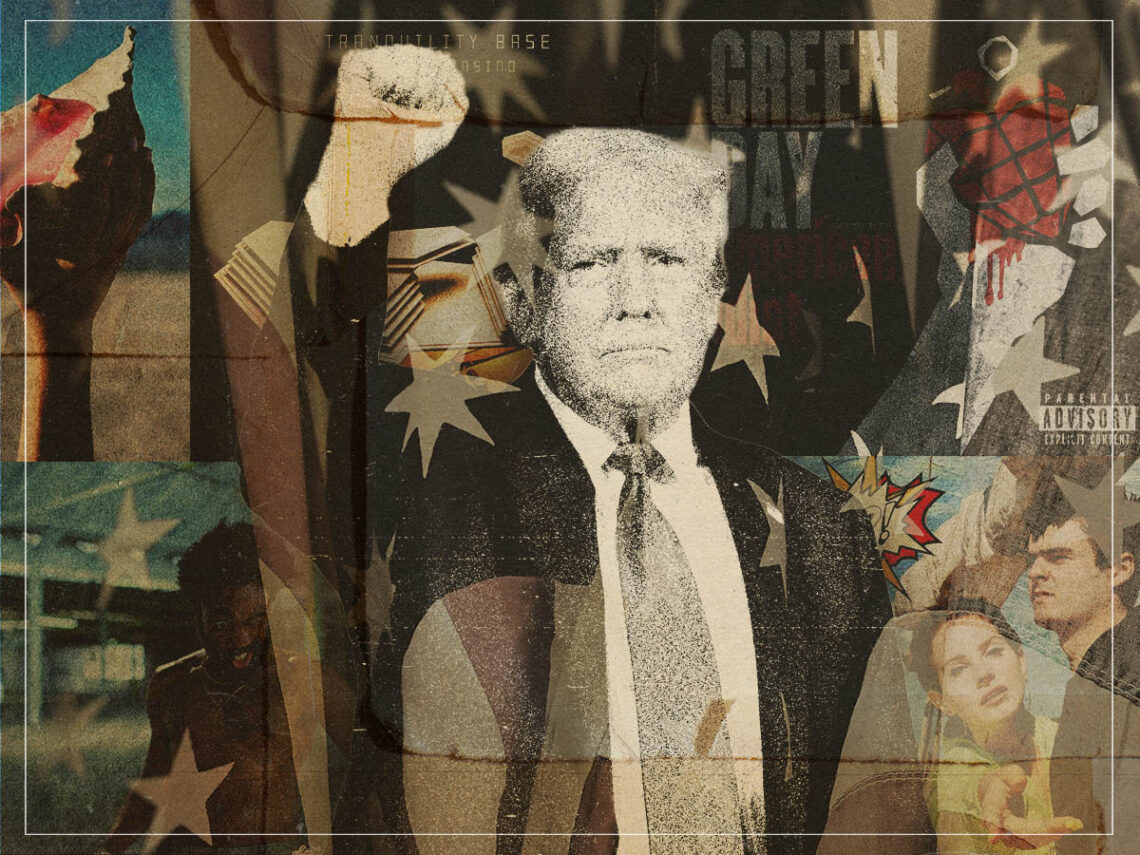
The obvious infliction is the rise in protest music and politically charged lyricism, like how Green Day decided to criticise the entire American value system in 2004 with American Idiot under George W Bush’s presidency. These frustrations often intensify under certain or new leaders, especially with musicians whose material often aligns with specific political causes or focuses on a specific facet of politics relevant to a particular reign.
During Trump’s first term, for instance, not all music directly referenced his presidency, but a lot of it incorporated various societal themes, including disillusionment in Lana Del Rey’s Norman Fucking Rockwell, alongside her general ability to capture loss and despair under certain ideals, which was felt among many over his first four years in office. This was particularly prominent across hip-hop, too, with artists like Kendrick Lamar and Childish Gambino critiquing aspects of American politics like racism, desensitisation, gun violence, and more.
This also infiltrated many indie-rock spaces, like The Killers’ Wonderful Wonderful and Arctic Monkeys’ Tranquility Base Hotel and Casino, which made direct references and unknowingly predicted Trump’s re-election with songs like ‘Golden Trunks’. “The leader of the free world / Reminds you of a wrestler wearing tight golden trunks / He’s got himself a theme tune / They play it for him as he makes his way to the ring,” frontman Alex Turner sings, likening Trump’s unlikely-yet-somehow-likely success in this year’s election to the theatrics of wrestling.
But new presidents—particularly Trump—don’t just impact lyrical content; they also reframe the role of anti-establishment and protesting in music, reinstating the power of music to unite factions of society and incite collective rage or hope in the face of adversity. Chappell Roan would have no doubt continued to supercharge new feminist and LGBTQ+ progressions in music under Kamala Harris’ authority, but the Republican power has faced such artists with a newfound sense of political futility, with music, as ever, being a solid channel for amplifying anger and resistance.
Therefore, new presidents not only cause music to feel much more charged in many areas, whether directly or indirectly, but they can also catalyse artist shifts and ignite movements, especially during pivotal, heated moments like the early stages of a new president and ongoing controversial topics. Some of these elements may calm down over time and readjust depending on fan and artist interest, but the influence of suddenly perceived instabilities reinstates urgency in music, proving its power in reflecting and creating new strands of expression.
