


How much money did The Beatles turn down to play Shea Stadium for a third time in 1967?

Shea Stadium in Queens, New York, was home to arguably the most iconic and impactful Beatles imagery of matching army jackets, which saw them take to the makeshift stage in 1965 and realise the full force of the Beatlemania storm.
Surrounded on all sides by fans, it’s tough to even image the scale of noise 55,600 people could make, especially if most of them are teenage girls who are utterly in love with the people on stage. While he wasn’t at that exact gig, a young David Lynch attended a Beatles concert on their earlier American tour and never forgot the deafening sound of it all, calling it “a screaming event” more than anything.
Then imagine the band attempting to play a show in the middle of it. With no in-ears and no monitors, they could barely hear anything except the ear-splitting screams, let alone being able to hear each other to play tightly or in time. “You can see it in the film. George [Harrison] and I aren’t even bothering playing half the chords, and we were just messing about,” John Lennon said when the show was caught on camera for a documentary.
As their biggest show yet, the band came away with conflicting feelings. On one hand, Harrison said, “I don’t think I have ever felt so exhilarated in all my life”. But at the same time, all four of them felt somewhat disappointed as the actual musicality of the show didn’t live up to their standards because they couldn’t hear a thing.
There was also the overwhelming matter of the fans. That too was a thing that split their opinions, leaving them swaying somewhere between total excitement and total fear. As the scales of Beatlemania revealed themselves, there was already the sense that one wrong move could cause disaster, as if at any moment, all those fans were going to storm at them like a stampede.
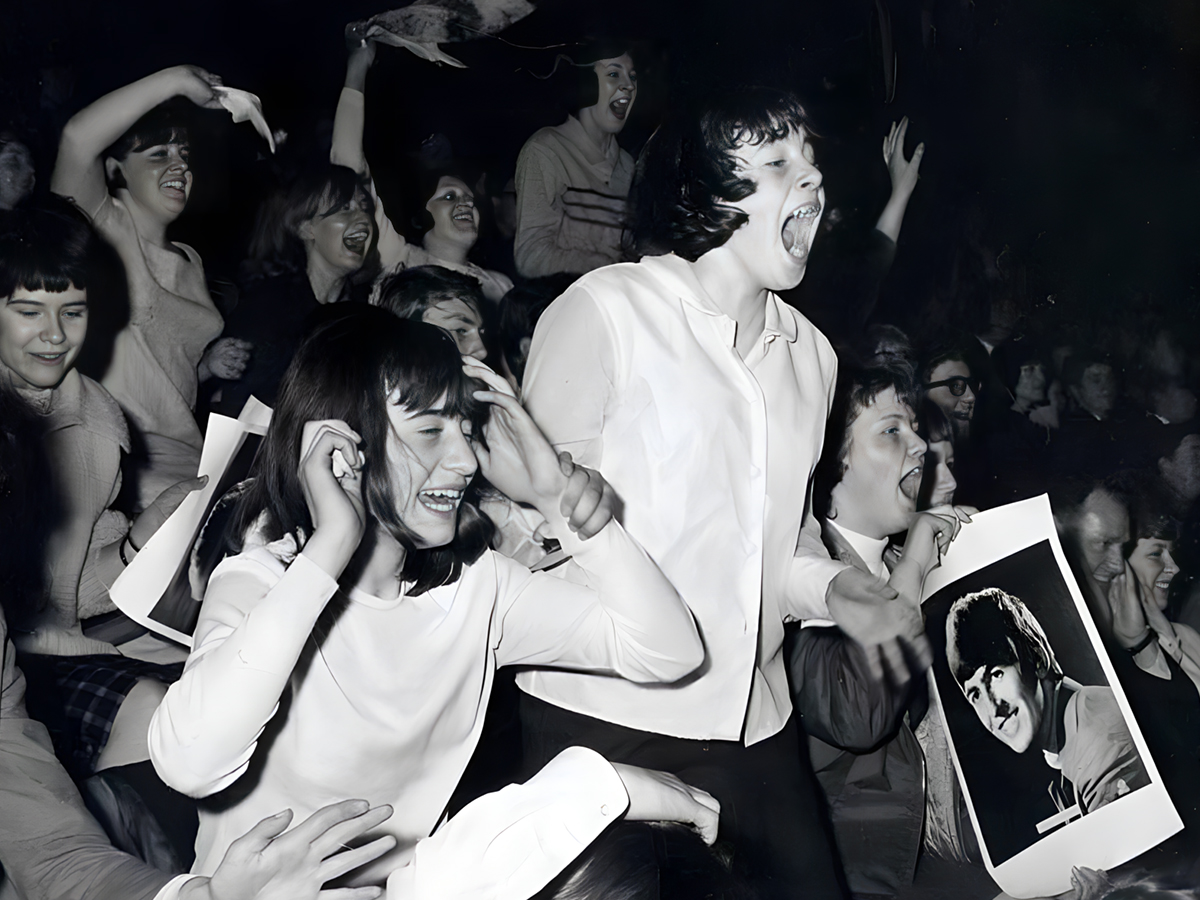
Either way, it was history for the band, the stadium and music as a whole. Their first appearance in August 1965 was the first concert to be held at a major stadium, and as it set records for attendance and profit, it made all other stadiums realise that maybe they needed to invite some bands down to the grounds.
Thus, in 1966, they invited the band back for another show. However, by this point, Lennon had caused controversy with his comparative comment of “more popular than Jesus“, meaning that their return to the States was fraught with fear and intensity. It perhaps also impacted ticket sales as during their second appearance, there were around 11,000 unsold seats.
“It was a pretty unsettling time. And it was against this background that they said, ‘Right, we definitely won’t do any more. We are going to have a break and then we are going into the studio to make a record’,” producer George Martin recalled of how Shea Stadium helped confirm their decision to quit touring. That still didn’t stop Shea Stadium from trying its luck a third time with the band in 1967.
How much money did The Beatles turn down?
In 1967, the stadium wanted The Beatles back again. Promoter Sid Bernstein was the man who had successfully got them there twice before. The first time, they were paid $160,000, which doesn’t feel like a lot in today’s standards, but it was back then. In 1966, they got $189,000, which was around 65% of all the earnings from the event.
But in an attempt to get them back again, Bernstein levelled up the deal by a lot. He offered the group a million dollars to appear once more, desperate to get them out of their live show retirement for a special appearance.
The answer? No. They wouldn’t do it. They didn’t want his money.

Never Miss A Beat
The Far Out Beatles Newsletter
All the latest stories about The Beatles from the independent voice of culture.
Straight to your inbox.