


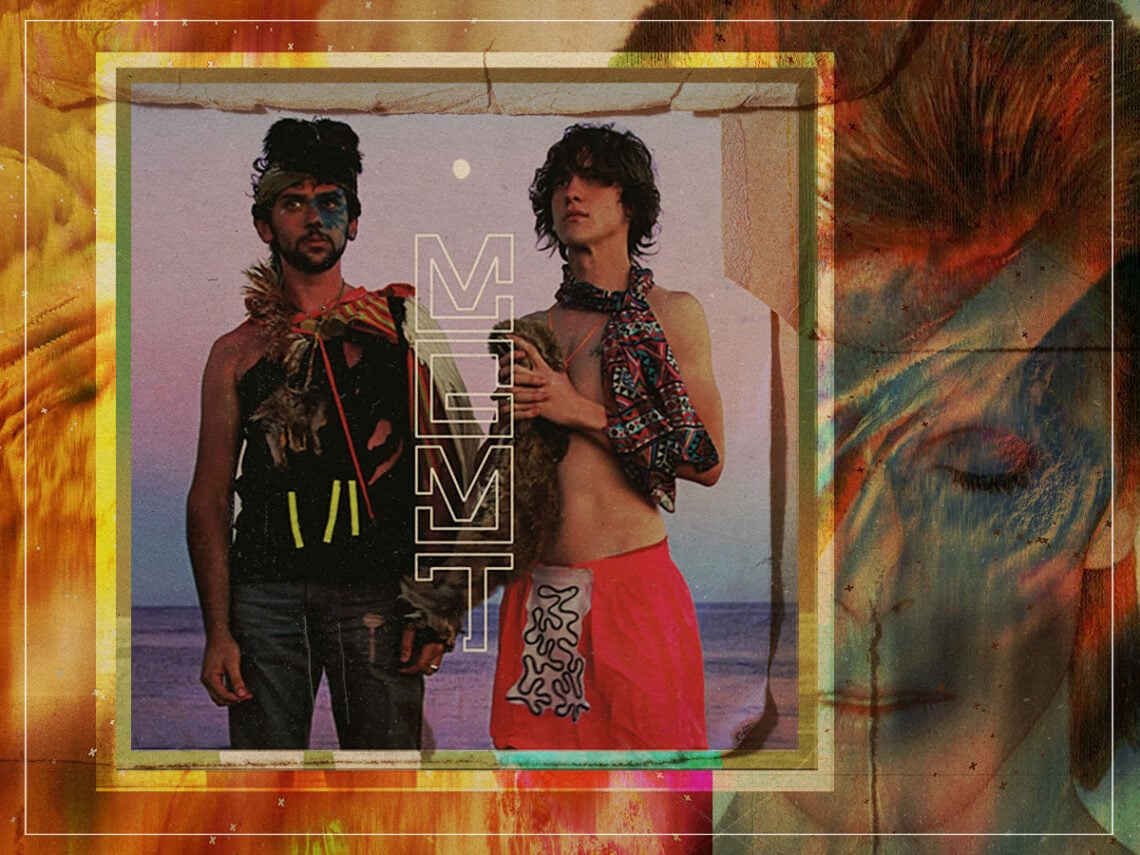
‘Time’ vs ‘Time to Pretend’: how MGMT proved indie is classic rock’s nihilistic child

“The time is gone,” Pink Floyd lamented in their anthem of anxiety over the wasted minutes. Bowie said, “Time, he’s waiting in the wings”, as though its passing is a looming villain. Bruce Springsteen sang of time as a river that lives are swept up in and carried away. Throughout classic rock, the threat of hours, days, months and years passing feels like sand slipping through fingers as if every single grain is an opportunity. But in 2007, MGMT were ready to take it all and throw it away as they presented ‘Time To Pretend’, their nihilistic ode to time wasting.
Back in the early days of rock, there seemed to be a prevailing belief that rock and roll could change the world. Rock stars took on a shamanic role, with figures like Jim Morrison, Mick Jagger, Robert Plant, and more acting like messiahs. Even during the “turn on, tune in, drop out” era of the 1960s and ‘70s, it felt like musicians were acting as shepherds, directing their heard into a brighter future. They believed they could build that as if the counter-cultural world of rock could expand into a better society of increased freedom, creativity, joy and liberation.
In that way, rock music was like a religion—a belief system to buy into. But even as the optimism of that faded at the turn of the decade after the 1960s when the hippies started to disappear, and events like the Altamont Free Festival or the Manson Family murders brought the joy of the era to a swift end, the lingering idea that time was precious and that music could make a difference prevailed.
The result seemed to be time anxiety that colours pieces like Bowie’s ‘Time’ or Pink Floyd’s track of the same name. As Bowie wails, “We should be on by now”, there’s a smothering guilty impatience to the work. It’s antsy, as if the singer should be doing something, such as finding some way to slow time or at least make use of it. Pink Floyd’s song has the same energy, with the relentless ticking sound haunting the back of the track.
“You are young, and life is long, and there is time to kill today / And then one day you find ten years have got behind you,” they sing as if passing on a warning to their fans or to the next generation of musicians. They see time as a race that you have to win, singing, “No one told you when to run, you missed the starting gun”.

Their songs are that starting gun. They shoot, yell, “Go”, and hand the baton to the next band. They’re constantly passing on this idea that time must be seized and used wisely, that the future depends on how musicians spend their day right now, that rock and roll, or even the world at large, must be saved day in and day out by effort and inexhaustible energy.
By 2007, the message couldn’t be more different. “There is really nothing, nothing we can do,” MGMT sing as they drop the baton and shrug. By the time indie took over, and the classic rock era was well and truly in the rear-view mirror, the towel was thrown in for a more nihilistic approach. Instead, bands like MGMT, Arctic Monkeys, The Libertines, The Strokes and beyond all seem coloured with a mindset that says fuck the past, fuck the future, it’s all about right now. Nialism had well and truly settled in as The Strokes rolled their eyes and asked, “Is this it?” while Alex Turner was busy singing of the various sights and sounds of random nights out in Sheffield with nothing much more philosophical than the ethics of mean bouncers and which girl he might take home.
For MGMT, time was something to be thrown away or burnt out in a blaze of glory. “Let’s make some music, make some money / Find some models for wives / I’ll move to Paris, shoot some heroin and fuck with the stars,” they sing as their life plan, which has no deeper mission than merely a good time. The anxiety that coloured the classic rock tunes is nowhere to be found as MGMT stare time down and sings, “Yeah, it’s overwhelming, but what else can we do?” They’re deciding to look away from its looming tick to instead “live fast and die young”, forgetting any grander plan or meaning to the minutes they get to spend on the earth.
Perhaps it’s a sign of the times. The differences between the 1960s and 1970s and the early 2000s are stark and brutal. With the turn of the millennium came streaming services that bled the music industry dry of its funds and global economic crashes that meant not only was the old rock star lifestyle now impossible for young artists, but in general, young people felt widely doomed. Pensions are out the window, politics is worsening daily, rent is going up and all the elders simply just keep saying “back in my day” as if it still applies. Perhaps it’s this disconnect from the glory days of the past and the turn to the bleak-looking future that meant that artists had to give in on the whole concept of time and embrace nihilism on the topic simply for their own sanity.
“We’re fated to pretend,” MGMT sing as they block their minds to the looming fear of time that used to plague the old rockstars. Instead, it’s all about right now, having a good time and existing in the joyously nihilistic knowledge that maybe all of this is meaningless, so it shouldn’t feel so heavy.
