


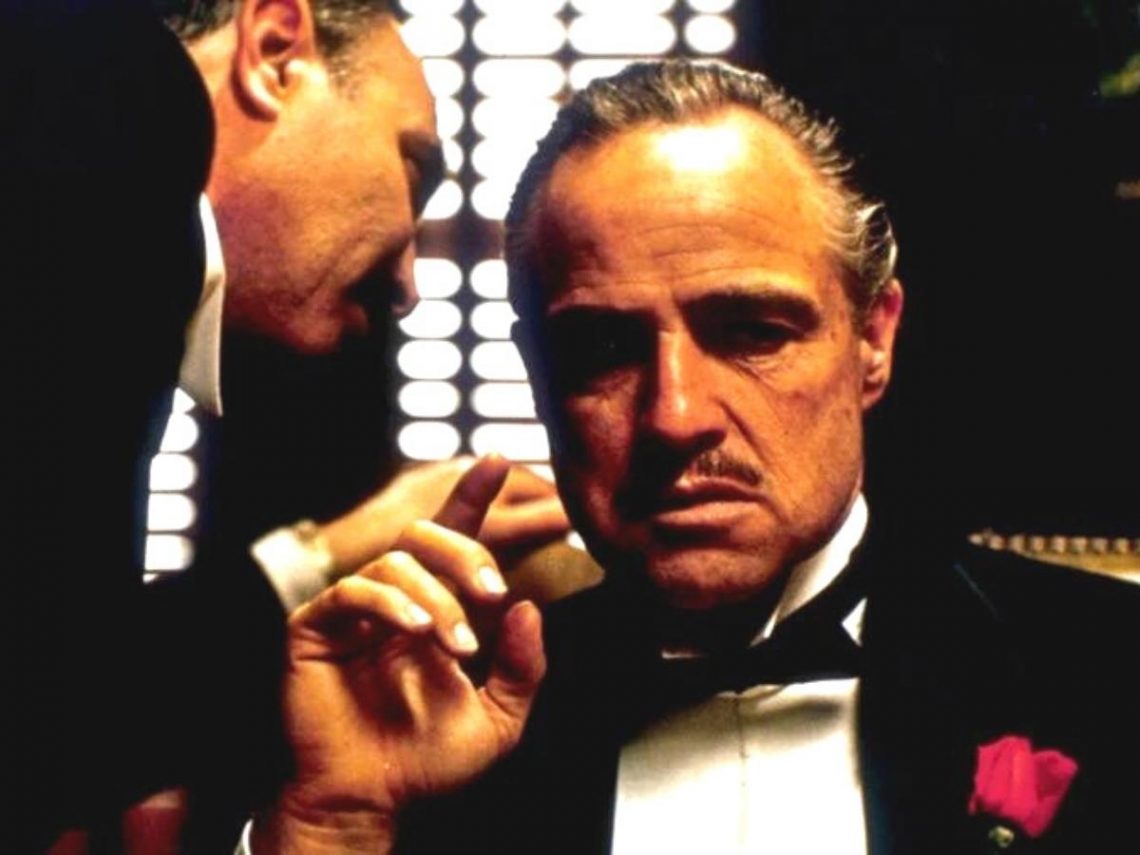
‘The Conversation’: the story of Marlon Brando’s rejection is connected to ‘The Godfather’

Marlon Brando and Francis Ford Coppola will forever be connected through their work on the pair of classic movies, 1972 The Godfather and 1979’s Apocalypse Now. The former is arguably the greatest crime film of all time, and it kicked off an eminent trilogy based on Mario Puzo’s novel of the same name. Written in tandem with Puzo, the series made stars of Al Pacino, James Caan and Robert De Niro, whilst also giving the middle-aged Brando his definitive role in a sea of timeless performances. Duly, the first Godfather picture is widely regarded as Coppola’s masterpiece, even eclipsing the more expansive – yet heavily troubled – production of Apocalypse Now.
Although Brando is connected to Coppola through his two performances in The Godfather and Apocalypse Now, he is also tied to one of the director’s most significant offerings, 1974’s The Conversation.
On one day in the early 1970s, Coppola was attempting to get the passion project The Conversation off the ground when he first came across Mario Puzo and his novel The Godfather. Remarkably, that same day, Brando called Coppola to turn down his offer to star in The Conversation. However, in some “cosmic” turn of events also on that day, all the pieces of The Godfather would come together. Eventually, Brando was cast as Don Corleone in the crime epic.
Coppola recalled to Cigar Aficionado in 2003: “I sold everything to put together this little bit of money, and we moved to San Francisco. We started an independent company, which we called American Zoetrope. One Sunday, I got a call from a guy named Al Ruddy and his partner named Gray Frederickson. These guys said, ‘We’re up here making a film with Robert Redford called Little Fauss and Big Halsy and we want to come see you’. The Sunday Times had just come and, as I was looking through it before they got to my house, I noticed a little ad in the book review. It was this stark hand and strings of a puppeteer and it said ‘Mario Puzo’s The Godfather’. I was drawn to it because I thought that sounds like some intellectual Italian writer, Mario Puzo. It was maybe like another Italo Calvino.”
He added: “I was looking at the ad and wondering, who is this Mario Puzo? Is that an Italian writer? I had no idea. The book looked like it was about power. I was attracted to it. While I’m looking at it, the doorbell rings and these two guys who were making the Redford film come in.”
The director continued: “I was trying to make a movie at that time, a more personal film called The Conversation. I had sent the script to Marlon Brando, whom I didn’t know at all. But I greatly admired and looked up to him. I’m looking at The Godfather ad, and I’m talking to these two guys who are making a film with Redford, and the phone rings. I answer the phone, and it’s Marlon Brando.”
“I hear the voice. I recognize it. He said [mimicking Brando’s voice], ‘This is Marlon Brando’. I said, ‘Gee, Mr. Brando’, ‘I read your script’, he says. ‘I think it’s very good. It’s not for me’. And I said, ‘I thought it could be an interesting character, you’re a wiretapper’. ‘You know, I thought it was good, but it’s just that I’m not interested’. I hung up the phone and I said, ‘My God! That was Marlon Brando’.”
Coppola concluded: “It’s very interesting that on that same day, without anyone knowing it, that Al Ruddy and Gray Frederickson would later be given this Godfather book, become the producers, and make the film. I had noted the ad for the book. And while Ruddy and Frederickson were in my house, Marlon Brando called me up. What a kind of cosmic thing is that, that on that one day all the pieces that were later to become The Godfather, came together. No one knew it. Brando didn’t know he was going to be in it, Ruddy didn’t know he was going to do it, I didn’t know I was going to do it. They all came together on that same day.”
