


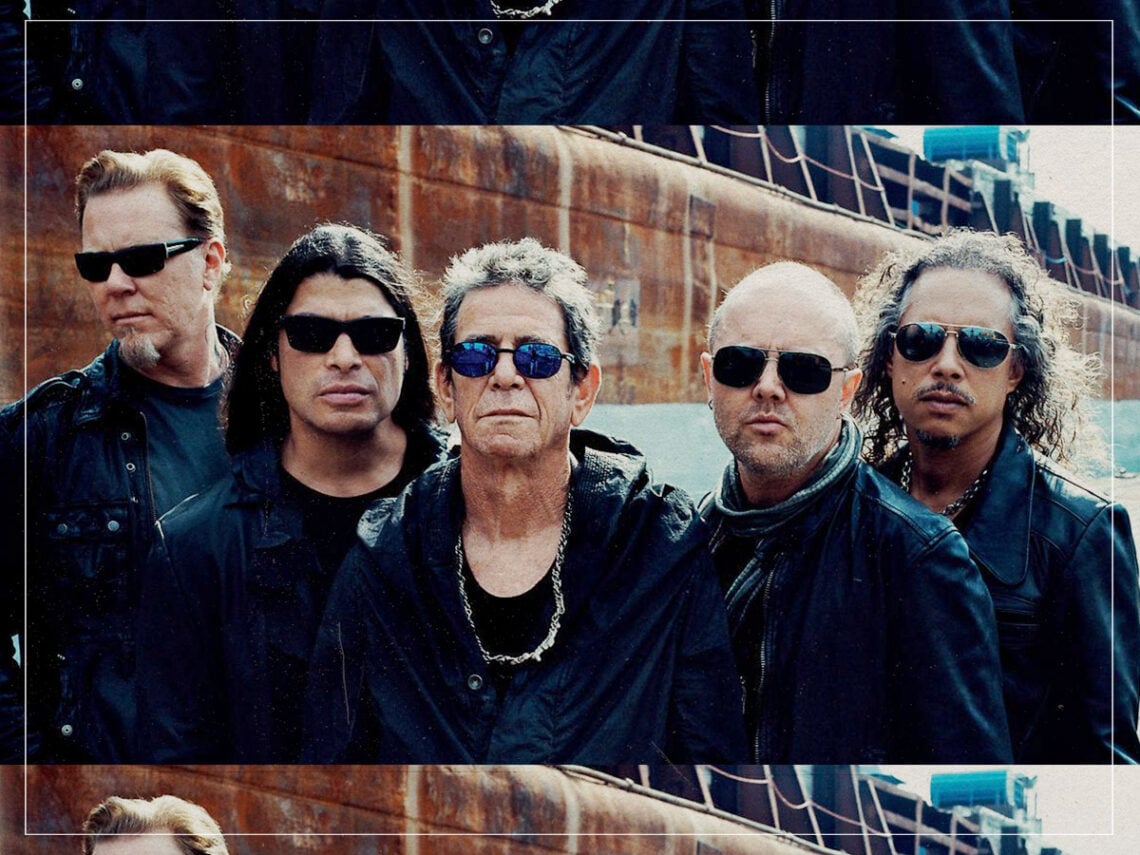
How Lou Reed became Lars Ulrich’s “musical soulmate”

In 2011, just one year after the world had suffered the collaboration of Snoop Dogg and Katy Perry, Metallica delivered the fruits of its own unholy alliance with the legendary Lou Reed—a joining of titanic rock and roll forces that a weirdly tiny number of people had ever imagined or wished for.
Did they call it “Reed The Lightning” and let Lou pontificate over some sick speed metal riffs? Sadly, no. Instead, Lulu was the album neither fan base had in mind, though no one could excuse it of being unambitious.
The 87-minute double album was inspired by the plays of 19th-century German dramatist Frank Wedekind, with Metallica crafting dark soundscapes under Reed’s jagged spoken-word narration. Reaction was swift and polarising, with some calling it an unmitigated disaster and others hailing it as audacious, high-concept art. For the actual members of Metallica, though, there was zero concern with the feedback coming in from the outside world: the collaboration had been a triumph on personal terms.
“We like being challenged,” guitarist Kirk Hammett told The Verge in 2013. “We like going down new creative avenues in the name of Metallica. . . . Working with Lou Reed was such a cool, unique, and special thing for us. Maybe it’s not for everyone. Maybe it’s a challenge for our fans, but for us — Lars, James, Rob, and myself — we loved doing it and it was such a great experience. We look back at it very positively.”
Lulu was decidedly not an “easy” listen, but that was never the point. Lou Reed’s loyal fans had endured plenty of provocation before (see: Metal Machine Music), and Metallica’s lifers had certainly weathered their share of curveballs, from that controversial haircuts album (Load) to the one with the weird drum sound (St. Anger), to all that Napster nonsense in the early 2000s. In that sense, the collaboration fit both legacies perfectly: it asked listeners to either take the leap or walk away.
For Metallica drummer Lars Ulrich—no stranger to going against the popular grain—the partnership with Reed went even deeper than provocation for provocation’s sake. In interviews, he often framed Reed as a kindred spirit—someone who embodied the same sense of defiance that had defined much of Metallica’s own career.
“I think we’re soul mates,” UIrich told Interview Magazine around the time of Lulu’s release, “In the fact that we come from a place of autonomy. We come from living and being in our own bubbles. We don’t play music-business games.
“Lou has never played any of those games,” Ulrich continued. “And we certainly feel left of center, outside the mainstream, and Lou has created the blueprint for that type of existence in music for 40 years. So, I think we’re musical soul mates, and for all the people that sit there and scratch their heads at this odd and strange collaboration, I don’t think that they really understand truly who we are as artists.”
And before you assume that Lars is getting a bit cocky, proclaiming that one of the architects of art rock is his musical soul mate, let it be known that the normally surly Mr. Reed was standing right next to Ulrich when he shared this observation, and rather than lowering his sunglasses in bemusement, he nodded in agreement and chimed in with this all-time nugget:
“These are my soul brothers,” Reed proudly proclaimed. “They are my spirit brothers. They are my metal brothers. There’s no ifs, ands, or buts about it.”
