


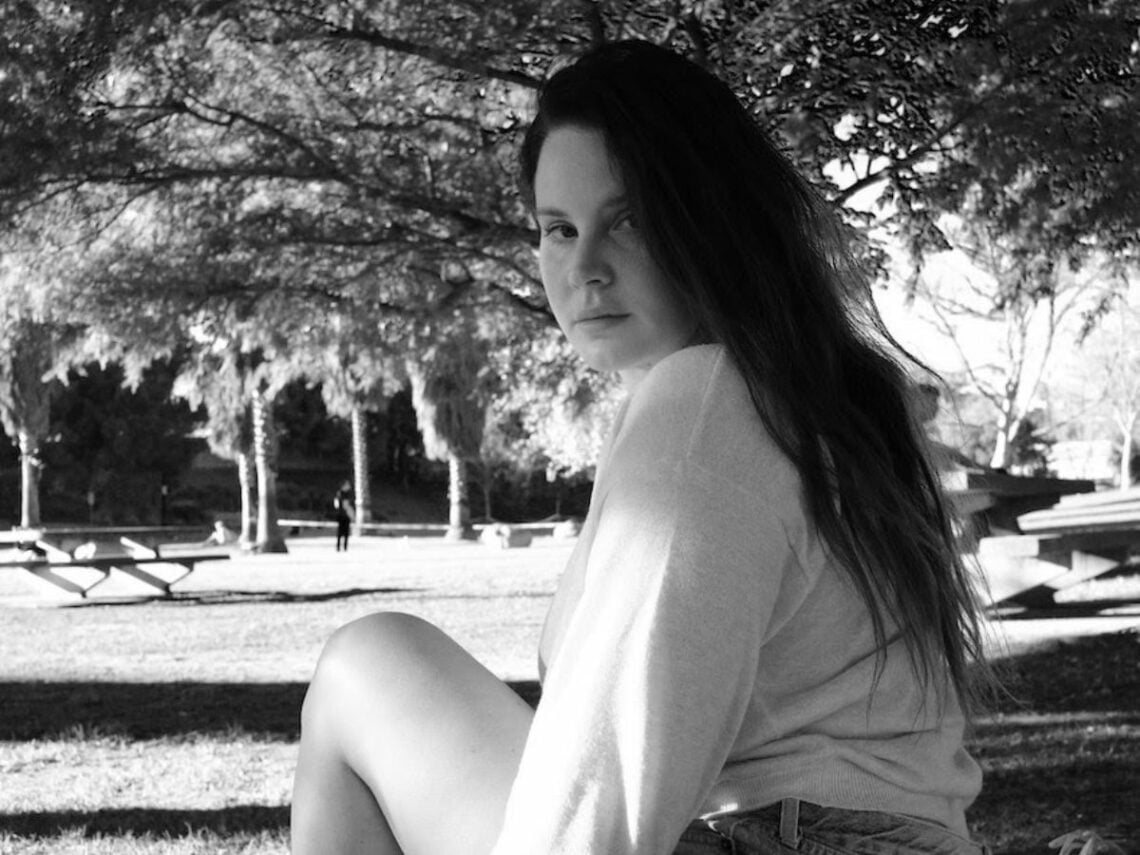
How Lana Del Rey turned Pinterest feeds into some of the most profound contemporary music today

There is an unusual dichotomy at play in the music of Lana Del Rey. She is undoubtedly a throwback figure relishing in her cultural role like Ava Gardner cast to portray a sullen classy pop star, but there is more to it than that. As you listen to her 1950s-laced beats you get the certified impression that her apartment is carefully littered with vinyl records, chic furniture, potpourri, French movie posters, faux vintage stovetop espresso makers, and evidence of stationery overspends. And yet there is hip hop bounding around freely, tales of ghosted texts, video games, modern-day man-child exorcisms, and scathing social media posts in the mix too.
This meeting of everyday modernity and the chic past is the triumph of her music—the two prongs that make it perhaps the most profound and important in the pop charts today. The contemporary prong gives it vitality and relevance while the bygone L.A. noir nostalgia clothes it in a dress of timeless elegance. If this was cinema – which it often feels like anyway – it would be a Golden Age period epic with plenty to say about the present; brimming with more refinement and self-awareness than Babylon, less camp fatuity than Baz Luhrmann’s point-missing The Great Gatsby, and none of the same pomposity and obviousness that hamstrung Mank.
In fact, what Lana Del Rey seemingly has most in common with amid modern pop culture is Pinterest. The site arose in 2009 and set itself up as a world away from social media as we know it. Users were able to curate their own online idealised identity via a smorgasbord of their unique interests alone. As you scrawled down a page you could jigsaw a mythical person out of the posts: Okay, so they like Sylvia Plath and other sad poets, they have a keen interest in bees, they love Seinfeld quotes (but possibly not the series), they don’t like people who like body-shaming, occasional tasteful nudes for edginess, and they have a keen eye for detecting the absurdity of local Facebook groups. All the while, you have absolutely no idea who they are.
The same can be said of Lana Del Rey’s music. Sometimes you find yourself thinking: ‘Who is the Lana Del Rey beneath all this? Does she even have a Country Club membership? What actually is her golf handicap? And does she really masturbate over the idea of James Dean?’ And then comes the line that stings like the ‘original post’ on the page that undercuts all the fantasy. These honest moments are glinting novel glimpses that not only add sting to the music but also make sense of it—bringing an air of sincerity to the vintage façade. (NB, “sting” as in potency not the lute-strumming former Police man and two-day shagathon fellow).
After all, what does our love of Lana and hours on Pinterest prove if not that we need nostalgic escapism and retro idealism more than ever to pull us away from the pitfalls of the nasty 21st century and fantasy-free daily grind? Pinterest happily let us reside in the prettiness of a glossed-over past while not ignoring the present, allowing for a little bit of engineered individualism and paradoxical anonymous identity extolling. And this anonymity allows for the user to couple daft, relatable observations of life like ‘I haven’t done a cartwheel since I was nine,’ with important points about feminism without feeling like one exists in a separate world from the other and should be kept apart for the sake of the argument (ala Twitter).
This is something the Norman Fucking Rockwell singer has also picked up on in her songwriting. Nuance is often where the true narrative lies—suddenly you stack something innocuous like a cartwheel alongside the judgement of society and it feels like an important point on our loss of innocence. Maybe user_my_third_house was making a similar point about the world growing less beautiful when they shared posts of a sepia-tinted Jack Kerouac making notes on a Greyhound bus, a drunk man being sick into a pram on the subway in 2013, and an excerpt from an article about Tar Sands in Canada in the same sequence.
Whether or not the crooning sensation took direct inspiration from Pinterest and its retro-modern ways when her rebranded music shortly followed the site’s launch is hard to tell and, ultimately, a moot point, because she is undoubtedly the Pinterest pop star of the 21st Century: classy, refined, carefully curated, and now with an 18+ log-in imperative. And this tact of tasteful timelessness, Thomas Pynchon-like illusory L.A. underbellies, poetry, personal pains and cherishing of cultural icons is a scrambled mood board for us all to enjoy; when it all adds together it shines a light on the real life and interests of the Lana behind it all and, in turn, the society in which she exists.
