


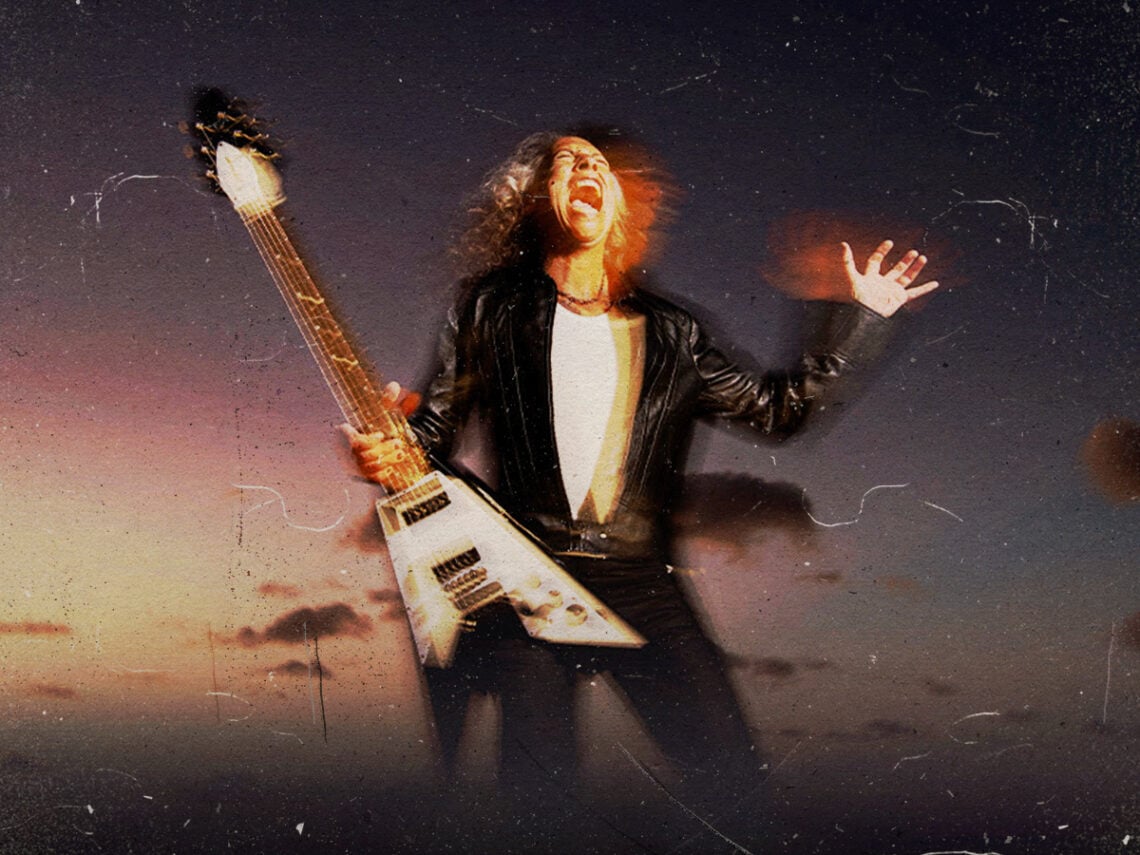
How Kirk Hammett’s favourite Kirk Hammett guitar solo “came out of the air”

In the 2006 football World Cup quarter-final, the German goalkeeper, Jens Lehmann, scrutinised a note glued to his water bottle before every Argentina penalty in the shootout. In the process, he made it clear that he had not only revised where they usually shoot, but that he had, effectively, brought his revision notes out onto the pitch with him.
Germany was the emphatic victor – the Argentinians had been thrown off their focus. As it turns out, he didn’t even have notes on most of the Argentine takers that day, but subsequent research has shown that simply getting to the penalty kick takers to (over)think was enough. The same is perhaps true for rock musicians.
The more highly trained you are, the more you ought to rely on your instincts. Kirk Hammett certainly found that to be the case. When musing over his greatest solos in the whole Metallica back catalogue, it is one that happened in a flash that proves to be of particular interest to the frizzy-haired frolicker.
‘One’ was being crafted late one night in the studio for their And Justice for All album in 1988. Those present sensed that they were onto a winner with the song capturing the musical breadth they had recently been striving for, building from softer, arpeggio tones into a more rollicking, heavy swell. It needed a suitable solo, though.
“Lars called me and said, ‘Can you come down? We need a solo on the new song demo,’” Hammett recalled when telling Metal Hammer about his favourite solos. “I remember showing up with my guitar, Lars played me the track a couple of times and I fiddled with it, figured out where James was going.”
Enthused, he continues, “I said, ‘OK, press record.’ Next thing I know, my hand is tapping on the neck, following the chord progression, it just came out of air! Afterwards I was thinking, ‘Well, that was kind of a trip!’”
In pretty much the same time that it took to listen to the demo, the rocker had cut the solo he remains proudest of to this day. He didn’t have time to overthink. As Miles Davis once said, “Do not fear mistakes. There are none.”
In truth, there are plenty of mistakes – you hear them in music all the time – but Davis’ endless training, coupled with that philosophy, meant that he was stumbling onto magic more so than mishaps. Hammett uncovered the same thing almost by accident, and it transformed his playing. Instinct now became his staple.
As he put it himself, “I don’t know what the fuck I’m going to play from the first lick, and I love that, I love knowing that I’m dancing on the knife-edge, that’s the excitement I fuckin’ live for.”
