


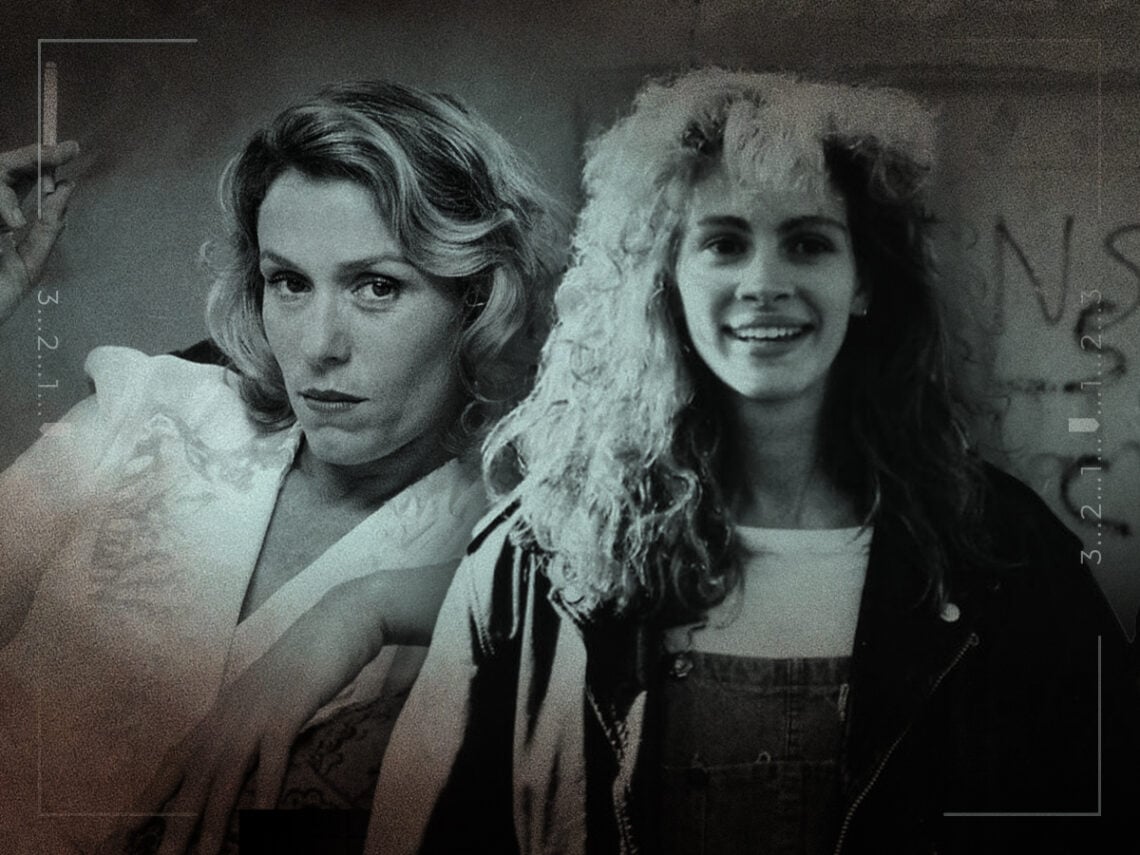
How Julia Roberts cleared a path for Frances McDormand to play the 1990 role she’d come to regret

In Hollywood, there’s always going to be last-minute casting decisions that completely change the course of a film, and you can never really be too sure when picking one actor over another is going to make or break a project. And sometimes, the reason for a certain star winning a role over another can be for the most trivial of reasons.
Here’s the thing with Hollywood: it’s a rather incestuous pool of who’s dated who, so it’s not out of the question that an actor will be faced with an ex-partner when going up for a role. All of a sudden, someone whom they’ve longed to forget is potentially going to be their colleague, someone they’d have to work with every day for hours on end, and perhaps even have some rather intimate scenes with.
You might be thinking, ‘Can’t an actor just put personal matters behind them for the sake of being professional?’ But actors are only human, at the end of the day, and the prospect of having to kiss, or even film a sex scene, with your ex is enough to send a cold shiver down most people’s spines. Even when a large pay cheque is on offer.
This was the case for Julia Roberts, who found herself up for a role alongside her ex-boyfriend Liam Neeson in 1990, just as she was rising to fame following the success of Steel Magnolias. She was considered for the part of Julie Hastings, an attorney who also serves as a love interest to Neeson’s superhero in the Sam Raimi film Darkman. It soon proved to be a role she just didn’t feel able to take on.
“Julia Roberts came in. The studio was pushing for Julia for a number of reasons,” producer Robert Tapert told The Hollywood Reporter. The actor would, of course, bag Pretty Woman that year instead, which was the key to launching her as a proper Hollywood leading star, so clearly her reluctance to appear opposite Neeson was for the best.
“She and Liam had dated briefly and were broken up,” casting director Nancy Naylor explained, “When they read the audition scene together, both actors had tears in their eyes. It was so intimate. Right after, her agent called and said she felt it might be better if she was taken out of consideration. I think she felt it would just be too awkward for them to work together again so soon under the circumstances.”
Francis McDormand was thus cast in the part, and while the movie received acclaim, she couldn’t help but look back on her experience of making the movie with a certain regret. “With Darkman, by the way, I really missed an opportunity,” she told Tod Lippy, “I could’ve had more fun, the same way Sigourney Weaver had fun in Alien and Kathleen Turner had fun in Romancing the Stone. I was taking it too seriously.”
The actor also felt like her character wasn’t properly fleshed out, adding, “Sam kind of cast me because he wanted to answer the criticism of not ever having three-dimensional female characters in his stories. It didn’t work, though, because I didn’t find the dimension of positive silliness that has to go along with the ‘damsel-in-distress’ role.”
Darkman might not have been McDormand’s favourite performance from earlier in her career, but it hardly held her back. Roles in classics like Short Cuts and Fargo soon followed, the latter winning her an Oscar.
