


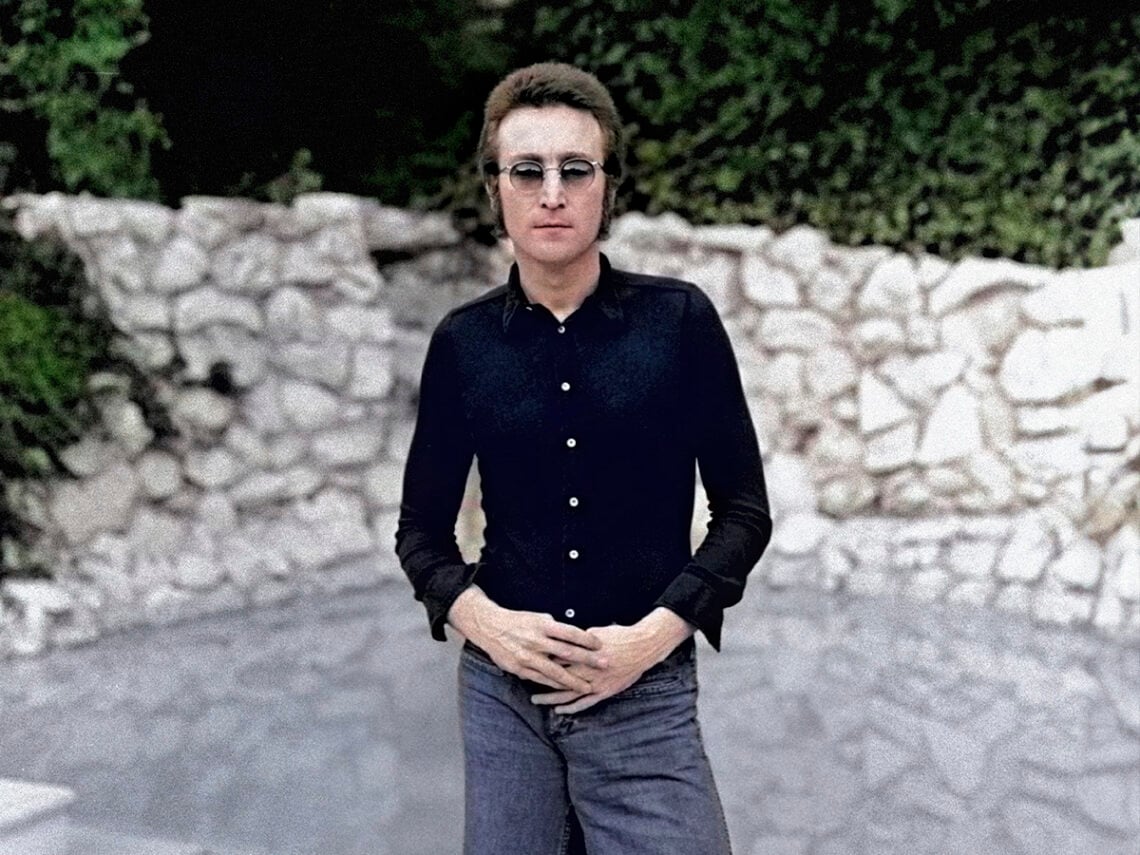
“All these songs came”: How John Lennon found creative inspiration in Bermuda

Picture the scene: it’s June 1980. A Long Island yacht sails through an Atlantic storm, ringed by waves that swell like hills, some to 20 feet high. Perhaps unexpectedly, above deck and steering from the helm, bellowing sea shanties over howling 65mph winds, is former Beatle and then-globally renowned artist John Lennon.
The 1970s had been a tumultuous decade for Lennon. After leaving The Beatles in 1970, he moved to New York in 1971, facing a two-year-long deportation effort by the Richard Nixon administration due to his anti-war advocacy. After separating and later reuniting with his wife Yoko Ono, Lennon sought solace in family life on Long Island. Dogged by depression and substance abuse issues, he decided to semi-retire from music and learn to sail under the tutelage of local yachtsman, Tyler Coneys.
For many musicians, the economic hardship and political upheaval of the 1970s had sown an atmosphere of cynicism, resulting in genres like punk rock, which had overshadowed the optimism of the 1960s. Lennon—like many artists—was probably searching for a sense of optimism or just a creative spark that would reignite his artistic mind. He found it in an unusual place when a Tarot consultant told him to journey in a southeasterly direction.
Not one to decline a challenge, Lennon chartered a 43-foot sloop called the Megan Jaye and set sail for Bermuda with a crew of five: Tyler Coneys and his two cousins, plus experienced sailor Hank Halstead. After a 700-mile journey, primarily characterised by raging storms, the crew docked in St George’s Harbour. Lennon’s mind was already buzzing from that close encounter with the incredible power of nature. He later said that he’d felt like Jason leading the Argonauts, from Greek myth. All that remained was for him to find his own version of the mythical Golden Fleece.
Lennon rented a house in The Fairylands – a village on Bermuda’s Spanish Point peninsula. Moving in, he found himself surrounded by quiet, pastel-coloured streets and greenery. Bermuda wasn’t entirely like America or England. It was a place in between: a limbo space, with red post-boxes and English street names, but a tropical climate similar to the Caribbean. We can easily imagine Lennon thinking back to his childhood in England. In doing so, who knows, he may well have regained some of the childlike curiosity that for many artists is conducive to creating music.

Two or so nights after his arrival, Lennon visited the 40 Thieves nightclub in Hamilton. Striking up a conversation with club owner Tony Brannon, he noticed the song playing at the time: ‘Rock Lobster’, by The B-52’s. He told Brannon that it reminded him of the music he’d made over the years with Yoko Ono.
If any band best exemplified the incoming experimentalism of the 1980s, it was probably The B-52’s. They had taken Punk in its nascent form and thrown it into the future, becoming known alongside bands like Talking Heads for their angular riffs, groovy synths, and insightful, irreverent lyrics. We can’t say for sure how much the band influenced Lennon on that night, but their uniqueness was bound to have sparked something inside of an artist as forward-thinking as him.
During his two-month stay in Bermuda, Lennon wrote roughly 30 songs, corresponding via telephone with Ono, who was in New York. He also collaborated with local talent, like drummer Andy Newmark. Often, the songs were vaguely similar to The B-52’s in tone, featuring angular instrumentation and joyful, lyrical irreverence.
Later, Lennon had his four-year-old son Sean come out to see him. The pair spent lots of time exploring those serene, winding streets, sometimes venturing into green spaces like the Bermuda Botanical Gardens.
It was there that Lennon found his ‘Golden Fleece’, and a title for this emerging project: Double Fantasy – named after a species of freesia flower. For Lennon, that title said something about his marriage to Ono: two ‘fantasies’, or dual worldviews, that had collided and never perfectly melded together, but they co-existed all the same.
That trip to Bermuda in summer 1980 and later, the November 1980 release of Double Fantasy, was Lennon’s creative swan song, before his murder in December 1980. Still, the album tells a memorable story: one of an artist who made a quiet peace with his life’s turbulent events. Seeing a new musical era approach, he created a paean for both his marriage and music, which, together, had defined much of his life up to that point.
