


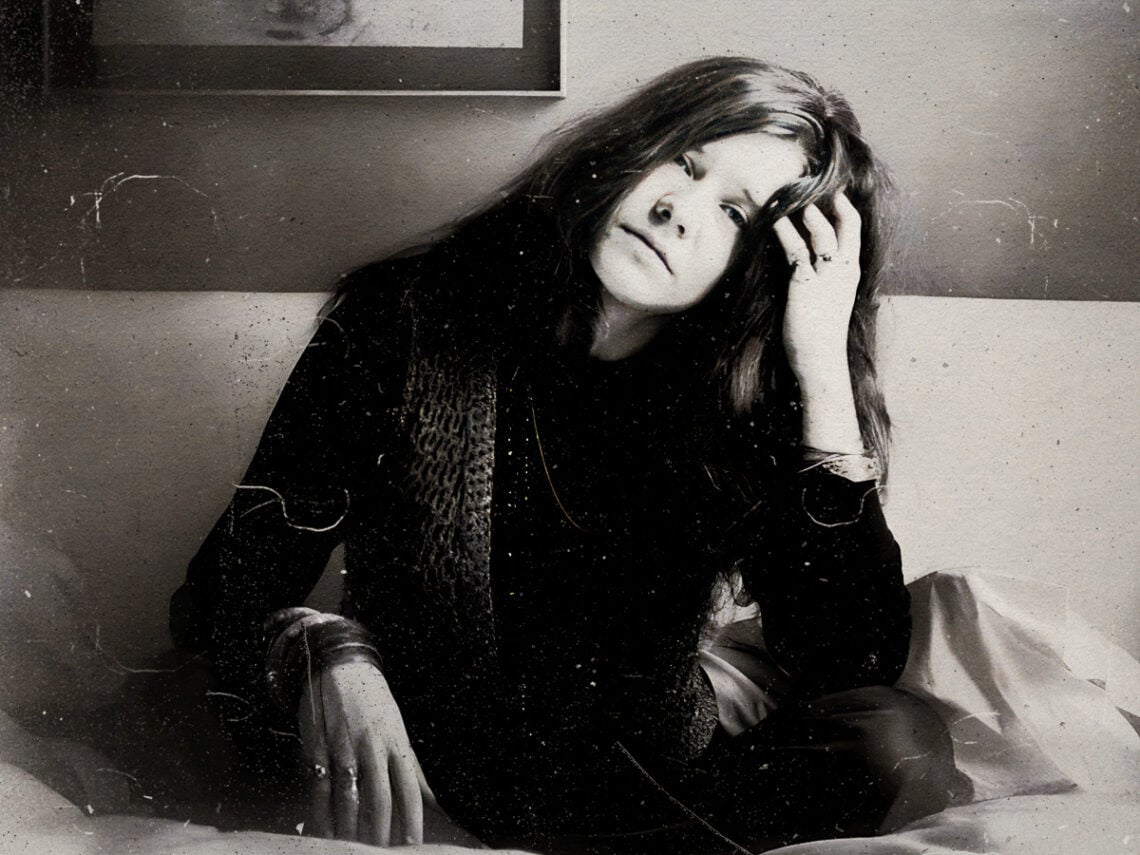
“You are what you settle for”: Janis Joplin’s defiant battle against insecurity

At almost any moment in music history, any female artist’s rise to fame is almost always defined by the chauvinistic nature of the male gaze or their male peers. Even some of our biggest current artists have been subjected to such challenges, making industry prejudice reign supreme even in the most progressive and unsuspecting corners. Janis Joplin, too, faced stereotypes and expectations throughout her entire career.
From day one, most of these views came from people who took issue with how Joplin presented an authentic version of herself through her art. After all, for a woman in music to appear so bold and confident wasn’t something others accepted so willingly, and her self-assured demeanour baffled many audiences. However, perhaps more powerful than that was how it set other female rock stars on a path to immense self-discovery and confidence.
Stevie Nicks, for one, sought comfort in Joplin’s ability to stand tall in a male-dominated industry while utilising her own experiences as a firm grounding that she deserved to be there just as much as everybody else. As Nicks told The Telegraph in 2011, “From Janis, I learned that to make it as a female musician in a man’s world is gonna be tough, and you need to keep your head held high.”
However, while Joplin knew she had the talent and drive to make it, many of the reasons certain comments or situations landed her on the brink of hot water were because of her honesty. Her abruptness sometimes came across as a stunned ploy to defend herself or her choices. More often than not, however, Joplin just wanted to set the record straight, no matter how her words might have been misconstrued.
Addressing these subtle insecurities with Howard Smith, she admitted her strength while claiming, “It really hurts if someone doesn’t like me.” This is something that most, if not all, musicians go through, but for women in particular, learning about someone else’s disapproval can spark a dangerous journey towards imposter syndrome. Joplin has had her share of such an experience, but she never let it stop her from writing her truth.
“Girls want to be reassured,” she said, “Which is not to say that all people don’t. But, I think women especially, even though I know those are just [people] who don’t know what they’re talking about. I just try to continue with my music. It was really important to me, whether people were going to accept me or not.” When pressed about how she responds to others criticising how upfront she was sexually, she added: That’s their problem, not mine. You are what you settle for.”
While some felt honoured at being at the receiving end of Joplin’s honesty and unpredictability, others found her confidence overbearing, which, as Joplin notes, was merely a manifestation of the shortcomings of others rather than anything genuinely critical about her or her work. In a way, this made her immune to pretence, even when others attempted to blanket her in it.
