


‘Pictures of Matchstick Men’: How the industrial north of England shaped a psychedelic classic

No matter how committed a hater you are to Status Quo’s meat and potatoes boogie rock, most will make one giant exception for their markedly different debut single.
Back when they had a “The” at the beginning of their name, Francis Rossi and Rick Parfitt were scoring psychedelic guitar stompers replete with flanging effects and lysergic garage strut, all donned in the flower power clobber of the day’s swinging counterculture. ‘Whatever You Want’, it wasn’t. Quickly, Status Quo’s early, far-out pop wouldn’t enjoy chart success, prompting a move toward their denimed three-chord chug across the 1970s.
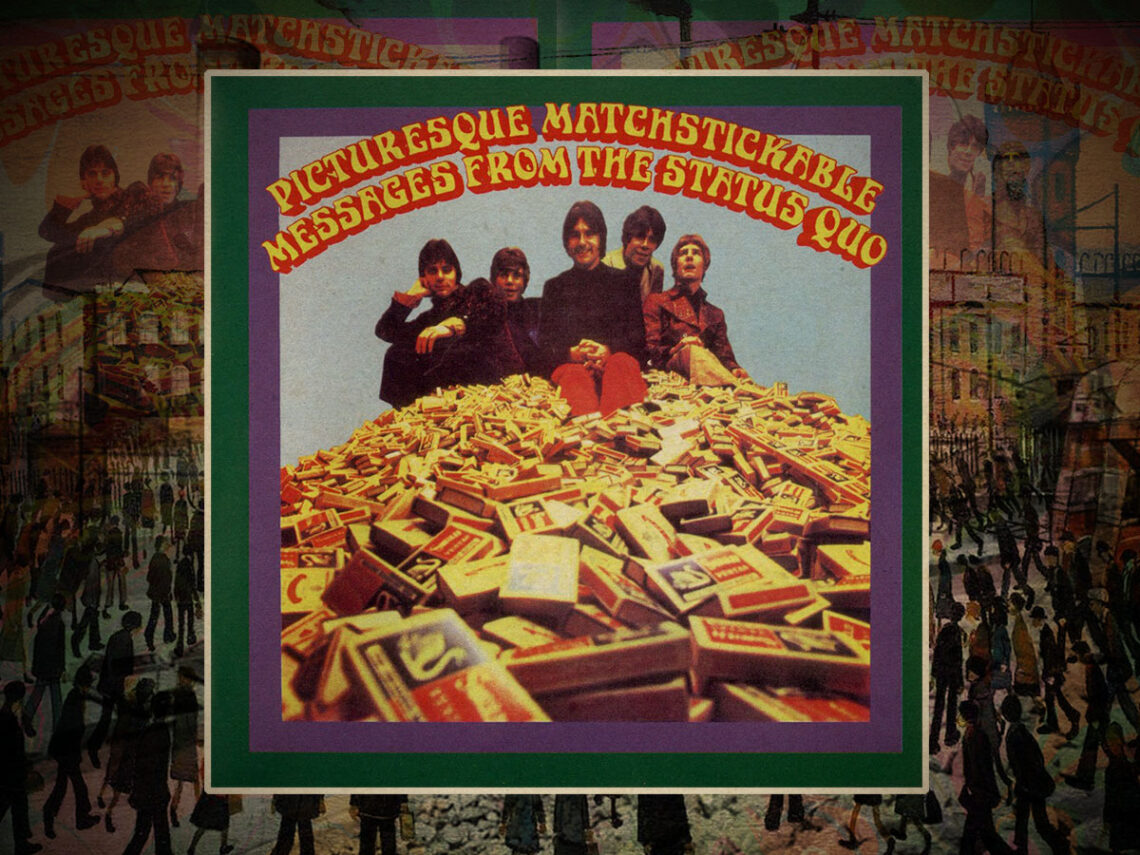
They struck gold with 1968’s ‘Pictures of Matchstick Men’, however. Status Quo’s first single and leading Picturesque Matchstickable Messages from the Status Quo, Rossi penned a shimmeringly infectious psychedelic gem of wah-guitar groove peppered with the lyrically surreal vignette of an alluded ex-lover and her nebulous presence among the many “matchstick men” that populate Rossi’s trippy landscape.
According to Rossi himself, ‘Pictures of Matchstick Men’ was largely written in the bathroom to escape his wife and in-laws. For the song’s peculiar figures, Rossi took inspiration from a celebrated Lancashire artist well-known for their capturing of the industrial north.
It’s not obvious thematic guidance for a psychedelic conjuring. Known for his muted and monochromatic colour scheme, LS Lowry’s works featured a perennial fascination with the working-class districts of mid-20th century life, often depicting vast crowds navigating his characteristic grey shroud.
While never shying away from the drab reality that casts its forlorn shadow across the urban landscapes, Lowry’s stick figures run a strange gamut of emotions between isolation and solidarity, on one hand a flat-capped proletariat lost amid the chimneys and factories of the industrialised world, but also possessed with a post-war solidarity that valued a class and community sharing the same vision for its own trajectory.
Much of Lowry’s work bottles the stark soul of the north’s working spirit. Going to the Match depicts the matchstick men off to a Bolton football game, Coming from the Mill shows his figurines leaving a day’s work at the Pendlebury textile factories, and a mass of coated stick people congregate at the Mather & Platt engineering works in Manchester‘s Newton Heath for his defining Going to Work oil on canvas.
Such earthy and poignant pieces offered Rossi an intriguing terrain to ‘Pictures of Matchstick Men’s faintly melancholy air, lacing a forlorn edge under the acid guitar licks that perfectly score his wistful ache over a past lover’s new life among the sea of stick folk unknown to him, yet each filled with a life as complex and vivid as his own.
In a strange way, Status Quo’s greatest song illustrates Lowry’s sensibilities perfectly. “Some critics have said that I turned my figures into puppets, as if my aim were to hint at the hard economic necessities that drove them,” the celebrated artist once said. “To say the truth, I was not thinking very much about the people. I did not care for them in the way a social reformer does. They are part of a private beauty that haunted me. I loved them and the houses in the same way: as part of a vision.”
