


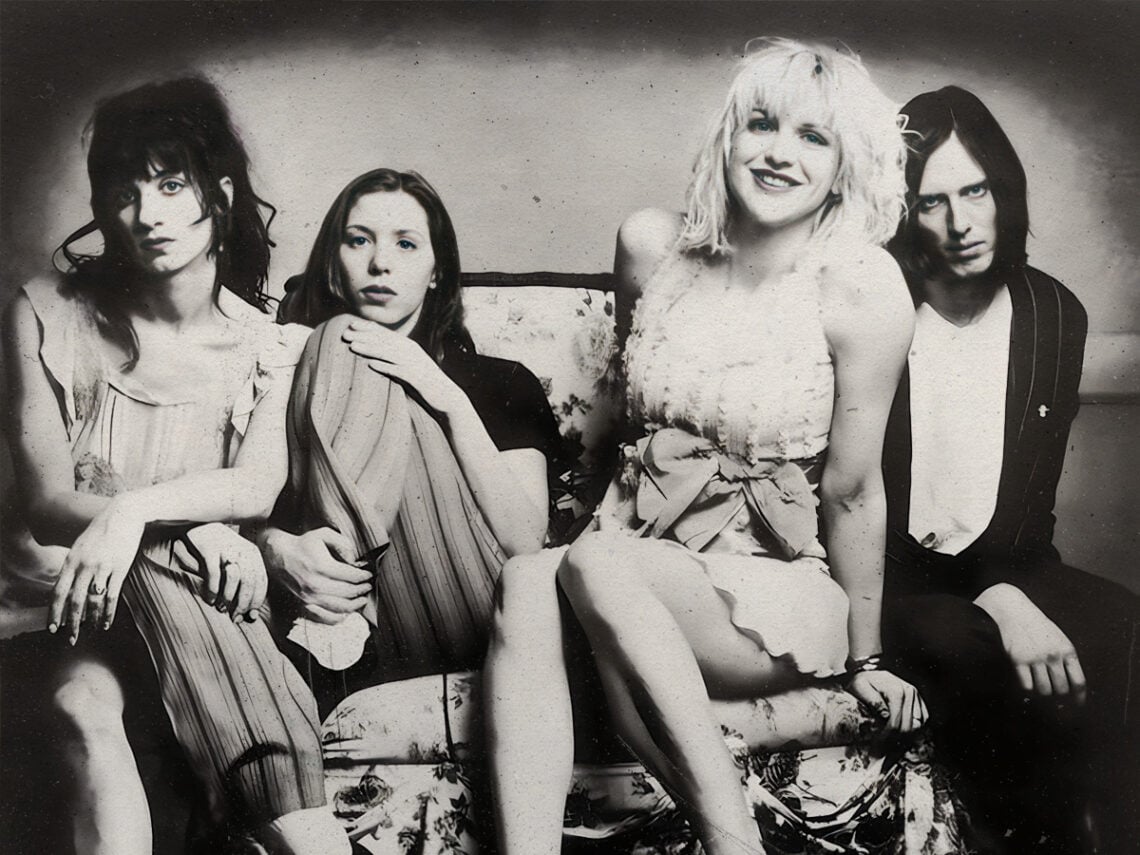
“We never finished”: The story of how Hole wrote ‘Live Through This’

“And the sky was made of amethyst,” Courtney Love sings in the opening line of ‘Violet’, the introduction to Hole‘s breakthrough second album, 1994’s Live Through This.
For far too long, Hole’s reputation was marred by gossip fodder – and unfortunately, this remains true today. The media sensationalised Love’s life: her marriage to Kurt Cobain and their daughter, Frances, became sources of speculation, as did her brazen attitude on-stage and off. As Nirvana completely revolutionised popular culture, Hole became an unwilling footnote to their legacy. But Love wouldn’t allow it for long.
“I was very competitive with Kurt [Cobain] because I wanted more melody,” Love explained to Spin. “But I already wanted that before Live Through This.”
As the pressure to compete with the success of Nirvana’s Nevermind continued to mount, Love was determined to prove her artistry and solidify her reputation as a musician, beyond the media’s immediate equation of her talents with those of her husband.
“I want this record to be shocking to the people who don’t think we have a soft edge,” Love declared, “and at the same time, [to know] that we haven’t lost our very, very hard edge.”
Live Through This, then, became an album of personal reckoning and survival, against both public and personal demons, as well as unwarranted opinions and characterisations of Love and her bandmates. Adorned with the unforgettable photograph of an ill-fated prom queen, Live Through This is one of those albums that permanently linger in your mind from your first listen. Each chord, each drum beat and each of Courtney Love’s screams continue to ring, with the lyrics sinking into your consciousness like a pit in your stomach, unapologetically confrontational in their reckoning with violence, misogyny, motherhood, body image, depression and more.
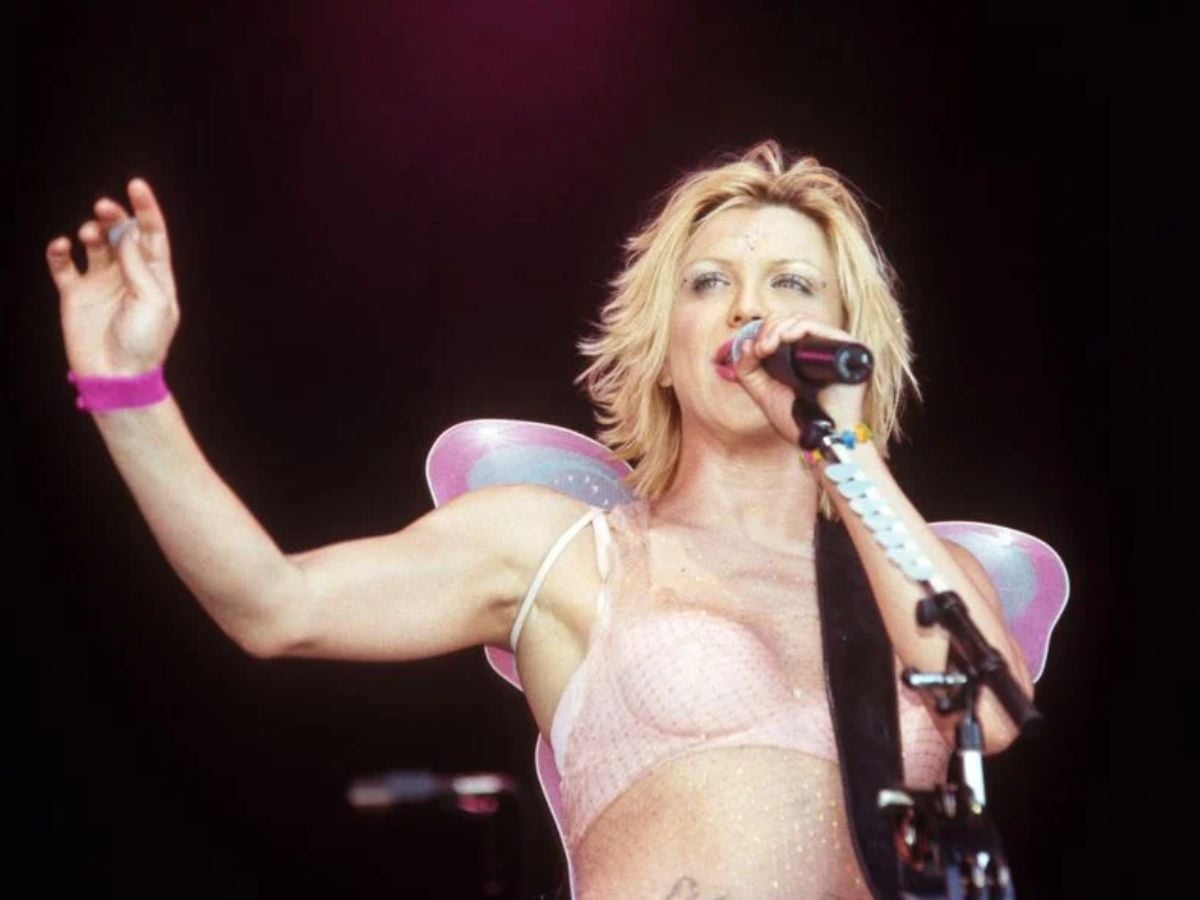
Despite the heaviness of the lyrical content, Love remembers the songwriting process for Live Through This as “really easy”. She began writing in Los Angeles, writing ‘Violet’ at Jabberjaw, a bygone punk club. In Cambridge, Massachusetts, she wrote the legendary declaration, “I want to be the girl with the most cake,” on the acoustic-led ‘Doll Parts’, in the bathroom of Joyce Linehan, a former punk promoter. “That one was easy,” Love recalled to Spin, later telling Billboard that she had to write the lyrics on her arm with a Sharpie when she ran out of paper.
The band eventually found their way back to Seattle, when, as Love remembers it, she wrote ‘Miss World’, a song reflecting the tortured prom queen with the immortal chant, “I’ll make my bed, I’ll lie/die in it.” As Hole’s drummer, Patty Schemel, remembers, the brutal ‘She Walks On Me’ was written in the laundry room-turned-studio of Love’s Seattle home with Cobain.
“Hold you close like we both died / My ever-present suicide,” Love shouts against abrasive guitars and drums, “My stupid fuck, my blushing bride / Oh, tear my heart out.”
Then came ‘Jennifer’s Body’, a harrowing tale of abuse. “Me and Courtney went up to San Francisco when Kurt was working with the Melvins on Lysol,” Schemel recalls. “We went in and messed around, and came up with ‘Jennifer’s Body’.”
As guitarist Eric Erlandson describes, the writing process for Live Through This was endless. “We never finished writing,” he explained, “we were writing the whole time, trying to come up with more and more songs because even though it looked like we had a good, solid album, we knew we were missing some pieces.”
The initial five songs grew into 12, with songs like the scathing ‘Gutless’ and the chilling ‘Asking for It’ making their way onto the tracklist, during the recording sessions, the latter of which also featuring backing vocals from Cobain, lingering in the background.
Cobain would take his own life one week before the release of Live Through This, a tragedy that left an unshakeable presence on the album. Two months later, Hole’s bassist, Kristen Pfaff, also suddenly passed away. The album, then, was afflicted by devastation from its inception, but in the wake of grief, Hole and Live Through This persisted. Released on April 12th, 1994, the album amplified as a beacon of reclaiming power against all odds and in her lyricism, Love chronicled the dual beauty and violence of womanhood, the struggle between performance and authenticity.
“I put a lot of energy into the music because it was the place I could put my energy,” she explained, concluding, “And the title of the record is not a prediction of the future. It’s like, fucking live through what I already lived through, you motherfuckers! It wasn’t meant to be about anybody dying. It was about going through fucking media humiliations like this. You try it – because it ain’t fun.”
