


How Genesis P-Orridge is “responsible” for Billy Idol

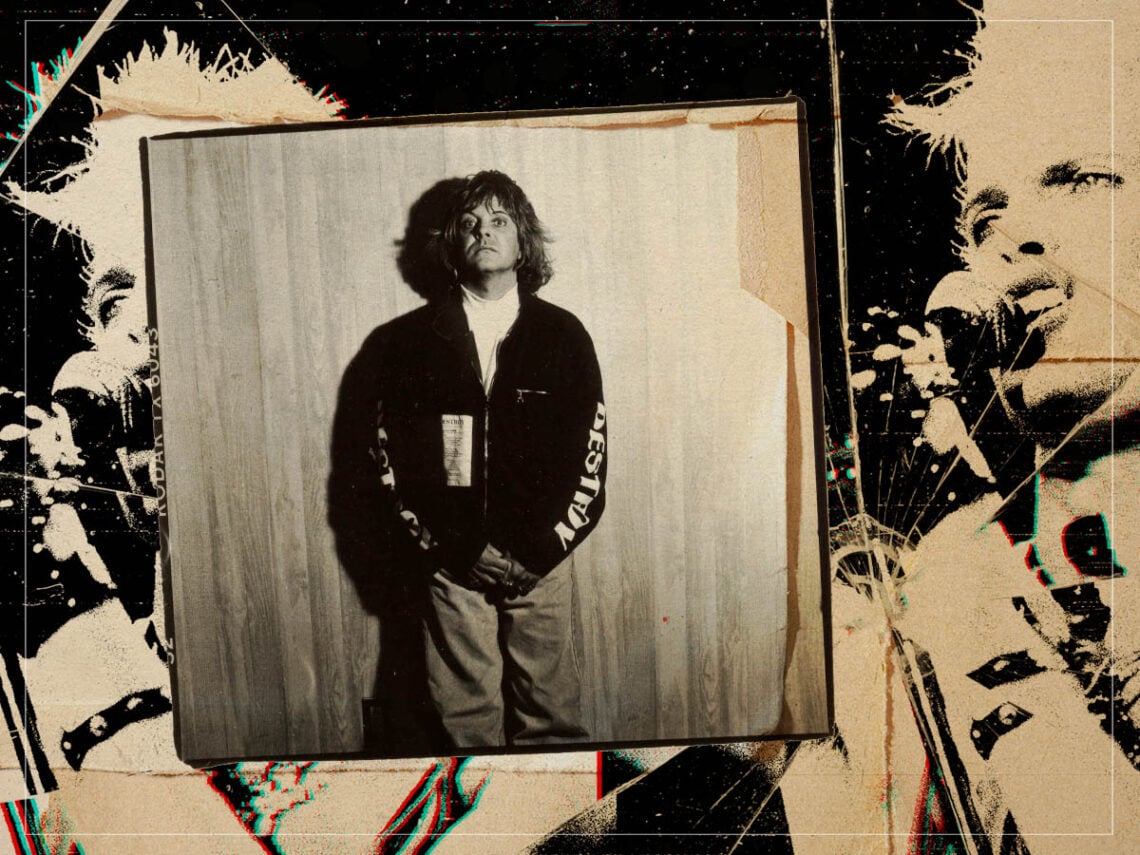
The late Genesis P-Orridge lived quite a life. From being one of the founders of industrial music to creating a real-life minefield in Bradford, their day-to-day existence was as boundary-pushing as the music they made. Their list of artistic achievements and cultural innovations is extensive, but one thing that most are unaware of is that the Throbbing Gristle leader claimed that they were responsible for Billy Idol – responsible being the keyword here.
The 1970s was a time of immense creative cross-pollination. Just as in the latter half of the previous decade, those who had been at the forefront of artistic expression continued to be transgressive and move with the ever-evolving times. Outgrowing the boundary-pushing performance art collective COUM Transmissions they had been in during the late countercultural period, P-Orridge and Cosey Fanny Tutti formed Throbbing Gristle in 1975. They were later joined by Hipgnosis partner Peter ‘Sleazy’ Christopherson and Chris Carter to round out the lineup.
Throbbing Gristle, a trailblazing music and visual arts group, challenged the day’s musical and societal standards with their sonics and aesthetics as they sought to create an unbridled and brazen new form. For this reason, their music was more confrontational and transgressive than anything anyone had ever heard, going much further than what The Velvet Underground had done in the previous decade. P-Orridge once explained: “… Up ’til then, the music had been kind of based on the blues and slavery, and we thought it was time to update it to at least Victorian times—you know, the Industrial Revolution”.
Given Throbbing Gristle’s pioneering transgressive work during the mid-1970s, some have seen them as forebears of the punk movement, but they were not. They saw themselves as an entirely distinct entity, on a different path, despite them and the first wave of punk’s dedication to overthrowing suffocating musical and cultural traditions. Demonstrating the stark musical distinction, Throbbing Gristle’s work was wholly untried and sought to reflect the essence of the forthcoming technological age and the members’ relationship to this world. In contrast, punk was essentially back to basics rock ‘n’ roll, something Throbbing Gristle deemed too conventional.
However, as this was an age of innovators rubbing shoulders, P-Orridge would have an impact on the world of punk, whether they liked it or not. They revealed it all when speaking to Nardwuar in 2016 when it was put to P-Orridge that the punk clothing store Acme Attractions on London’s King’s Road was what got them into punk.

In true form, they rejected that, saying, “We’ve never been into punk; it’s too traditional.” The shop didn’t even expose them to punk, they maintained, correcting the narrative. “Myself and Sleazy were commissioned to re-design Acme Attractions, and we called it Boy, and to this day, Boy the brand is still going. We got paid £60 to design the shop, come up with the logo, and the name and the brand and everything. But, the person who exposed me to punk was Soo Catwoman.”
A key member of London’s early punk culture, Susan Lucas, better known as Soo Catwoman, was one of the most distinctive figures of the movement. She was a friend of the Sex Pistols, the muse of photographer Bob Gruen, and her iconic cat-influenced haircut even influenced The Prodigy frontman Keith Flint’s years later. She also happened to be P-Orridge’s girlfriend for three years. It was through her that P-Orridge got to see many of punk’s pioneers, such as The Jam and The Damned, in their early forms.
Asked if it was true that P-Orridge auditioned a young Billy Idol – then known by his real name as William or Bill Broad – they confirmed it was. “Yes, we did,” they replied, “Oh, what a terrible thing we’ve done.” In another reflection of the close-knit nature of the era, P-Orridge’s friend from university was John Krivine, who just so happened to own Acme Attractions. He wanted a band to rival the shop group of the other punk store on the King’s Road, Malcolm McLaren and Vivienne Westwood’s Sex.
Krivine had decided that this group would be called Chelsea and asked P-Orridge to audition members. The auditions took place in a warehouse where Krivine stored old jukeboxes, and a variety of would-be members came to try out. One of them stood up and confidently said his name was Bill Broad, and he wanted to play rhythm guitar, and P-Orridge turned to Krivine and said, “He’s a natural. Pick him.” They then chose the rest of the group.
Of course, Chelsea in that state wouldn’t last long, with Broad, who had become Billy Idol, bassist Tony James, and drummer John Towe leaving to become Generation X. That was the start of Billy Idol’s long route to becoming a global star. “In their first official biography, they (Generation X) credit me with having pulled them together,” P-Orridge concluded.
