


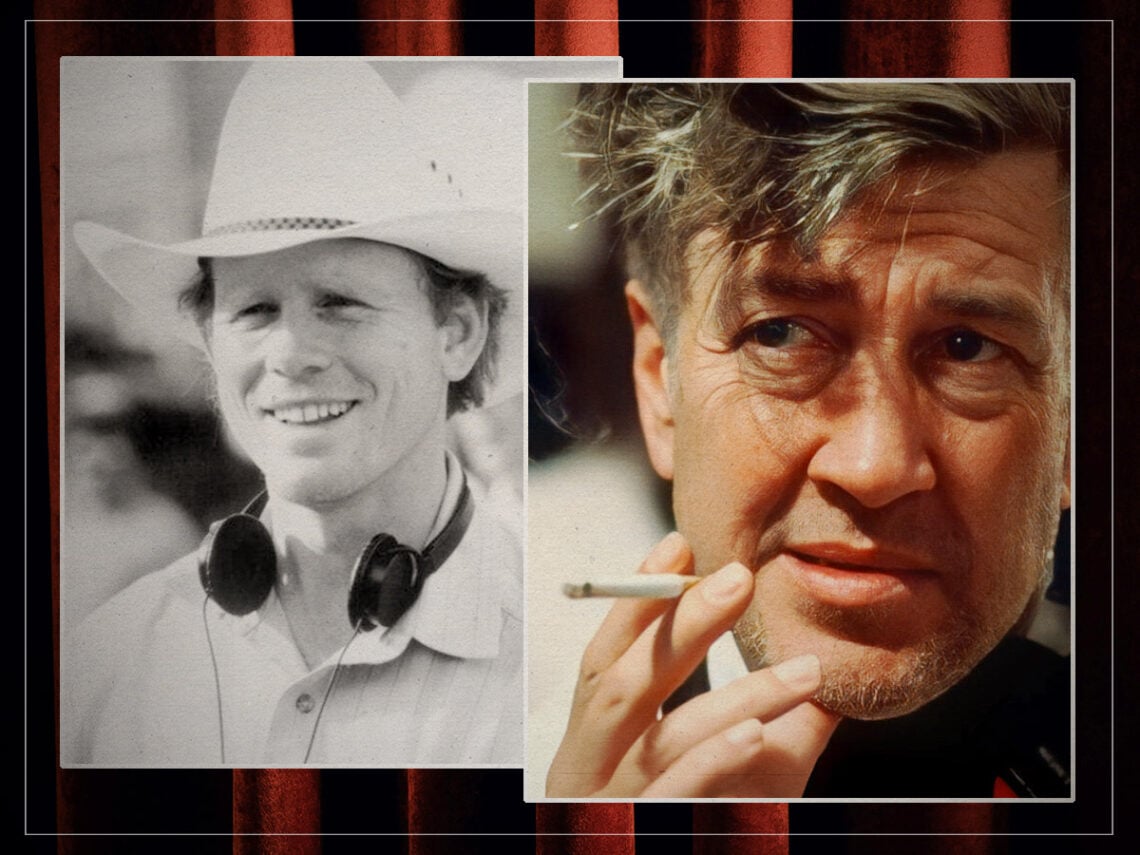
How a failed collaboration with Ron Howard led to David Lynch’s greatest film: “There was no indication that it wasn’t going great”

Fans of David Lynch could argue for decades about which of his projects was the most masterful. Whether it’s the polarising Blue Velvet or the darkly stylised take on American high school in Twin Peaks, Lynch left an unparalleled body of work that no one will ever be able to replicate. Of all his work, however, the surreal tenderness of Mulholland Drive stands out as the most powerful and complete expression of his creativity.
Considering the uniqueness of his filmmaking style, it’s no surprise that the director often had a difficult relationship with Hollywood. On the one hand, the 1980s effort Elephant Man netted eight Oscar nominations. On the other, the surrealness and alienation of movies like Blue Velvet and Lost Highway sent critics into a tailspin of confusion and even outrage. At the same time, however, the one time Lynch lost creative control of a project, it turned into his greatest failure and disappointment – 1984’s Dune.
There was one project that encapsulated all these paradoxical relationships that Lynch had with the industry. When he began working on the script for Mulholland Drive, he intended it to be a television show. Twin Peaks had already come and gone on ABC, and he was ready to do another. Producer Tony Krantz, who had helped push Twin Peaks over the line, brought the idea of a new Lynch series to ABC. They were tentatively intrigued.
It was Ron Howard and his company, Imagine Entertainment, who produced the pilot. It’s hard to envision a more unlikely pairing – the dark surrealness of David Lynch and the sunny optimism of Howard, but there must have been some mutual understanding and admiration there because the pilot went ahead with Laura Harring and Naomi Watts as the stars. In fact, everything during that stage of the production went exactly according to plan.
“It was a beautiful shoot,” Lynch said in a 1999 interview with Movieline. “There was no indication that it wasn’t going to go great.” Then, he showed it to ABC. “No one called me,” he complained. “I never heard from anyone after I turned in my cut. Not word one. All I got was a whole truckload of notes.”
It’s clear that Howard wasn’t the one who found the pilot to be lacking because Lynch said that he didn’t recognise the names of any of the note writers. “The network thought the show was ‘too weird,'” he explained, saying that he’d had creative control on all his films since Blue Velvet and that he struggled with the constant mixed messaging of television executives.
“This will be the end of it for sure,” he lamented. “I’ve got to get realistic. I love feature films, and that’s what I should be doing.”
He was correct in believing that the project was finished on the television front, but not long after the pilot was rejected, Pierre Edelmann, the French producer behind the Straight Story, found funding for a film version of Mulholland Drive. The movie went on to become Lynch’s most critically acclaimed work, blending the darkness of the Hollywood dream with his singular use of nightmarish abstraction. He was nominated for the Academy Award for ‘Best Director’ for the Mulholland Drive, but, in the ultimate irony, lost to Ron Howard for A Beautiful Mind.
