


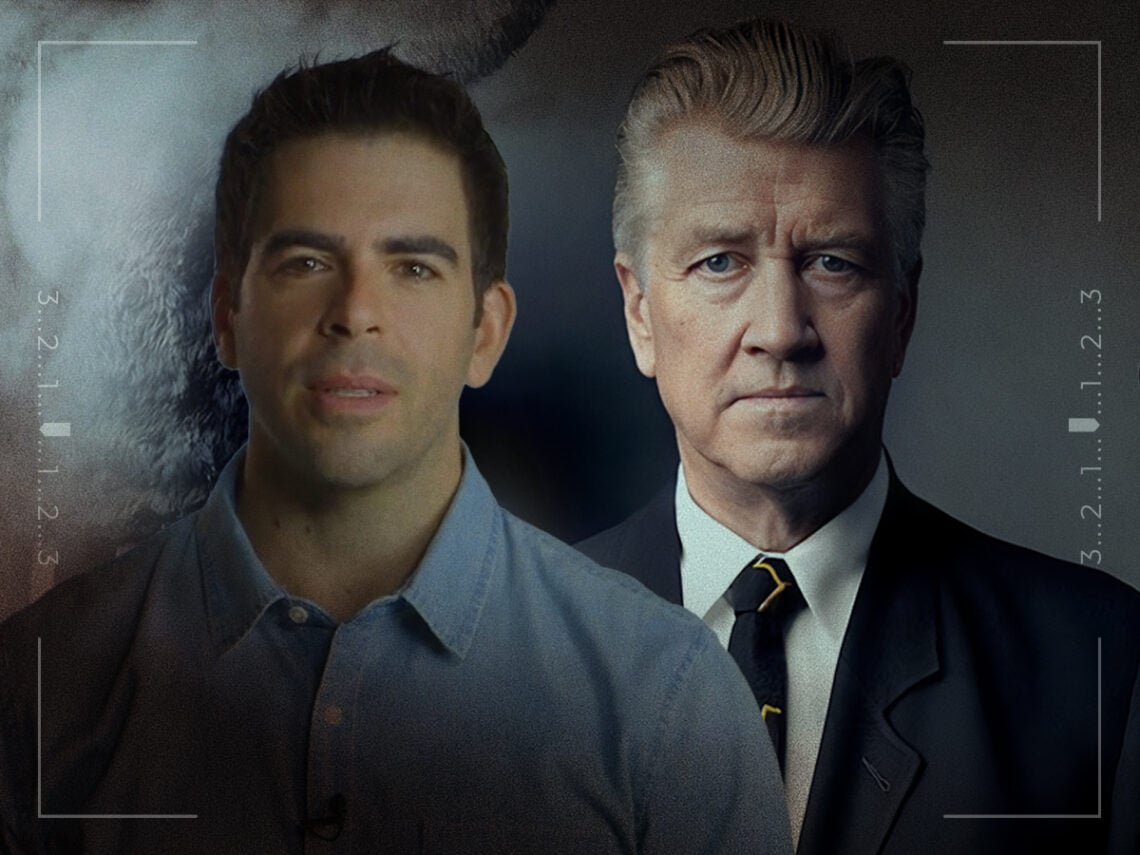
How Eli Roth became David Lynch’s unlikeliest protégé: “It’s going to be beautiful”

Last year, among the worst movies to come from the constant flow of titles Hollywood keeps churning out was Borderlands. It was directed by Eli Roth, and there is no doubt that his work was influenced by David Lynch. Both are brought up discussing contemporary horror and auteur cinema. It was exceedingly, extremely awful.
This film could possibly have managed to get hold of some bigger stars, including Cate Blanchett and Jamie Lee Curtis, but was then shortlisted for six Razzies. If a movie gives Blanchett a Golden Raspberry nomination, then it must be terrible – enough said. It’s quite unfathomable to believe that to be possible, but Roth’s movie really did force the Oscar-winning actor to scrape the lowest depths of the murky Hollywood barrel.
Roth has made his fair share of negatively reviewed films, but the most unforgettable is arguably Hostel, his 2005 torture porn flick, which many critics reacted to negatively. At what point does violence become spectacle, rather than somehow eroticised in its attraction, existing for any reason other than to experiment with the parameters of the audience, or even perhaps inducing a repulsive sense of gratification?
Most of the violence used by Roth in his films has been criticised as gratuitous, but whether one loves or hates it, the director did have some impact on the display of violence in the genre of horror in the 2000s. But he might not have utilised this persistent collection of sensibilities to actualise his vision without the influence of David Lynch.
Roth’s commitment to Lynch was proof of how much control the surrealist director had. Lynch loved people, and he loved art, and if one was desperately motivated to create, he noticed this drive and saw to it that they cultivated it. The pair met when Roth was only 20 and studying at NYU, and he told KCRW, “I was very close with David. He was probably the closest thing; he and [Quentin] Tarantino were the closest thing[s] I ever had to mentor[s].”
He explained, “I was working for a theatre and film producer named Fred Zolo. David wanted to do a project for Broadway about the scientist Nikola Tesla. Fred arranges this lunch for us because David needed research, and I’ll never forget it. We went to Sardi’s, which is like the theatre restaurant of 44th Street. I’m like 20 years old or 21, probably a junior… maybe a senior at NYU. I sit down, and there’s David Lynch.”
Roth couldn’t hide his excitement because Lynch was one of the reasons he loved film so much. Now he was sitting opposite him, and he was real. It’s easy to see our favourite directors as these mythological figures – can you imagine Stanley Kubrick just buttering himself a slice of toast for breakfast?. But these great artists are ultimately human, even when they seem otherwise, and Roth finally felt like he had a way in to Lynch’s great mind.
“I wound up spending five years doing this research for him. It went long beyond school. I just kind of used it as an excuse to stay in touch with him,” Roth added. This led to Roth helping Lynch run his website, where he uploaded bizarre short films that allowed him to offload his strangest ideas with a sense of urgency that only the internet can facilitate. “It’s going to be beautiful. We’re going on the net,” Lynch told him.
Roth continued, “I wound up going to his house every day and just filming the craziest, craziest things you can imagine. Basically, any idea that David Lynch had, we’d just shoot it. We didn’t even question it.”
Lynch gave Roth a vital piece of advice when they worked together: “Keep your eye on the doughnut, not the hole.” Reminding Roth not to get “sucked right in” to the “other bullshit” that threatens to ruin a film like a vacuum, he carried this advice with him through his career. Unfortunately, Roth has used it to make some pretty dire excuses for cinema.
