


‘Moon’: how Duncan Jones mirrored his father’s ‘Space Oddity’

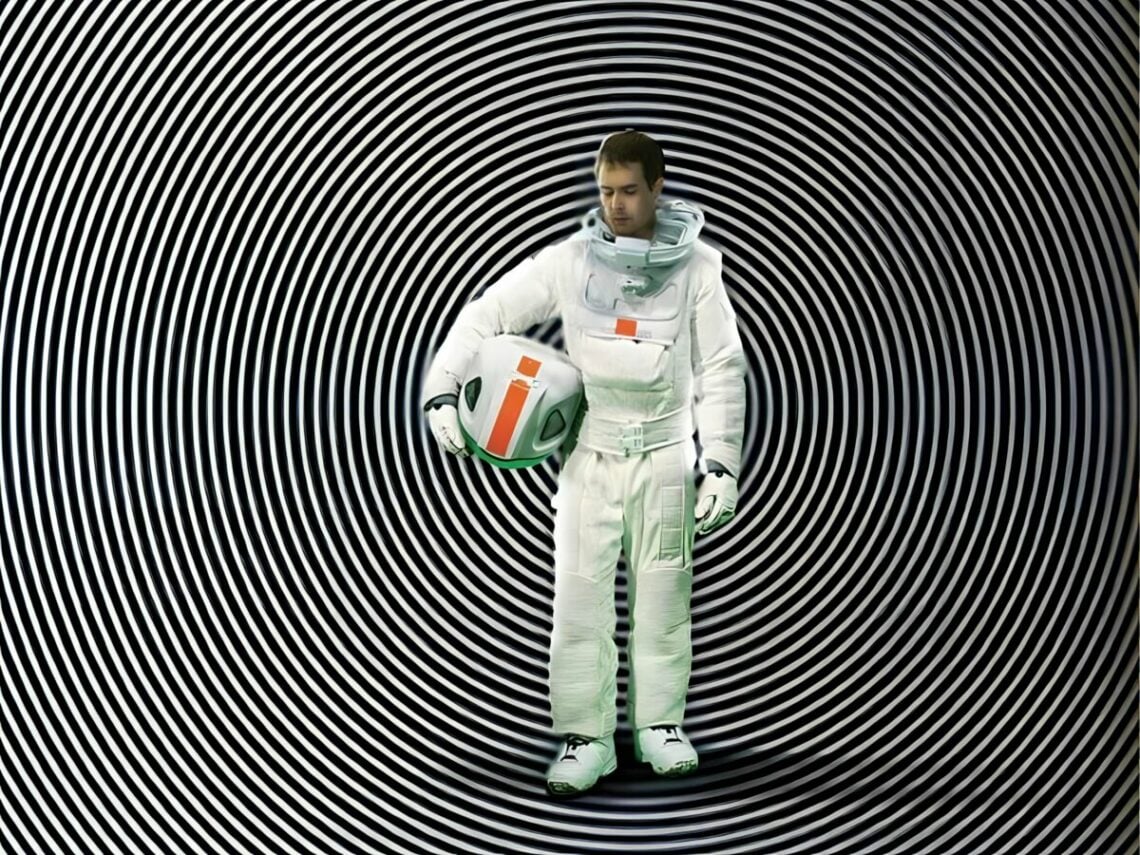
Only those who experience space expeditions first-hand could ever truly understand the psychological complexities of finally coming to the end of a mission. Though best reserved for the astronauts, this formed the premise of the first directorial outing from Duncan Jones in 2009 with Moon, which follows an astronaut experiencing psychosis as he nears the end of his three-year mission on a lunar base.
Creatives across the film and music industry have been fixated on the concept of space for decades. While David Bowie is almost always the name that comes to mind when discussing such lunar-obsessed innovators, it seems considerably reductive to suggest Jones’ Moon venture was merely a product of his father’s explorations.
In fact, Jones’ channelling of his father’s interests and experiences came from a very real place, one concerned with existential experiences of alienation and isolation, and the same kind of solitude Bowie attempted to emulate for his opus ‘Space Oddity’. Moon, like the song, served as a metaphor for the yearning for freedom and the psychological ramifications of finally having it and realising the toxicity of exploitative society.
Many of the themes in Bowie’s ‘Space Oddity’ reflect this, namely in the disconnection Major Tom feels from society as he drifts far, far away, further from purpose and his sense of identity and being. He’s slowly losing control and finding fear and solace in it, similar to the slow psychotic breakdown that Sam Bell experiences in Moon, both confronting the harsh reality of being just another cog in the machine; another spaceman on a mission.
Jones wasn’t actually aware of manifesting his father’s preconceived tropes until it was brought to his attention. By then, he realised there were some similarities, even if they were unintentional. “Moon was certainly in no way a conscious reflection of what my dad had done,” Jones told The Los Angeles Times in 2009. He added, “But there’s no getting away from the fact that I grew up around the same things that were informing him, and I am the sum of my experiences, and my experiences tend to overlap [with] what my dads were.”
Jones was also influenced by many fictions that came before, the ones that took the concept of space and space exploration and used it as a technique to explore earthly disillusionment. These were almost always character-driven pieces that involved protagonists or antagonists filled with unconventional oddities who struggled to fit in or succeed because of their personal flaws.
In many ways, Bowie was the master of this trope, particularly with how he presented concepts of otherworldly entities and used them to simultaneously reflect existential dread, conflicting identities, and the power and tragedy of being deeply misunderstood by society at large. For Jones, this was a major component that influenced Moon. “[These films] were about human beings and not going for just one action set piece, or special effects set piece,” Jones explained.
Expanding on the value of incorporating layered characterisations and narratives, he added: “They really were about people, they were character-driven films, but that just happened to have these very alien or unusual environments. And that was where science fiction came in, but really it was about people. And that’s a very different approach than most science-fiction films that get made today.”
Therefore, Moon was as much enabled by his father’s preceding creativity as by the continual cultural fascination with intergalactic themes, alongside the artist’s consistent strive to question reality and identity with overt abstraction. For Jones and his father, much of this is rooted in real experiences and the prolonged entrapment between two worlds.
