


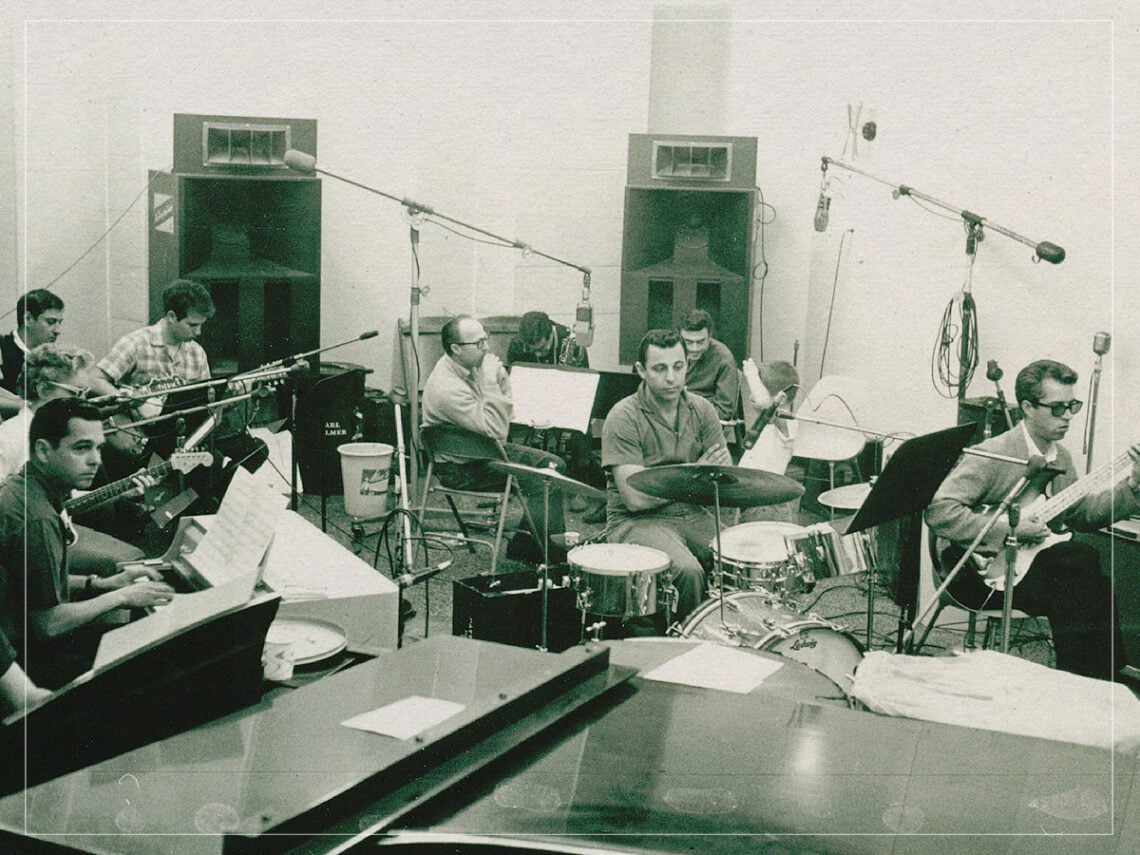
How did The Wrecking Crew get their name?

For such a loose ensemble of session players, The Wrecking Crew struck one hell of a formidable force in pop history.
Virtually the in-house band of Phil Spector’s ‘Wall of Sound’ production vision, many of the Hot 100’s biggest hits across the 1960s and 1970s were realised by Los Angeles’ grade-A musical cohort, owing to their flexible backgrounds in jazz and classical. Before long, their reputation would grow in immortality on Spector’s rich and dramatic overdubbed pop pieces, from The Ronettes’ ‘Be My Baby’, Ike and Tina Turner’s ‘River Deep – Mountain High’, and The Righteous Brothers’ ‘You’ve Lost That Lovin’ Feelin’’.
Some of the most respected session names in pop would all hail from The Wrecking Crew. Carol Kaye’s bass and Hal Blaine’s drumming skills would stand in stature in later years; Jack Nitzsche would lend his songwriting and arranging chops to the likes of Neil Young and The Rolling Stones, and Glen Campbell would stand as a country rock star in his own right.
So fascinated with The Wrecking Crew’s session alchemy, The Beach Boys’ creative force Brian Wilson studiously took notes from the Spector school of sonic density, recruiting much of the collective on subsequent records and to winning effect on 1966’s Pet Sounds opus and its visionary approach to songcraft and expanded instrumentation.
Yet just how Spector’s right-hand band earned their name can often be lost to even long-time fans of the premier pop maestro.
So how did The Wrecking Crew get their name?
It’s often thought that The Wrecking Crew refers to the band’s superhuman ability to ‘wreck’ all the day’s pop competition during their pomp.
The fact is, the term was little known until decades after their classic tenure. In his 1990 memoir, Blaine detailed the origins of The Wrecking Crew name from the clash between the musical old guard and the new generation, the uniformed veterans slinging the tag pejoratively toward the young kids in their jeans and hip clobber, accusing them of “wrecking” the industry. Before long, the term stuck as a kind of wry badge of honour in the face of the stuffy professionals stuck in their ways.

Kaye has shot such a narrative down, however. Various statements on her official online channels have stated that the crew were in fact ‘The Clique’, Blaine only using The Wrecking Crew term “for his own self-promotion” around the time of his book launch. Expert fans and musicologists have dug deep into the 1960s’ press and discovered next to no corroboration of Blaine’s take on the band’s name.
Biographer Kent Harman muddied the waters with his own findings, writing, “Some of the studio musicians I interviewed swear they heard it applied to themselves as early as 1963; others say it was later. One says it was never used at all.”
It’s likely never to be truly verified, but however its entrance into the popular consciousness, The Wrecking Crew name stands as a perfect illustration of their aural heft, pop power, and ensemble mix of disparate musical ingenuity.
