


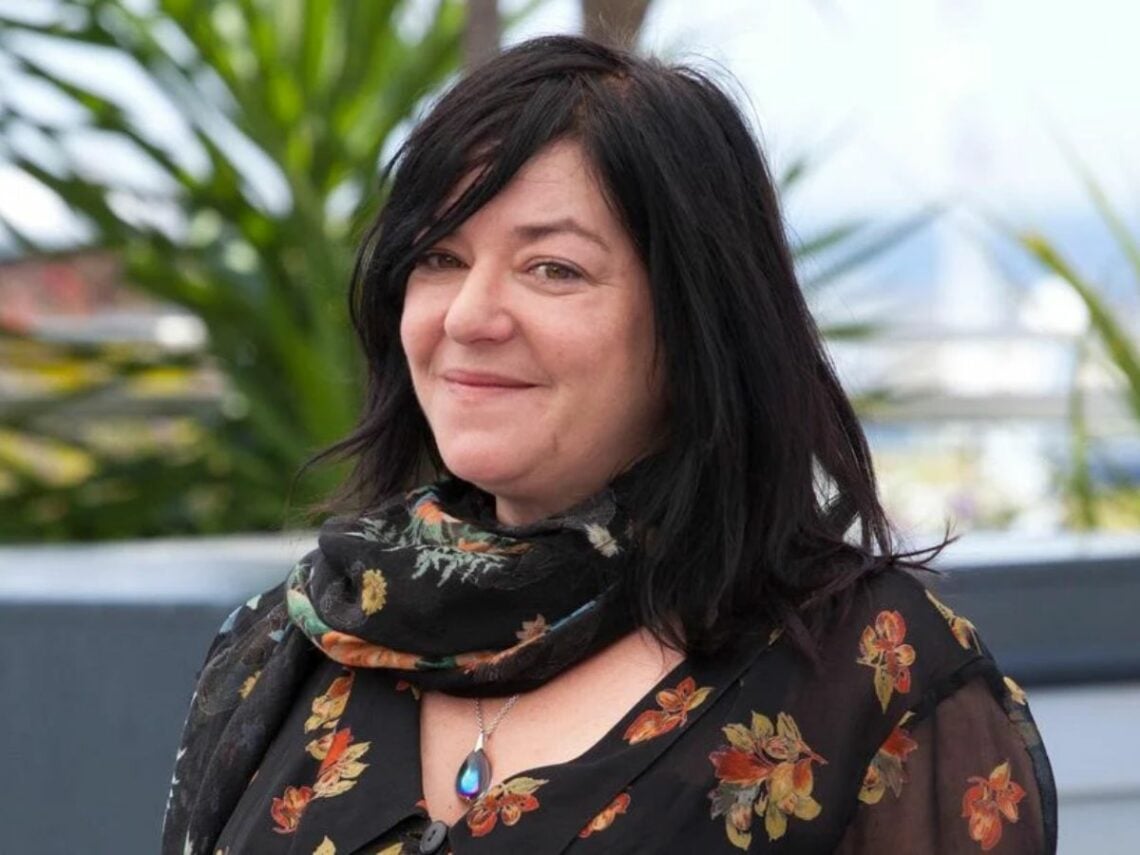
How did Sam Fuller and ‘The Shining’ shape Lynne Ramsay?

Following the tradition of British cinema’s propensity for social realism, Lynne Ramsay began her career making short films depicting the brutal realities of everyday life. Her first short film, Small Deaths, explored small yet life-changing moments throughout a woman’s childhood, adolescence, and early adulthood. Despite its short runtime, Ramsay left an impact, proving herself to be an extremely promising new filmmaker.
With her next short films, Gasman and Kill The Day, she further proved her genius for centring on working-class Scottish characters, exploring family, coming-of-age, femininity, and memory with complexity. In 1999, she released her debut feature, Ratcatcher, a heartbreaking tale of one young boy’s experience of living in extreme poverty in Glasgow. The movie was highly acclaimed, leading Ramsay to make her next feature, Morvern Callar.
With a stunning performance from Samantha Morton, the film was also praised as a masterpiece. It explored the melancholic life of the titular character, who claims her boyfriend’s manuscript as her own after finding him dead on Christmas Day. With an ability to imbue empathy and nuance into complex stories, Ramsay uses her narratives to comment on wider themes, such as womanhood, friendship, poverty, coming-of-age, and grief.
She has since gone on to work on some bigger American productions, most notably We Need To Talk About Kevin, which was followed by You Were Never Really Here, both of which are psychological thrillers. Ramsay has always maintained an incredible sense of uniqueness, taking inspiration from a wide range of movies.
In an interview with The Skinny, she revealed that Stanley Kubrick’s The Shining has been a source of inspiration for her due to the fact that it exceeds the boundaries of its genre, becoming something much greater and profound. “I love films like The Shining, which seems like a straight horror film, but it’s really about a man going mad. And I think within the construct of a genre, you can tell an exciting story, but also go deep into the psychology of things. You grow as a filmmaker, and you’re interested in different things at different times.”
In Morvern Callar, for example, Ramsay presents us with a drama involving a social realist lens, but she also weaves in horror and thriller themes by showing the titular character dealing with the death of her boyfriend in a rather unconventional and horrifying way. It is a psychological film that asks us to question why Morvern begins acting the way she does as she decides to take ownership of her boyfriend’s manuscript.
Ramsay then explained her love for the work of Samuel Fuller, too. The American filmmaker made many low-budget movies during his career, like I Shot Jesse James and The Naked Kiss, inspiring many filmmakers. He can even be seen in Jean-Luc Godard’s Pierrot Le Fou explaining the meaning of cinema to Jean-Paul Belmondo.
“I was kind of brought up with 50s B-movies, in a way, and I’ve always loved the short form of telling a story. The reason I always mention Sam Fuller is, I think he’s pretty subversive for his time, speaking about things within this framework that were pretty controversial. Funnily enough, You Were Never Really Here ended up like those 50s B-movies, really economical, 95 minutes.”
