


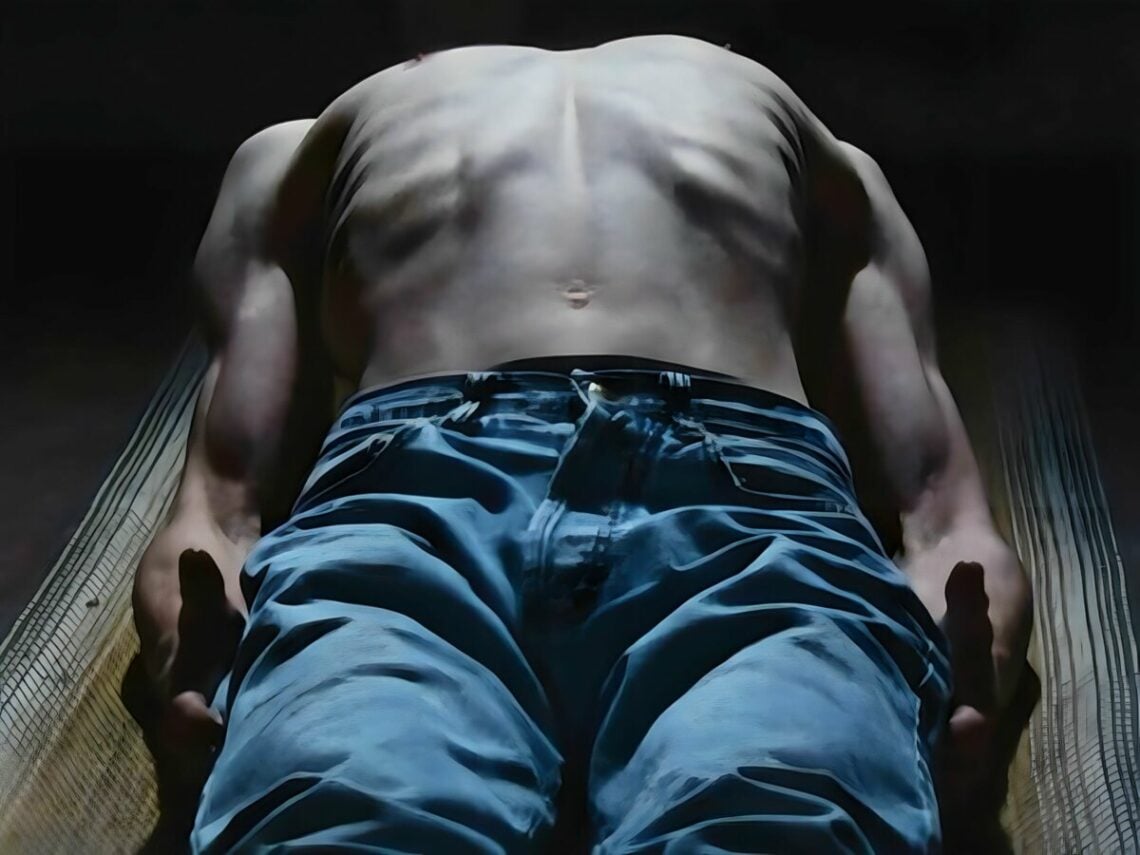
Lynne Ramsay’s haunting early short films about unhappy families and childhood memory

As is so often the case, the work of female filmmakers frequently goes underappreciated, and even more so when it doesn’t possess highly commercial appeal. Although Lynne Ramsay reached a certain level of mainstream recognition with her 2011 film We Need To Talk About Kevin and 2017’s You Were Never Really Here, she remains a director that frequently flies under the populous radar. Yet, Ramsay is one of the most exciting cinematic voices to have emerged in the past 25 years, and nothing demonstrates this better than her work from the late 1990s and early 2000s, which shines a light on underrepresented groups in her native Scotland.
Her stunning debut Ratcatcher and 2002’s hazy Morvern Callar are two solid features about grief and isolation. However, they wouldn’t have been possible without the creation of Ramsay’s early short films. Before Ratcatcher, Ramsay released three shorts, all to critical acclaim, yet they remain tragically underseen slices of cinematic genius. Her first was Small Deaths, her graduation short film that won Ramsay an illustrious Cannes Prix de Jury prize. The filmmaker wrote, directed and filmed the short, which follows a young girl through three pivotal moments in her life.
In the first segment, ‘ma and da’, Ramsay highlights the cracking of naivety as the young child, Anne-Marie, realises that her parent’s relationship is on the rocks. Her mother silently brushes Anne-Marie’s father’s hair as he prepares to go out, eventually exchanging a few minimal words. What’s so fantastic about this scene is the underwhelming nature of it all. Anne-Marie doesn’t witness explosive fights or arguments. Instead, she witnesses a lack of love between the two, as though her father is sitting in the barber’s chair, having his hair attended to by a stranger.
In one significant shot, Ramsay lingers on a close-up of Anne-Marie’s face as she reads from a book, her parents framed in the background, out of focus. The composition highlights the importance of this moment in the back of Anne-Marie’s mind. It becomes a pivotal childhood memory, reminding her that love often leads to loss. The next vignette, ‘holy cow’, takes place on a warm summer’s day and sees Anne-Marie a little older, perhaps aged 12 or 13. In a field, she witnesses other teenagers, including shirtless boys, leading her little sister to tease her for fancying one of them. Stuck in limbo between childhood and adolescence, Anne-Marie runs through the field, hands brushing the long grass, emphasising the visceral nature of the memory, eventually reaching the site of a dying cow. The laughter of the teenagers can be heard echoing in the distance as Anne-Marie reckons with an image of violence and death, as though she has received punishment for her feelings towards seeing the shirtless boy.
Finally, in the last segment, Anne-Marie is a young woman making out with a man in a dingy corridor. Once again, she experiences something that will leave a lasting impact on her memory. Up the stairs, a group of people fool her into believing a woman has overdosed, Ramsay’s camera coming aggressively close to the faces that demand she calls an ambulance before bursting into laughter. It’s a sick joke, and Anne-Marie walks away disheartened – any youthful optimism she still possesses has now disappeared.
The short was followed by Kill The Day in 1997, which captures a day in the life of a heroin addict, James, on his release from prison. Ramsay uses an experimental non-linear format to explore the inner workings of his memory. Flashbacks to pivotal childhood moments, such as pushing someone in a river – something that Ramsay explores in Ratcatcher – plagues his mind as he attempts to recover and become a better person. Ramsay sensitively documents James’ day, abstaining from using a soundtrack, instead letting the characters’ silence prevail. The director uses subtle noises, such as a buzzing fly, to create a heightened atmosphere of tension as James is filmed in tight close-ups, framed in dingy blues and greens.
Kill The Day is as directionless as James’ life, weaving slices of memory with studied shots of his face, contemplating where everything went wrong. The film bears many similarities to Small Deaths, and these snippets of reflection act as their own ‘small deaths’. Ramsay continued this theme into her next short, 1998’s Gasman. Yet again, Ramsay returns to using beautifully intricate sound design to convey a sense of claustrophobia, emphasising the rustling of plastic or the pouring of sugar. The film is another ‘small death’, depicting a child’s discovery of her father’s infidelity. Lynne Ramsay Jr and James Ramsay (the director’s niece and brother) star in the film, following their appearances in the previous shorts. However, Gasman is arguably Ramsay’s greatest.
At the beginning, we see Lynne, her face concealed, grappling with a pair of patent shoes. Once they’re on, the rambunctious child clicks her heels and declares, “There’s no place like home!” Little does the wannabe-Dorothy know that her fantasy world is about to come crashing down. Ramsay carefully hides the mother’s face from the audience, and we only see glimpses of her as she argues with Lynne before walking down the shadowy hall and shutting the door in our faces. The camera pans to the window, where a glare from the reflection partially conceals the mother’s face, isolated behind the slatted blinds which obscure her view. Ramsay’s employment of such imagery helps to emphasise the emotional division between each party, subsequently illuminating the tragedy of the day-to-day.
At the kitsch 1970s Christmas party, Lynne sees an identical girl sitting on her father’s knee and demands she gets off. When the girl stresses that he’s her father, too, Lynne begins to pull her hair, eventually dethroning her. Ramsay emphasises the devastation of this moment by crafting a highly sensorial viewing experience. At the party, the camera moves as though we’re in the room, documenting happy moments such as Lynne dancing with Santa Claus, her dress moving in a circular motion. The camera often focuses on kids fighting, moving disorientingly through crowds of children before landing on a table of fathers, relatively unbothered by the behaviour. Ramsay puts us in the headspace of Lynne, thus making Gasman a highly emotive film that captures a moment of childhood happiness tarnishing, even worse, at Christmas.
These three shorts paved the way for Ramsay’s feature-length work, sitting remarkably as individual pieces and as thematically-connected films. In each short, Ramsay manages to sensitively capture a lifetime of sadness and betrayal through hazy memories and moments. Her exploration of memory, grief, unhappy families, and childhood with striking realism is truly extraordinary.
Watch Small Deaths, Gasman and an extract of Kill the Day below.
