


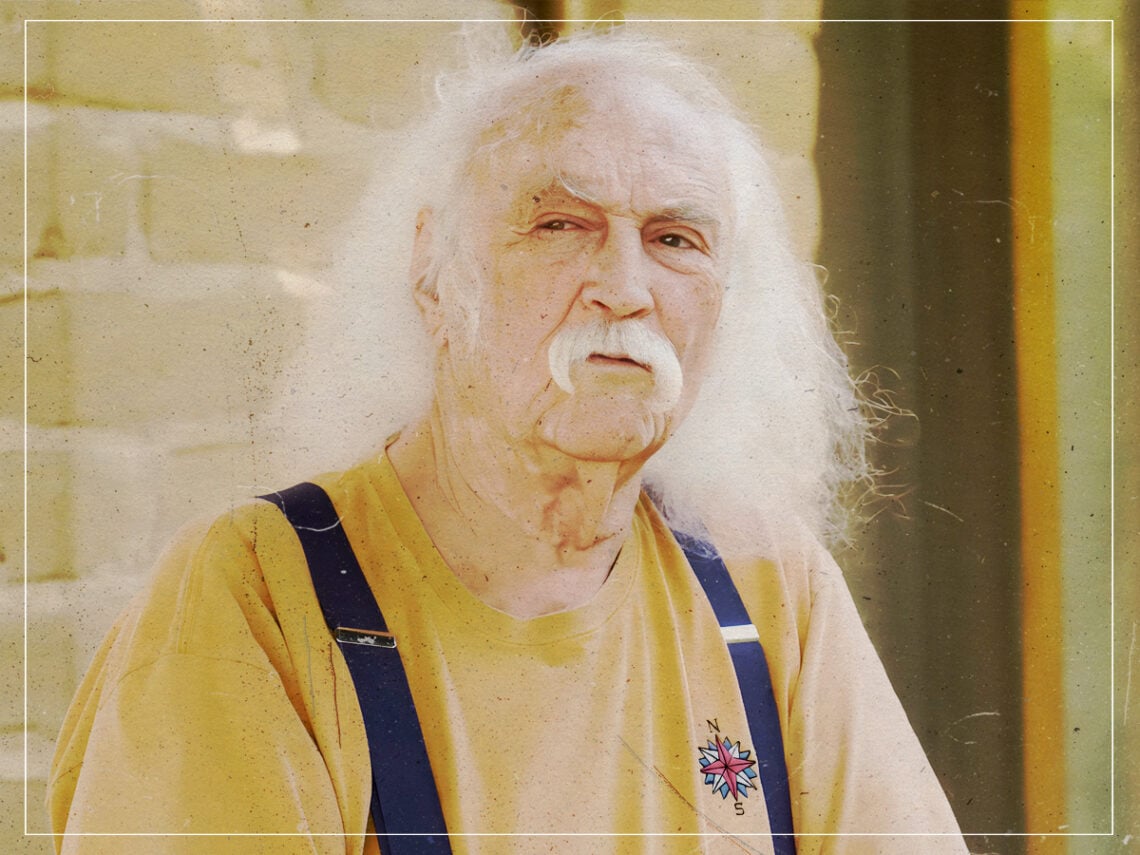
How David Crosby outwitted Mexican vigilantes

It’s often true that you don’t know what you have until it’s gone, which is certainly the case with David Crosby. While everyone knew he was a musical legend, he did not get the full plaudits that his talent warranted. What’s more, his life was so extraordinary that it’s pretty astounding that it hasn’t yet been adapted for the screen. His story produced more comedy, drama, and moments that blurred the lines between fact and fiction than any other world-famous artist.
Forget your Johnny Cash, Freddie Mercury and Elton John; Crosby’s life was unbelievable from the get-go. With an Academy Award-winning cinematographer of a father who came from a prominent European family, and his mother from an influential East Coast family that went all the way back to the 17th century and America’s origins, clearly, Crosby’s life was all set to differ from the norm before he was even born.
Later in life, Crosby would help pioneer folk rock and raga rock with The Byrds, one of the definitive acts of the countercultural period. After he was kicked out due to creative and personal issues, as well as his spouting of conspiracy theories about the JFK murder on stage at the Monterey International Pop Festival in 1967, he would form Crosby, Stills and Nash, a group who tapped into the very essence of the era of their self-titled 1969 debut. The record set the scene for their masterpiece the following year, Déjà Vu, their first with another titan of the epoch, Neil Young.
Although pioneering musical forms and capturing the spirit of the consequential period he was at the centre of are more than enough to warrant Crosby’s hallowed place in the history books, his wild life did not concern merely musical feats. While the Californian had always had a penchant for hellraising, with his naturally enquiring mind well suited to be absorbed by the explosion of drugs and hedonism that co-occurred with the music of the counterculture, things took a much more fraught turn after the tragic death of the love of his life, Christine Hinton in an automobile accident in 1969, during the recording of Déjà Vu.
Naturally, the news destroyed Crosby, and you can hear his anguish on the counterculture’s passionate, defiant last stand, ‘Almost Cut My Hair’, as his voice cracks under the pain. It’s a song fittingly about refusing to cut off his ultimate symbol of hippie defiance amid changing times, his hair, and he strongly refuses to give in to the winds of change on it.
After Hinton’s death, Crosby took his hard-living to new levels. This would affect both his career and personal life, and he would have several serious brushes with the law and even a stint in jail. As the 1960s evolved into the 1970s, and the counterculture heroes began to become strung-out husks of their former selves, Crosby came to embody this.
One evening in the early 1970s, when partying on his famous schooner, Mayan, near Puerto Vallarta, Mexico, Crosby’s lifestyle would have some pretty terrifying consequences. It was a sign of things to come for the rocker, whose dangerous dalliances with the law were only getting started. That night, a gang of armed vigilantes boarded the boat looking for marijuana.
They didn’t find any but produced their own evidence. Things looked pretty bleak for Crosby, who had come down quickly from the evening’s imbibing and smoking and was now at the local jail. However, this was David Crosby, one of the pluckiest musicians out there. In one of his most astounding capers, he paid off the chief of police, giving him about seven dollars per person onboard the Mayan, kept the “evidence” that wasn’t his and got to return to the boat and resume the celebrations.
No matter the strength of the law, Crosby’s hippie party continued until the very end. He flew the freak flag of his era throughout the years and never conceded his spirit, regardless of his varying personal situations.
