


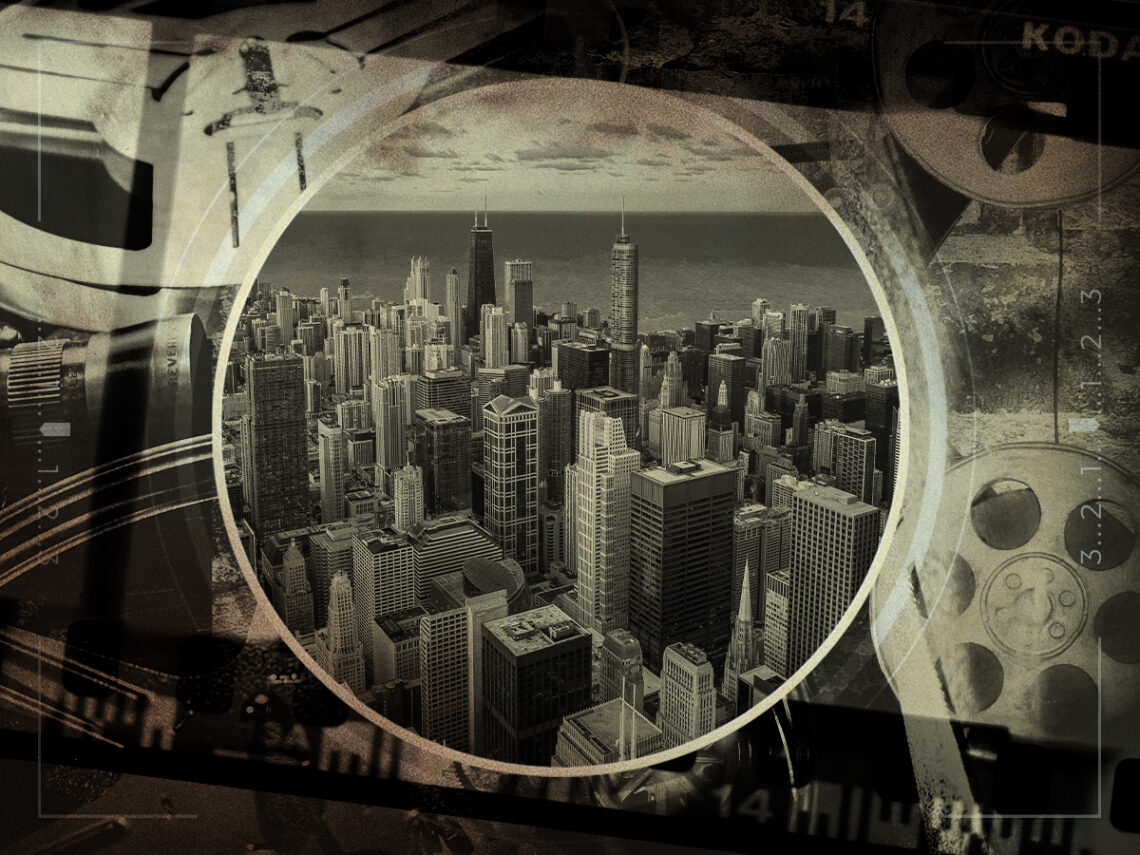
How a Chicago judge almost monopolised the movie industry

We like to think of the movie industry as one big, beautiful place where creativity can flourish, and raw talent can drive a person to the very top, but in reality, it’s the perfect microcosm of ultra-capitalism.
Money makes the entire business go round, whether you like it or not, and if Hollywood doesn’t think a movie is going to make money, then it won’t get made.
One of the pillars of capitalism (in theory, anyway) is competition; from the early days of the ‘big five’ studios to the modern streaming war we find ourselves in today, Hollywood has always thrived on business rivalry. Some of the greatest films of all time wouldn’t exist had somebody at one studio not gotten scared about what their competitors were doing, but once, this entire business model was almost shut down by one man.
Thomas Edison is often described as a genius, but the truth is a lot more complicated. He was a right piece of work who was accused multiple times of stealing ideas from other people. The validity of these claims has long been the subject of debate, but what we do know is that he was a ruthless businessman. Edison was at the forefront of the technology that would shape the motion picture industry, with his company releasing the Vitascope, an early movie projector, in 1896, yet he wasn’t the only name on the market, something the former wanted to change.
In 1908, Edison spearheaded the formation of the Motion Picture Patents Company, also known as the Film Trust, an organisation consisting of all the major companies behind every component of cinema. Production companies, distributors, projector manufacturers, and even Eastman Kodak, which produced raw film stock, all signed up to effectively place a stranglehold around the American movie industry. They held all the patents and, as a result, all the power.
One of the earliest resistance movements against this monopoly came from Chicago, from a group of immigrants, mostly Jewish, who began distributing their own films in working-class neighbourhoods, showing these pictures for five cents, which is where the term ‘nickelodeon’ comes from.
Naturally, the powers that be weren’t happy. Undoubtedly fuelled by a loyalty to Edison and some good old-fashioned anti-Semitism, one anonymous Chicago judge wrote an article that these illicit films were spreading bad messages and contributing to more criminals coming through his courts. The mayor of Chicago saw this and ordered a crackdown on illegal nickelodeons, putting an end to this rebellion.
Of course, we know that things didn’t end well for the MPPC: two businessmen, Carl Laemmle and Wilhelm Fuchs, also decided to push back. They formed their studios independently from the MPPC, which would go on to be known as Universal and Fox. World War I led to a massive decline in the Trust’s European sales, while its independent competitors survived mostly on domestic business. The final nail came in 1915 when the Trust lost an antitrust lawsuit in federal court, and by 1918, the company had officially been closed down.
The greed of men like Thomas Edison and the desire of him and his cronies to control an entire industry would backfire in a huge way. If it hadn’t been for their underhanded tactics and the people who fought back against them, we wouldn’t have Hollywood as we know it today.
