


‘Hollow Hills’: how Bauhaus brought ancient folklore into gothic rock

It’s perhaps not a tag they’re entirely comfortable with, but the ‘Godfather of goth’ mantle that hovers around Bauhaus‘ legacy is not unfounded. From their 1979 debut single and still defining cut, the gloomy nine-minute skulker ‘Bela Lugosi’s Dead’, the Northampton post-punk outfit inspired a generation of budding doom-merchants the moment Kevin Haskins’ percolating hit-hat trickles like dripping blood against David J’s bowel-rumbling dub bass.
Its stark cover helped too, a soiled monochrome still of DW Griffith’s 1926 silent film The Sorrows of Satan depicting what appears like a frightening banshee’s bat wings threatening to engulf the entire single’s artwork.
Gothic grandeur was further cemented by frontman Peter Murphy’s commanding baritone. Instilling a powerful presence throughout their initial tenure and future sporadic live sets, Murphy’s nebulous veer between feral mania and svelt decadence cut an enduring prototype for future goths that few would match.
Bauhaus were not a band that sought to be confined to rigid genre expectations for long, however. Exploring reggae, synths, and funk rhythms amid their heady post-punk brew, Murphy and the gang were showing confident flashes of creative curiosity stemming from a richly diverse scope of influence.
“I loved literature, all kinds of things, anything I turned my hand to, but there was no outlet for it. Which is typical because, in that fertile earth of Britain where nothing happens, a lot comes out, you know.” Murphy told The Rockpit in 2018. “So I’d really been listening to music from being a baby, from 1st World War and 2nd World War songs through to Doris Day, then Simon and Garfunkel, Rolling Stones, The Beatles, to all the early reggae stuff.”
He added: “It was a very musical family in terms of listening and singing, there was lots of music in the house, and then in 1966, The Beatles explode, and the radio is everywhere. Everywhere you go, there’s music, but on reflection, now what’s happening is that there’s just this generic mush everywhere, you know what I mean?”
Having made the move from 4AD Records to sister label Beggars Banquet, 1982’s sophomore LP Mask forged stridently into a deeper terrain of keyboard-soaked atmospherics and a dabble in the arcane. A standout track, ‘Hollow Hills’ imbues their art rock drama with the sodden relics of British folklore, beckoning the listener to cautiously investigate the barrows that litter the old woods and countryside.
Often called barrows and serving as burial mounds largely from the Saxon era, hollow hills are shrouded in legend because ancient people viewed such mounds as doorways to other realms or dwellings for gods and supernatural beings. In Irish mythology, the Túatha Dé Danann people were defeated in battle by the Milesians and agreed to live henceforth in the hollow hills where legend says they still dwell. Spooky activity surrounding barrows has existed for centuries, inspiring JRR Tolkien’s malevolent spirits, the Barrow-wights, in his The Lord of the Rings saga.
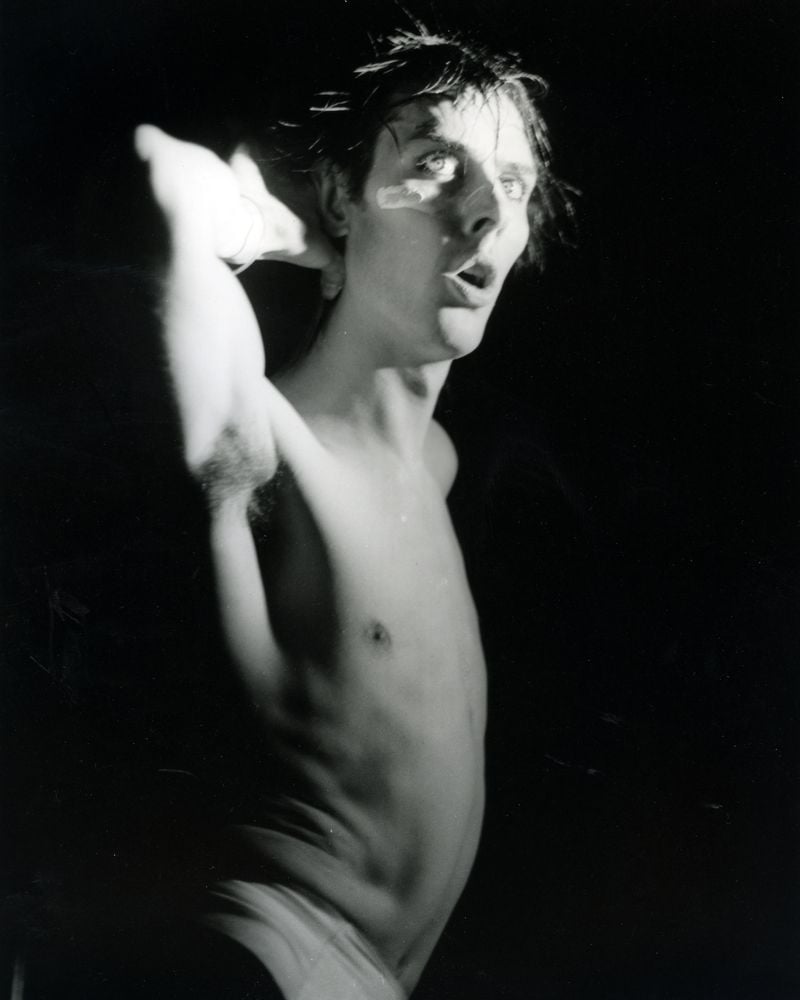
It’s an evocative cut which is sincerely fuelled with ethereal energy, and loved by Murphy so much that he indulged in some interpretive dance to its hypnotic, aural fog on BBC’s Riverside back around Mask’s release. An excellent work filled with guarded majesty, ‘Hollow Hills’ still stands as one of Bauhaus’ essential cuts.
