


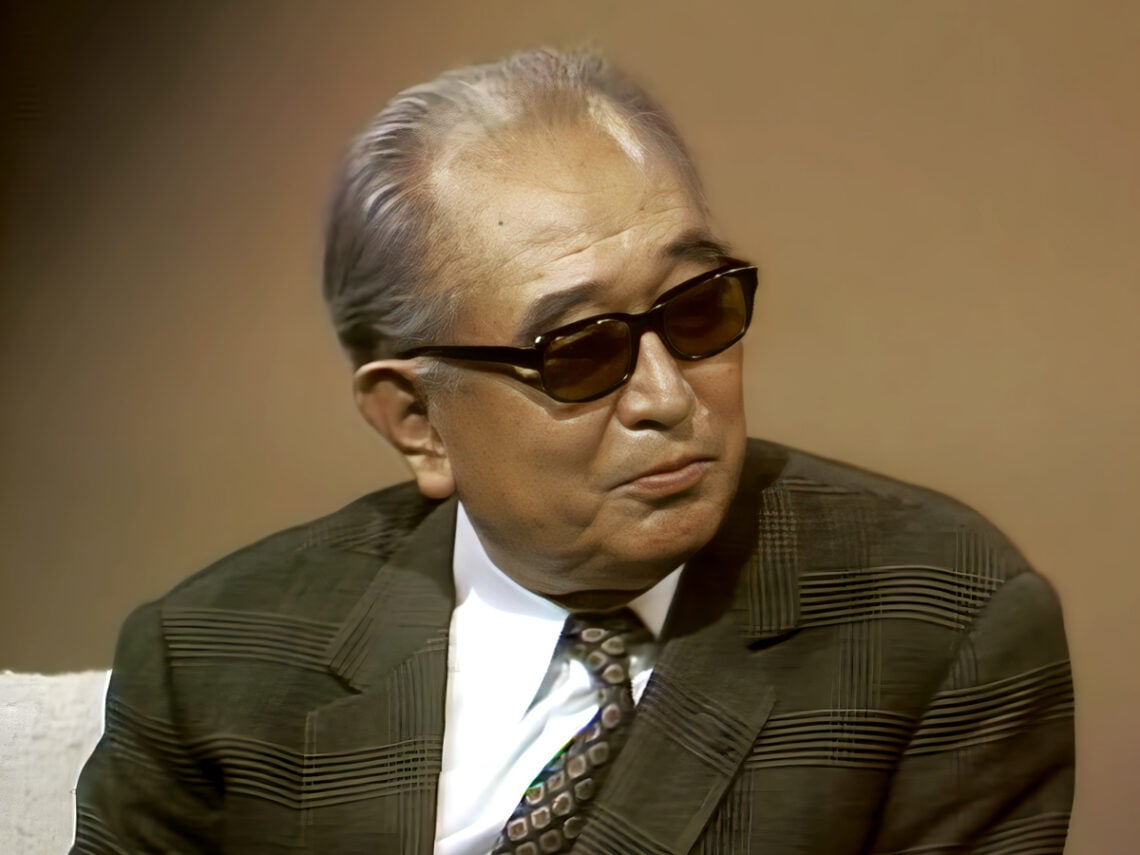
How Akira Kurosawa discovered Toshiro Mifune: “He’s something of a roughneck”

Currently showing is a new, well-reviewed Spike Lee film for A24 starring Denzel Washington called Highest 2 Lowest – a movie that while not explicitly a remake is certainly a retelling of a famous Japanese film by Akira Kurosawa named High and Low from 1963.
Kurosawa’s movie is the story of a business mogul who believes his child has been kidnapped and held to ransom, only to discover that the missing kid actually belongs to his chauffeur. He must then decide whether to pay the money or to put it toward his ailing company.
Starring Chinese-born actor Tashiro Mifune, it has gone down as a classic of foreign cinema; hugely influential, it was nominated for a ‘Best International Picture’ at the Golden Globes in 1964. Co-written by Kurosawa, it marked another high point in the 16-movie partnership with Mifune that had lasted since 1948 and their first film together, Drunken Angel.
That film was a Japanese mafia tale of a young gangster who is diagnosed with tuberculosis and forms an unlikely bond with the alcoholic doctor who treats him. It was Mifune’s first film, and the fact he got the role at all was a mixture of good luck, talent and fate as Kurosawa revealed in his autobiography, which told of the studios holding a talent search in order to get more young actors into the movie-making business.
While Kurosawa was shooting the 1946 political drama No Regrets for Our Youth he was taken to one side by Japanese actress Takamine Hideko who told him of the auditioning Mifune, saying: “There’s one who’s really fantastic. But he’s something of a roughneck, so he just barely passed. Won’t you come have a look?”
Kurosawa, who was due to be a judge in the talent show but couldn’t due to his filming schedule, quickly ate his lunch and rushed over to where the hopeful actors were performing. He was taken aback by Mifune, writing: “A young man was reeling around the room in a violent frenzy. It was as frightening as watching a wounded or trapped savage beast trying to break loose. I stood transfixed. But it turned out that this young man was not really in a rage, but had drawn ‘anger’ as the emotion he had to express in his screen test.”
The director then told how Mifune collapsed, exhausted afterwards and glared at the judges as though daring them to put him through to the next round, an act they apparently took as disrespectful. Kurosawa worried the actor wouldn’t be seen or heard of again and so wrapped up his own shoot early in order to drop in on the decision process. He was also concerned about the voting system present, which pitted directors and producers against the actors’ unions.
His fears were confirmed when it appeared that Mifune would be potentially be discarded. Kurosawa was furious and barely contained his anger at those present, saying: “I emphasised that I wanted a recount of the votes with more appropriate weight assigned to the experts’ opinions. The jury was thrown into an uproar. ‘It’s anti-democratic, it’s monopoly by directors!’ someone shouted.
“Finally Yama-san, who was head of the jury, said that as a movie director he would take responsibility for his opinion of the quality and potential of the young actor in question. With Yama-san’s pronouncement the young man squeaked through. He was, of course, Mifune Toshiro.”
Due to those events going his way Mifune went on to make the most of his talent and became known as one of the finest film actors of all time. He appeared in almost 200 movies and crossed over to Hollywood in the mid-1960s, with parts in major films including Steven Spielberg’s war comedy 1941 and now has a star on the Walk of Fame in Los Angeles.
