


The abject horror of Biblically accurate angels

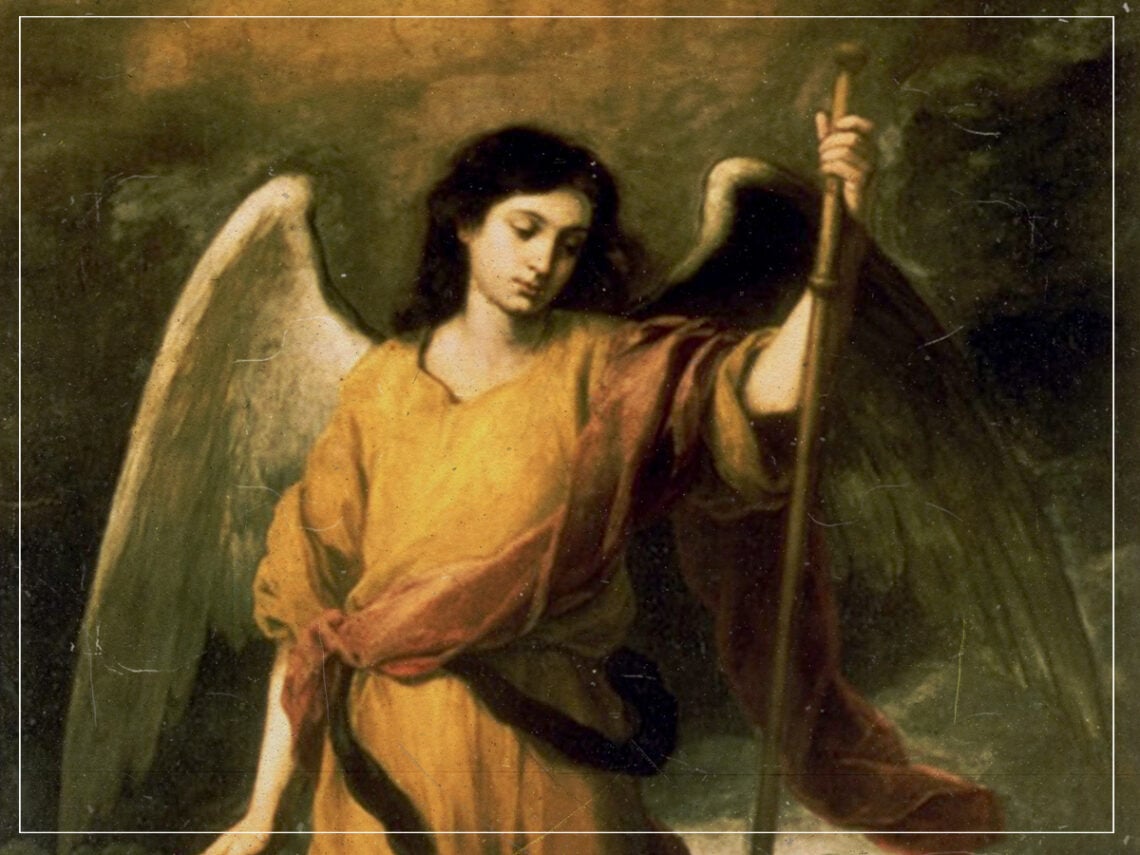
When you think of angels, you probably imagine rosy-cheeked little cherubs. They line the walls of chapels and churches, flitting around the sky and dominating most of Christian art. But capturing them with religious accuracy is much more complicated than just slapping a pair of wings on a chubby toddler. As it turns out, there’s a ranking system in the “angelology” of various religions.
Those at the top of the heavenly hierarchy have more power and sometimes a different number of wings and faces to reflect that. In Francesco Botticini’s The Assumption of the Virgin, we see a glimpse of this, with each tier of angel painted to reflect their status. But very rarely do we see Biblically accurate angels.
Take cherubs, which are probably the most commonplace angelic beings you could think of. The favourite subject of Renaissance artists was far more offputting in the Bible. When the prophet Ezekiel had a vision of cherubim in the Book of Ezekiel, they had four faces and four wings. They were considered animal-human hybrid beings, with the face of an eagle, a human, an ox and a lion, complete with hooves at the end of their pin-straight straight legs.
It’s a far cry from the romantic image of them flying around clutching cupid-like arrows. Then there’s the equally terrifying seraphim, who were angels with six wings. But the candidate for most horrifying goes to the ophanim, also known as thrones, who make up the bulk of the surreal images you’ll find if you look up a Biblically accurate angel.
They were said to look like pulsating wheels covered in eyeballs, and we see these spinning wheels in Matthaeus Matthäus Merian’s Icones Biblicae. Still, interlocking spheres with eyes don’t exactly spring to mind when you think of an angel. Digital artists have bridged that gap in recent years, creating angels that look more like Tool album covers than what we’ve become accustomed to.
German artist and motion designer Jonas Pfeiffer has created moving images of accurate angels that have become so popular that they have become their own meme. Underneath videos in his Celestial series, viewers often quote the Bible line: “Be not afraid,” which proves pretty futile when you’re confronted with a spinning wheel of eyes.
It turned out Raphael is who we have to blame for the angel miscommunication. When asked to paint angels on a church wall, he became rightly concerned the general viewing public might mistake them for demons. After a bit of back and forth, he settled on painting them as close to human babies as possible to quell all demonic doubts.
But after finding they didn’t look quite holy enough, he drew inspiration from Greek mythology and added a single pair of wings to the cherubs, deciding against adding four faces for a touch of realism.
