


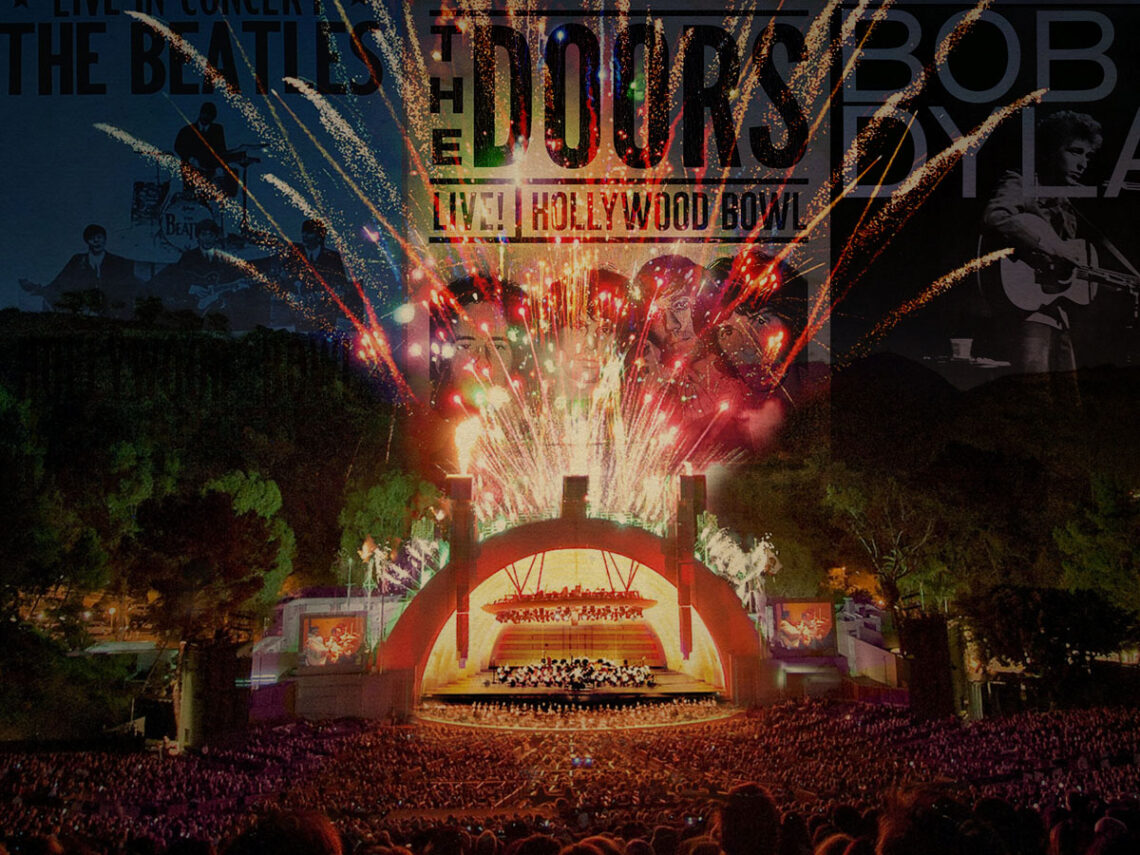
A brief history of the Hollywood Bowl: America’s most famous outdoor music venue

“I just remember that column in front of the stage with the girls trying to get across it,” Paul McCartney said in 2005, recalling The Beatles’ first performance at the Hollywood Bowl in 1964.
“I remember the screaming, and that it was a beautiful evening,” he added. “It was one of the first outdoor gigs we did. So there was some glamour to it. And being Hollywood; I mean, Hollywood for English guys… “
Macca let the rest speak for itself. In the early 1960s, Tinseltown still had a silver sheen and a magnetic draw on artists from all over the world. To be there playing a concert on a famous stage in the shadow of the Hollywood sign, where the greatest names in classical music, opera and jazz had performed, was one of the defining, ‘pinch me’ moments for the four lads from Liverpool.
Following The Beatles’ lead, countless artists have experienced the rite of passage of playing the Hollywood Bowl, from The Doors, Jimi Hendrix, and Pink Floyd up through Fleetwood Mac, Tom Petty, Adele, and Billie Eilish. In terms of fame and constancy in America, the place is rivalled only by the Grand Ole Opry in Nashville, Red Rocks in Colorado, and the big three of New York City: Carnegie Hall, Madison Square Garden, and Radio City.
When the Bowl opened in 1922, however, there was no guarantee that the world would flock to this unusual amphitheatre that had been carefully installed into Bolton Canyon. Some purists on the East Coast scoffed at the idea of all-year-round, outdoor bookings of symphony orchestras and opera productions. Wouldn’t the Californians be more interested in the beach? Even the name was a sticking point, as not everyone understood that the bowl referred to the surrounding landscape.
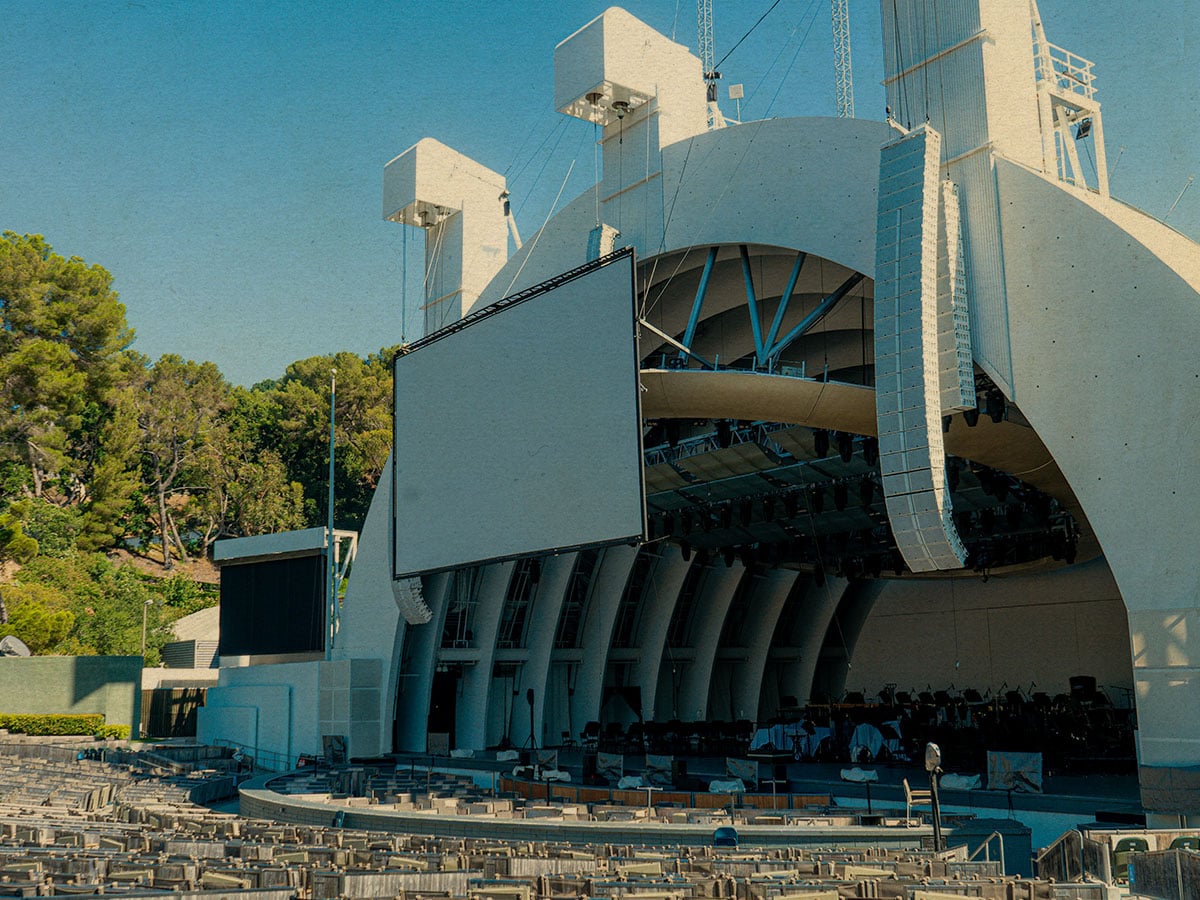
“It seems a pity that Hollywood should have dubbed its outdoor auditorium the Bowl,” wrote the New York-based Musical Courier shortly after the venue opened, “That may sound all right in California, but in our part of the East it carries with it the suggestion of athletic contests and the rough house of college scraps.”
The Bowl itself, built during a time when the Hollywood film industry was still in its infancy, was the product of an idealistic coalition of artists, philanthropists, and civic boosters. Its earliest champion was the music teacher and promoter William Reed, who began staging outdoor concerts in Bolton Canyon as early as 1919, convinced that Southern California deserved a world-class home for serious music. Reed was joined by influential supporters like newspaper publisher EJ Wakeman and philanthropist Christine Wetherill Stevenson, whose mother ultimately donated the land that would become the Bowl’s permanent site.
Designing a venue that could project sound clearly to thousands of people without the requirement of electrical amplification became the next great challenge. The Bowl’s earliest shell, completed in 1926, was designed by architect Myron Hunt, but it was quickly deemed acoustically flawed. A more iconic solution arrived in 1928, when Lloyd Wright, son of Frank Lloyd Wright, created the concentric, ringed bandshell that defined the Bowl’s image for decades and helped establish its reputation for surprisingly strong natural acoustics.
“The Hollywood Bowl is destined to become not only the mecca of local music lovers, but will become internationally known as the most wonderful natural amphitheatre in the world,” predicted an early Hollywood Bowl programme flyer, describing it as the “ideal” location for a concert: “Easily accessible, under a starlit sky, and fanned by soft, balmy breezes… Music has a different significance in this famous Bowl, its wonderful acoustics giving a more beautiful tone quality to the various instruments.”
Sure enough, over the next century, the Hollywood Bowl grew in esteem right along with the golden age of the movies. It also evolved in step with new trends in American music, becoming the summer home of the Los Angeles Philharmonic, hosting historic jazz concerts by the likes of Duke Ellington and Louis Armstrong, and gradually embracing amplified popular music as rock and pop eclipsed classical fare in the post-war years.
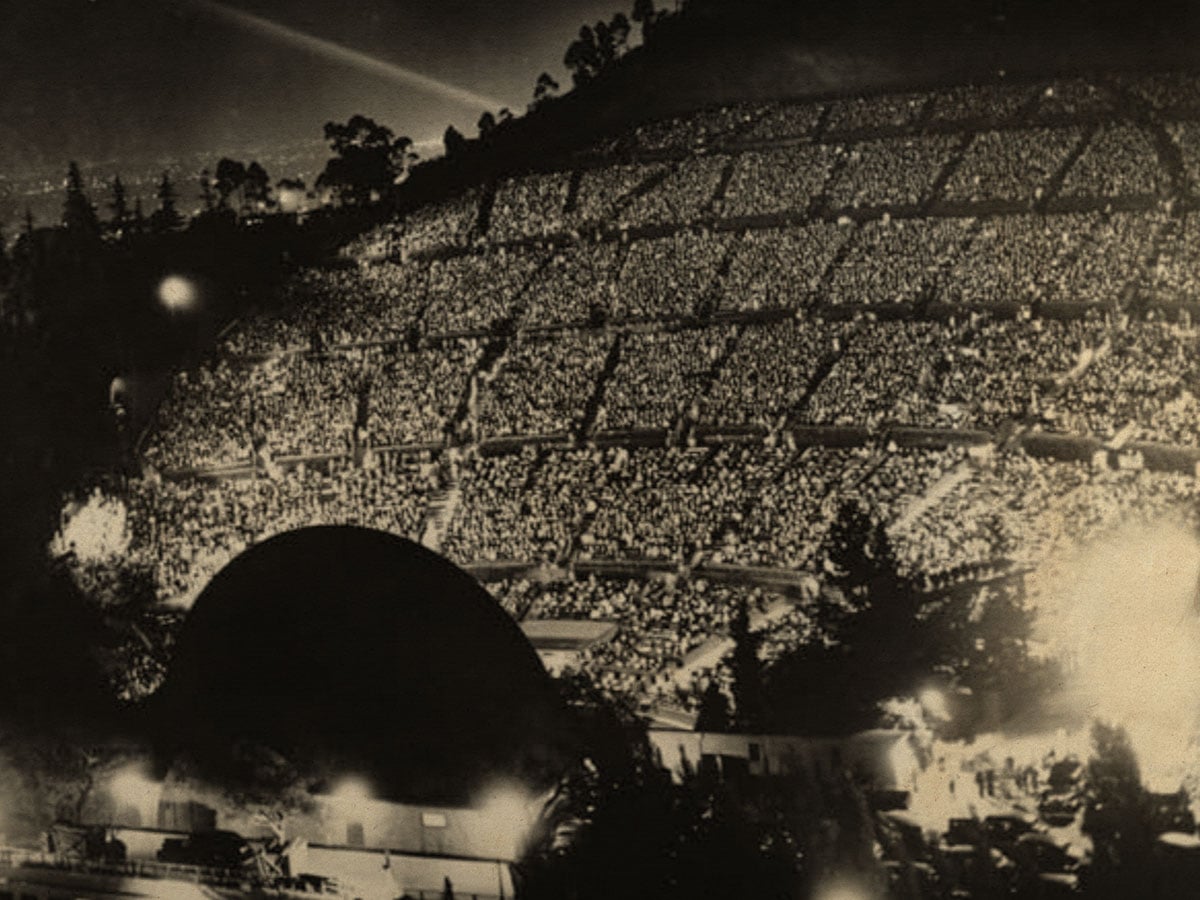
The Beatles made their LA debut here on August 23rd, 1964, and The Beach Boys headlined a ‘Summer Spectacular’ fest a year later. Bob Dylan and Simon and Garfunkel each played sold-out shows at their peaks in the late ‘60s, making it a bucket-list stop for many of the world’s biggest touring artists.
Various renovations over the decades added improved seating (the capacity is now over 17,000), sound systems, and accessibility without sacrificing too much of the venue’s essential character. Even the replacement of the historic Art Deco bandshell in 2004, which many preservationists had fought, wound up securing many of the aesthetic elements from Wright’s original designs, keeping it one of the more authentically ‘classy’ parts of a town that’s well past its golden age.
“When they built the Hollywood Bowl, there were no airplanes and helicopters around,” Los Angeles Philharmonic conductor Gustavo Dudamel said in 2023, “Silence, it was more about that. Right now, it’s a different city, it’s a different life. That is the thing of the Bowl: It adapts your life to the music.”
