


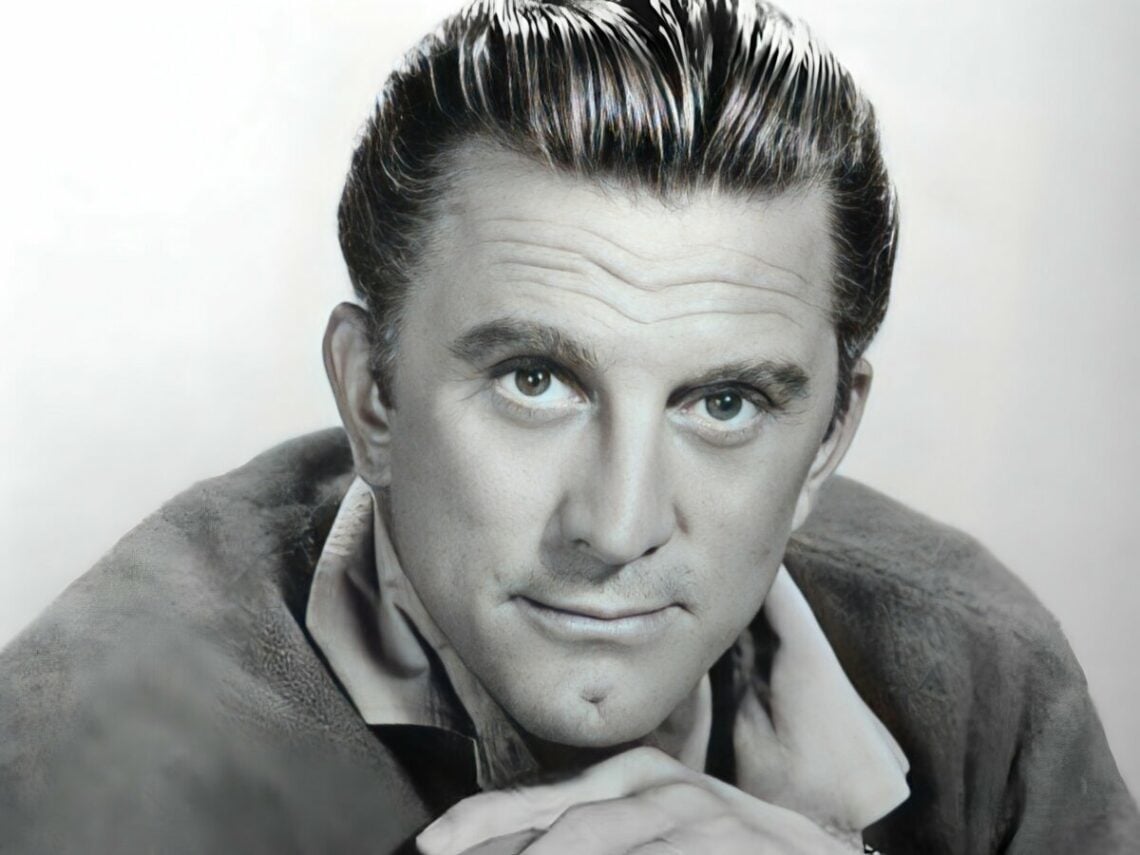
The history-making classic Kirk Douglas refused to star in: “I’ll show them”

Kirk Douglas was one of the most successful stars in Hollywood for nearly two decades. Starting out as a matinee idol in the 1940s, he began to align himself more closely with the up-and-coming generation of young actors who had honed their craft in New York. Paul Newman, James Dean, Montgomery Clift, and Marlon Brando were providing audiences with a completely different type of male character – angry, lost, and vulnerable. Although Douglas ended up being typecast in tougher, less nuanced parts, he still managed to break free of the clichés of earlier generations of male stars.
The journalism drama Ace in the Hole, the dark Hollywood fable The Bad and the Beautiful, and the Vincent Van Gogh biopic Lust for Life singled him out as an unpredictable and versatile on-screen presence. He earned three Oscar nominations during the 1950s and lost alongside fellow nominees Dean and Brando. He also starred in several historical epics, including 1958’s The Vikings and 1960’s Spartacus.
Both of these films were produced under the actor’s own production company, and the latter has gone down in history as one of Hollywood’s most consequential. Set in Roman times, it follows a slave trained as a gladiator who tries to topple the empire. At over three hours, it is an epic in every sense of the word. Off-screen, however, its legacy is even larger. Like Spartacus challenging the tyranny of the Roman Empire, it challenged the tyranny of Hollywood and the US government’s Blacklist by giving full screenwriting credit to blacklisted writer Dalton Trumbo.
This, combined with its thinly veiled political plot, sparked right-wing protests, but when President John F. Kennedy crossed a picket line to watch the film, the Blacklist was effectively broken after more than a decade of Congressional hearings, ruined careers, and arrests. It also earned six Oscar nominations and won four, including ‘Best Supporting Actor’ for Peter Ustinov and ‘Best Cinematography’ for Russell Metty.
In many ways, Spartacus was Douglas’s crowning achievement. A film fraught with behind-the-scenes drama and real-life political intrigue, it nevertheless became one of the most important movies in Hollywood history. It is surprising, given this context, to realise that it began as nothing more than a petty act of retribution.
In the late 1950s, Douglas was desperate to play the title role in William Wyler’s epic Ben-Hur, which followed a prince sold into slavery in Rome who gains his freedom and returns for revenge. Wyler chose to cast Charlton Heston in the lead and offered Douglas the part of the villain. Deeply irritated by this snub, Douglas decided that he would make a rival movie instead.
“That was what spurred me to do it,” he admitted later. “In a childish way—the ‘I’ll show them’ sort of thing.”
In pretty much any other circumstance, his Oscar-nominated, industry-transforming epic would indeed have done the trick, but unfortunately for Douglas’s ego, Ben-Hur was no ordinary movie. It had the highest budget of any film up to that point (over $15m) and became the second-highest-grossing of all time behind Gone With the Wind. Out of 12 Oscar nominations, it won a record 11 awards. It would take nearly four decades for another film to match it, and it remains one of only three to have done so (Titanic and the final Lord of the Rings movie being the other two).
