


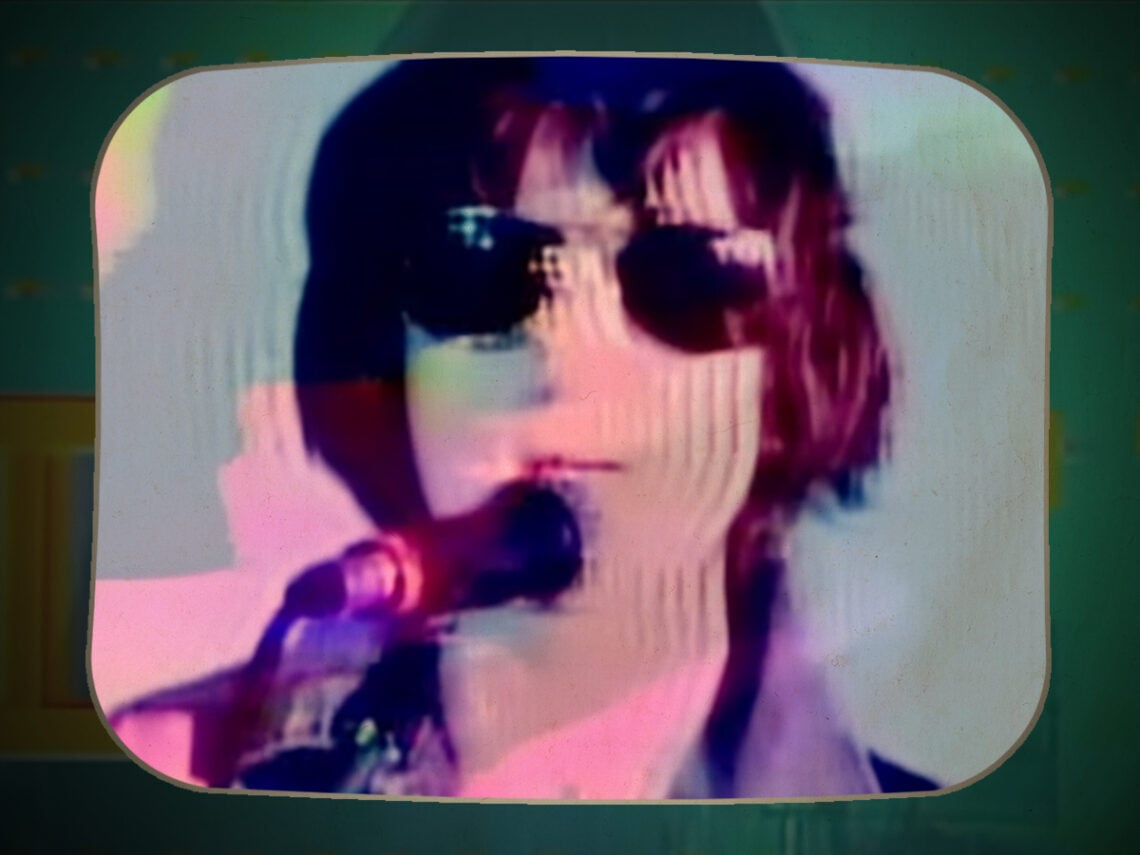
Is there a hidden meaning in Arctic Monkey’s ‘Don’t Sit Down ‘Cause I’ve Moved Your Chair’?

Somehow, Arctic Monkeys are better when you’ve left them alone for a while. Because, in those moments, you realise how much of a genius songwriter Alex Turner really is.
When you become too close to something, you start to lose sight of why it’s so great. Lyrics, especially, stop being fresh, and it’s harder to think about all the reasons why they cut so deep. With Arctic Monkeys, you can overdo the listening experience, which is also why, every time you come back to them, you realise just how amazing they actually are.
We’re at a point when it’s almost cool to dislike Arctic Monkeys. But what those people don’t realise is who reinstated the definition of cool in the first place. And not just because they looked the part. “I don’t want to be cool,” a young, teenage Turner once said. “That’s what I do, you see. I try not to be cool, and not to be funny, and that makes you funny and cool.”
If you replay those lines in your head in Turner’s adolescent voice, you can see why people were always endeared. And it’s because there’s truth in it, as well. He was never that cool, a little awkward, a stutterer who fumbled over his words and yet wrote absolute gold on paper. But it’s fine, because that contradiction is what made him cool from the off. A strange presence defined by his quiet genius.
Which is also why ‘Don’t Sit Down ‘Cause I’ve Moved Your Chair’ is one of the most quintessential Monkeys records. It has sprinklings of that familiar kitchen grittiness on the title alone, plus the underbelly of humour that Monkeys were already known for at that point. The act of telling someone not to sit down because you’ve moved their chair is so everyday, so normal a phrase, and yet the way it’s buried in other, weirder statements about what you can actually do gives it a heavier presence.

For instance, the one thing you can’t do in the song is sit down. But Turner reels off all the other things you can do, like “break a mirror, roll the dice, run with scissors through a chip pan fire fight.” You can “go into business with a grizzly bear” and you can “wear your shell suit on bonfire night”. You can “bite the lightning” and “do the Macarena in the devil’s lair”. But no matter what, “don’t sit down, ‘cause I’ve moved your chair”.
In Turner fashion, the lyrics came from somewhere fairly literal when he was recording the soundtrack for Submarine. “I said it to somebody whose chair I’d moved and I didn’t want them to hurt themselves,” he told NME, not even trying to be funny (which makes him funny). But then James Ford overheard and saw something in it, telling Turner that it “sounds like it could be a ’60s garage ‘Nuggets’ tune and be called that”.
“So then we thought, ‘Well, OK if that’s what you can’t do, then what sort of ridiculous things can you do that are probably more dangerous than if you just sit down?’” He went on. “But also, I quite like that it’s…you don’t want people to be sat down, do you? You want them to be up.”
That last line is where things become more complicated. Because while Turner joked about its genesis, he also pinpointed something deeper. A hidden meaning about the undercurrent of the song, and its message that tells people not to get complacent, not to rest on their laurels, when they should instead be standing tall, proud, having a good time doing literally anything else.
But in this scenario, therefore, Turner serves as the master puppeteer. He’s the one who has removed the chair – removed the apparatus you sit down on, should you choose to go against his word. But in that case, the joke’s on you, because if you try, you’ll surely fall on your arse in the process. Feeling alive, going against the grain, filling in “a circular hole with a peg that’s square” is always better than being boring.
Which, by extension, could be a broader comment on society and its passive members. Don’t be one of them, Turner is saying. Don’t become stoic, don’t coast along when there are so many more exciting things you could be doing, even if they’re destructive. Be an anarchist, not a sheep.
