


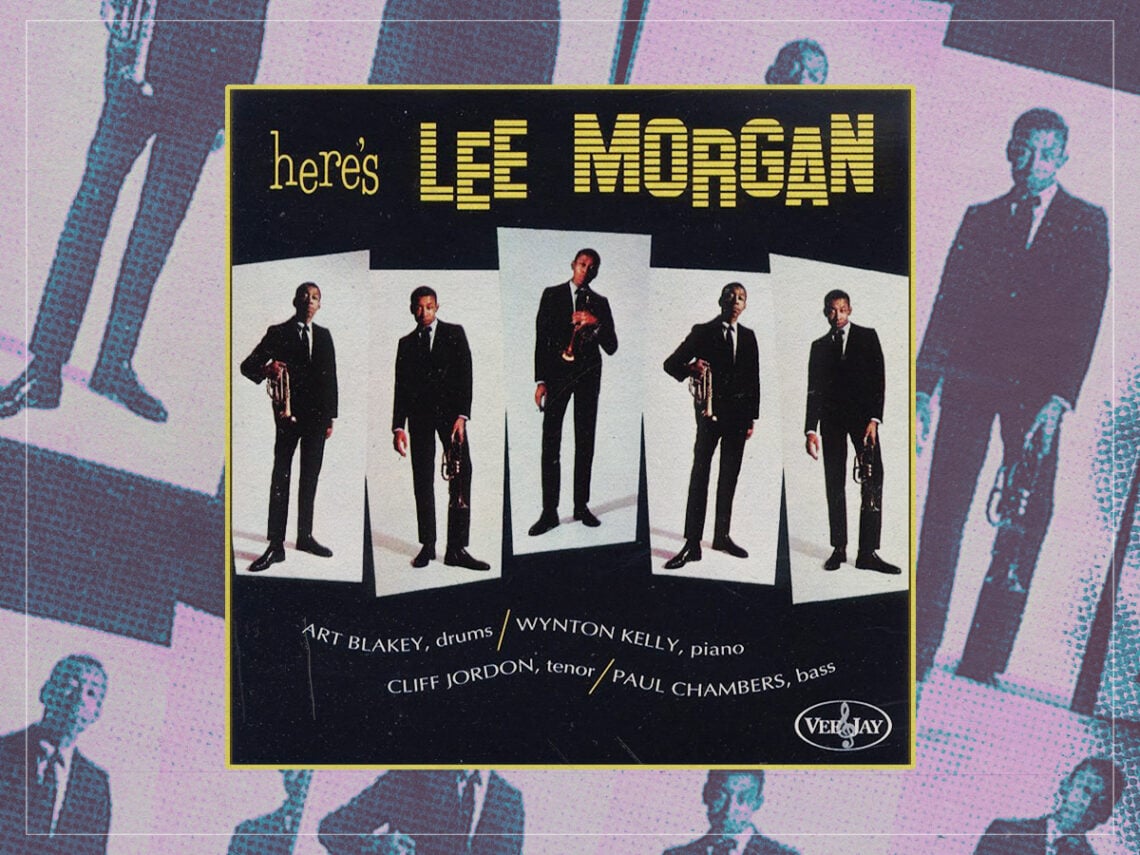
‘Here’s Lee Morgan’: Craft Recordings unveil masterful reissue of a jazz classic

Political protests on the rise, US troops in Vietnam, and an ever-widening generational gap, the 1960s was a period of profound transition for American society, as the post-war consumerist boom quickly gave way to class divides. Soundtracking that difficult era in US history was the revolutionary sounds of jazz, its constant development and diversification mirroring the rapidly changing nature of American society at that time.
Whether it was the awe-inspiring inventiveness of Miles Davis, the R&B leanings of Jimmy Smith, or the profound piano of Bill Evans, the jazz landscape offered audiences an unparalleled wealth of inspiration and innovation. So much so that certain audiences followed jazz in a religious sense, comparing the infectious rhythms and improvisation of these artists to the rousing speeches of any preacher in the country. One such leader was trumpeter Lee Morgan, who first emerged during the mid-1950s and went on to define the beloved sounds of Blue Note Records.
Born and raised in the concrete jungle of Philadelphia, Morgan first laid his hands on a trumpet on his 13th birthday, and he was rarely seen without an instrument in his hands after that. Learning his craft from trailblazing jazz trumpeter Clifford Brown, Morgan quickly fell in love with his instrument and the Earth-shattering sounds of jazz during its golden age.
He was only 18 years old when he joined the ranks of Dizzy Gillespie’s Big Band, placing him at the heart of America’s jazz scene, a position he reaffirmed two years later when he provided trumpet for John Coltrane on Blue Train, one of the greatest jazz albums to ever grace the airwaves.
It was also around his 18th birthday, in 1956, that Morgan began recording for Blue Note Records in his own right. An undeniable essential label in the history of the genre, Blue Note was America’s premier jazz label, producing a wealth of legendary artists from Art Blakey to Jimmy Smith. As soon as he joined forces with the label, though, Morgan became one of its flagship acts, renowned for his expansive, anachronistic sound, which placed him years ahead of his contemporaries.
One of his finest hours, however, came when he strayed from Blue Note, releasing his 1960 album Here’s Lee Morgan through the blues-focused Vee-Jay Records out of Chicago. Capturing the trumpeter at his absolute peak, before his descent into the depths of heroin addiction and after the formative experiences of recording with the likes of Coltrane and Gillespie, the album typified the hard bop era.
Here’s Lee Morgan features some of the most exciting and utterly captivating compositions of his tragically short career in jazz, prior to being fatally shot in a New York nightclub in 1972. Backed by a formidable band, including percussion by Art Blakey, Morgan guides listeners through an incredibly diverse and effortlessly cool collection of six tracks. Each of those efforts seems to pack an unparalleled wealth of ideas, expressions, and moods into their relatively short runtimes, affirming the musician’s position as a true artistic visionary.
Despite the relative success of the album upon its initial release with Vee-Jay, Morgan’s story often goes overlooked in a modern context, leading entire generations of listeners to have never heard the compelling tones of this iconic record. In fact, it has been nearly 40 years since the album has had an official, faithful reissue on vinyl. Thankfully, though, the wait for a new pressing has now finally come to a close, courtesy of Craft Recordings and Original Jazz Classics.
Hot off the success of their recent reissues, a notable highlight being Bill Evans’ Interplay, the California reissue label has unveiled a masterful copy and remaster of the iconic 1960 album. Pressed on heavyweight vinyl and complete with a thick sleeve and archival-quality inner, the reissue offers the kind of audiophile sound quality that jazz collectors everywhere covet. Crucially, though, there are no gimmicks when it comes to these Craft reissues; the focus is placed entirely upon the quality of the music, which is among the best you will find in the field of such modern jazz reissues.
Craft Recordings is carrying out a vital service with their recent run of Original Jazz Classics. Not only is the label introducing these essential albums to audiences new and old, but they are doing so in a way that covets sound quality above all else. Lee Morgan is among the most important jazz stars America has ever produced, and his work deserves the kind of respect that this reissue bestows upon him. The heavyweight vinyl of the new pressing captures the unique power of Here’s Lee Morgan better than any bootleg or battered old copy could ever hope to.
