


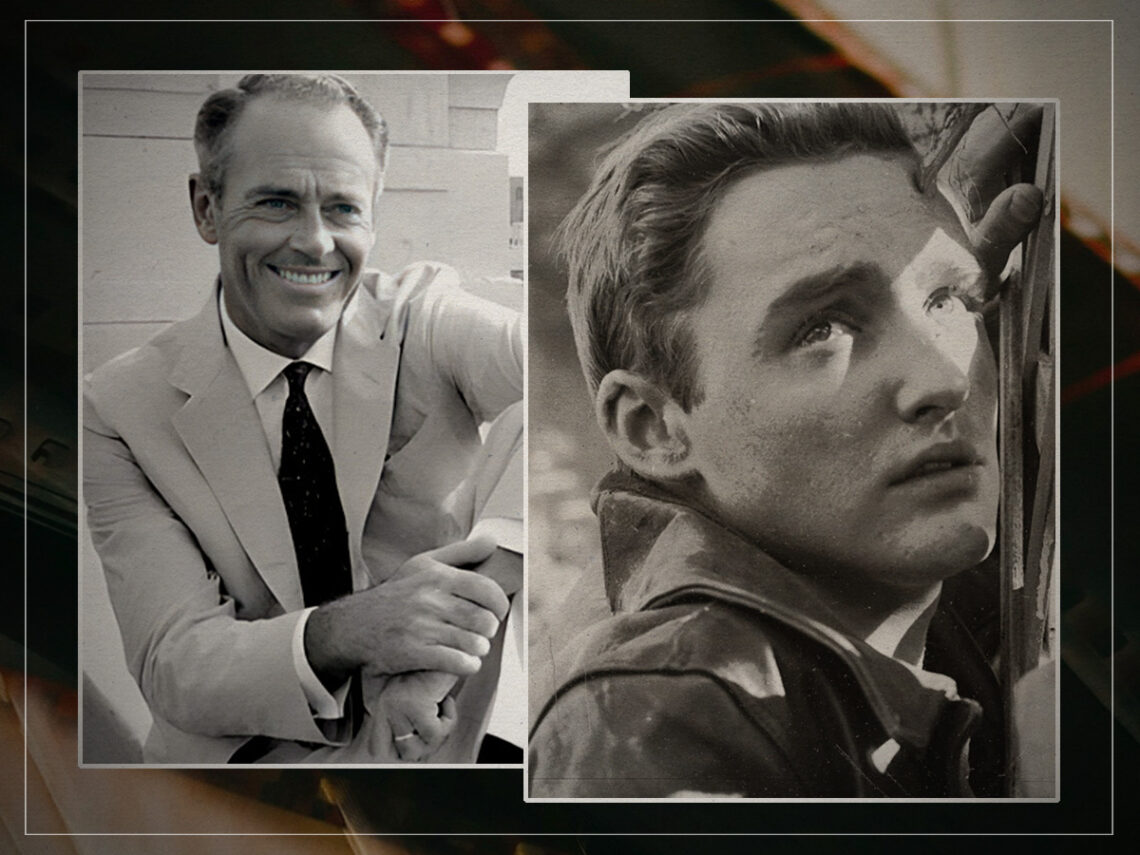
Henry Fonda’s miserable time at a drug-fuelled Dennis Hopper party: “He was going nuts”

Studies have shown time and again that multigenerational living is one of the keys to good health and longevity. Tell that to Henry Fonda, who tried his best to hang with the kids and ended up suffering instead. As the father of Jane and Peter Fonda, he had a front-row seat to the countercultural movement of the 1960s, and for whatever reason, he did his best to keep an open mind.
That wasn’t the standard approach for stars of his generation. Having gotten his start in Hollywood in the late 1930s in movies like Jezebel and The Young Mr Lincoln, he was quickly typecast in the roles of earnest, morally incorruptible men. He would throw in some variation late in his career with westerns like Once Upon a Time in the West and Firecreek, but it was more of a gimmick than a concerted effort to change his image.
By that point, he was already destined to be remembered as Hollywood’s old-fashioned straight-laced good guy, a persona that was wildly out of step with the changes in the industry. New Hollywood was descending over the town like a heavy, marijuana-scented cloud, and Fonda’s kids were at its forefront.
Peter Fonda was a pivotal figure in the movement, having co-starred in and co-written the era’s cinematic calling card, Easy Rider. Jane Fonda was destined to be one of its most famous and enduring stars and was experiencing her first brush with stardom in movies like Cat Ballou and Barbarella. Both were creatures of their generation, even though they had grown up surrounded by icons of Old Hollywood. As stars like Ava Gardner and Cary Grant faded and actors like Warren Beatty and Natalie Wood took over, there wasn’t much room for their dad’s brand of fame.
He did try, though. In the book Everybody Thought We Were Crazy, which chronicles the turbulent marriage of Dennis Hopper and Brooke Hayward in the 1960s, author Mark Rozzo recounts a story from a party that the elder Fonda gamely attended. It was a smorgasbord of Hollywood’s A-listers. Steve McQueen, Sidney Poitier, Jack Nicholson, and Lauren Bacall were there, as were Andy Warhol and Warren Beatty.
Fonda was sitting at the literal epicentre of the countercultural movement that day. The Freaks were a loosely affiliated group of freewheeling artists who spent their lives letting loose and vibing to the beat of the 1960s, usually on the trail of the Byrds. At this particular party, they had formed a gyrating vortex around the ageing actor.
“They were all kind of naked, dancing around Henry Fonda,” one of the partygoers remembered. “He was going nuts.”
Believe it or not, his main concern wasn’t the full-frontal nudity but the volume level, so he requested that the music be turned down. What would ordinarily be viewed as a pretty benign entreaty was nothing short of antagonistic as far as the person in charge of the music was concerned. David Crosby, a founding member of the Byrds and future member of Crosby, Stills, and Nash had the control and was not about to turn anything down. “Fuck that” was his general attitude to Fonda’s request, and the volume stayed right where it was.
For a man who had risen to fame playing a humble Abraham Lincoln in 1939, this free-spirited debauchery was probably a bit stomach-churning. That said, he could have avoided the party if he wanted to. For all we know, ringing ears aside, he might have been having the time of his life.
