


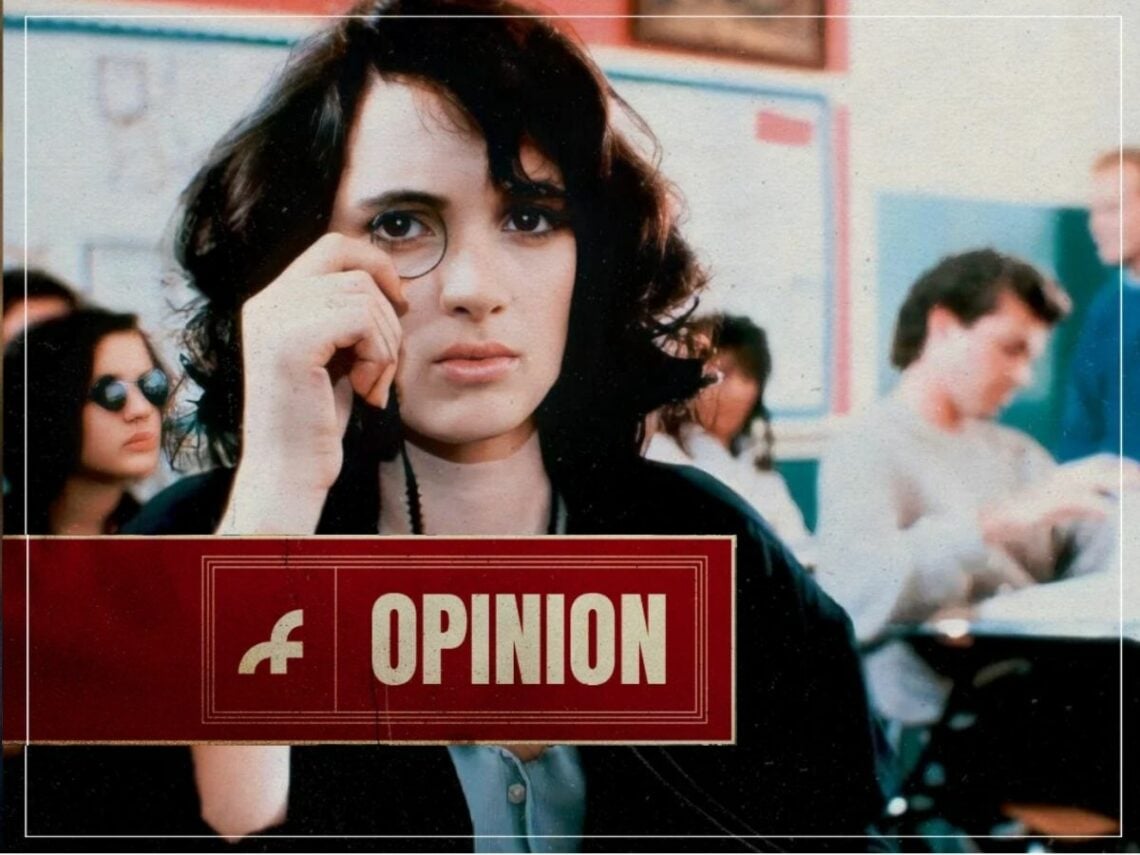
Hear Me Out: ‘Heathers’ is the ultimate 1980s movie

Crime, croquet, Christian Slater—everything about Heathers makes it undoubtedly the quintessential 1980s movie. Following Winona Ryder’s standout performance in Beetlejuice the year before, Heathers cemented her status as a defining star of the decade and remains iconic to this day.
Heathers follows Veronica (Ryder) as she navigates the treacherous social jungle of high school by aligning herself with the three most popular girls in school—all named Heather. However, her life takes a dark turn when she meets the enigmatic new kid, JD (played by Christian Slater). What begins as rebellion spirals into a twisted cycle of hate, indifference, and murder as Veronica seeks revenge on her enemies—who also happen to be her best friends.
Of course, the film’s look places it in the 1980s, albeit at the end, with huge-shouldered costumes, exaggerated hairstyles, and unmistakable school interiors that resemble those in The Breakfast Club and Back to the Future. However, what is more characteristic is the content and general mood of Heathers.
The trope of a girl trying to survive through high school by associating with the popular girls is very Mean Girls to our 21st-century eyes, but back in 1989, it was a sign of the times. Like The Breakfast Club, Heathers demonstrates how toxic platonic friendships can be, especially female ones, but by the time 1989 comes around, there’s a slightly different take on it – a murderous one.
The idea that a love interest would come in and sweep a girl off her feet away from everyone she loves is a tale as old as time, but JD takes Veronica to a much darker place. JD enters the scene when Veronica is growing completely tired of the Heathers, and plotting ways to teach each of them a lesson becomes an addiction for them both.
The humour is also distinctly 1980s in Heathers, including some of the ways the Heathers are killed, demonstrating a particularly black comedic style. From accidental poisoning to being shot in the throat, the murders lead to the town’s cult-like fascination with the rash of teenage “suicides” sweeping through their local high school – reminiscent of the mass hysteria caused by countless rumours and misinformation in the ’80s, including satanic ritual abuse of children and the AIDs crisis.
Taking this idea further, the moral panic aspect takes inspiration from folk horror and other earlier horror of the 1970s and ’80s. Obviously, the moral panic in a film like Halloween is warranted – Michael Myers is most definitely on the loose – but it shows how society can, and does, get things wrong quite often. Another example is The Wicker Man, in which the lack of moral panic is startling, and the ritual sacrifice of outsiders is completely normal – paradoxically highlighting the danger that herd mentality can cause. Much like these two classic horror examples, Heathers points to society getting it wrong and how they never did anything to help Veronica in the first place, an idea that was even taken to parody lengths in the likes of Scream seven years later.
The fact that Heathers uses horror tropes to bolster its crime aspect sets it distinctly apart from other films of the time while also cementing itself as a product of its time. It’s not as cut and dry as something like The Breakfast Club, which gives it an edge over other mainstream 1980s films.
All this being said, teen angst is the central driving force in Heathers. Not only is it deeply relatable, but it’s also a quintessentially 1980s trope. While many films continue to explore teen angst as a universal experience, there’s something about the ’80s that truly embraced the raw struggles of growing up. Heathers captures this essence perfectly, blending the turmoil of adolescence with biting satire and dark humour.
