


Hear Me Out: ‘The Breakfast Club’ is the greatest lazy afternoon movie of all time

Whether you’re hungover, enjoying a well-earned break, or just can’t muster the effort to get up and do something – don’t worry, I’ve been there – there’s nothing better than collapsing on the sofa and sticking a comfort movie on. We all have our favourites, usually a rom-com or nostalgia fest of some sort, and mine, ladies and gentlemen, is The Breakfast Club.
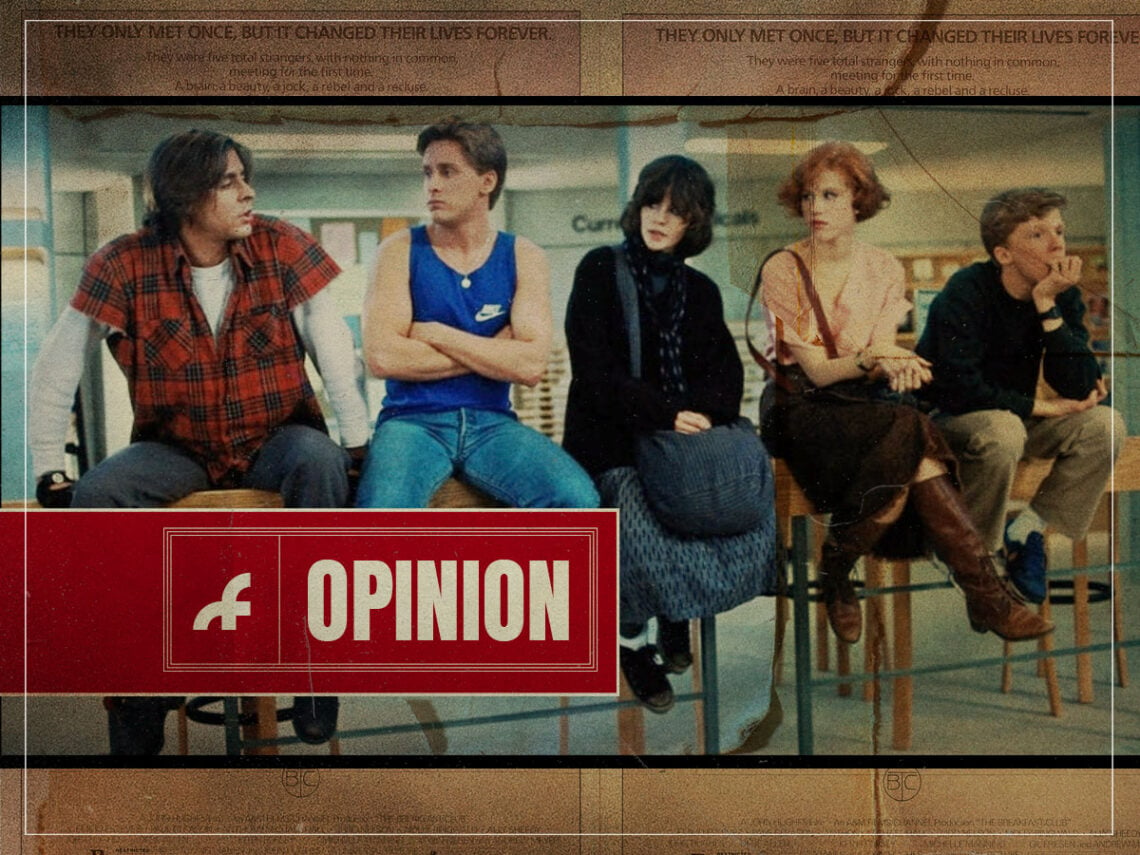
To me, there’s nothing more comforting than the nostalgic sound of Simple Minds’ ‘Don’t You Forget About Me’ fading into shots of an empty school in 1985, knowing the five outcasts we’re going to find in the library. The archetypal persona types we’re introduced to in The Breakfast Club have been repeatedly used as the basis for countless films that followed: the brain, the beauty, the jock, the rebel and the weirdo.
We’re pretty comfortable with these categories of high school students at this point, making it feel all the more familiar despite the fact that this would’ve been a pretty new concept at the time of release. The film then follows a formula of awkward conversations, escape attempts, and generally being teenagers, from smoking weed to messing with the principal’s belongings.
The strong feeling of nostalgia that comes with The Breakfast Club is more than that of any film I can think of, although I wasn’t actually around in the 1980s. What’s most effective, I think, is the fact that it isn’t trying to be nostalgic since it was actually made in that decade. Much of the problem with ‘nostalgic’ based films, especially in the 21st century, is the attempt to capture a feeling of a far-gone era when the only effective way of doing so is in the time itself. It’s comforting, and as many of the theories go, it makes us feel better.
What’s more, the now infamous characters are played by actors we now know and love, with Molly Ringwald and Judd Nelson mostly driving the narrative forward as Claire and Bender, a dynamic which in itself is easy to watch, as we know how it’s going to end: she gives him her earring on the way out. That enemies-to-lovers trope is a trope for a reason, as it reinvents itself again and again, whether in Bridgerton or any number of rom-coms from The Proposal to 27 Dresses, familiar since the days of Jane Austen and the Brontës.
The John Hughes flick, of course, defined a generation. Times were somewhat tough in America, with it still being at odds with the Soviet Union as part of the Cold War, and the upcoming generation of teenagers was yearning to find themselves, questioning what it was to be American.
The Breakfast Club sits amongst other films in the same oeuvre, whether because John Hughes also worked on them or not, including Sixteen Candles, Pretty in Pink and Ferris Bueller’s Day Off. Although the nostalgic feel of these films is pretty similar, as are some of their stars, The Breakfast Club seems the most well-rounded. Of course, like many films, parts of it have been called out in recent years for being outdated and often entirely inappropriate, for example, the suggestion that Bender touches Claire under her skirt when under the desk, without her consent, and is played off as a joke.
Of course, these now faux-pas inclusions should not be overlooked. However, for those who understand the complexity of viewing a piece of media like this through a 2024 lens, The Breakfast Club can be taken with a pinch of salt—which is exactly what you need for a lazy afternoon.
Aside from the stars mentioned earlier, Emilio Estevez, Ally Sheedy, and Anthony Michael Hall all went on to have successful 1980s careers and beyond. Although many actors from that time are now seen as—we’ll say—unsavoury when taken in the context of The Breakfast Club and all the nostalgia it brings, this cast made the film the iconic title it is to this day.
