


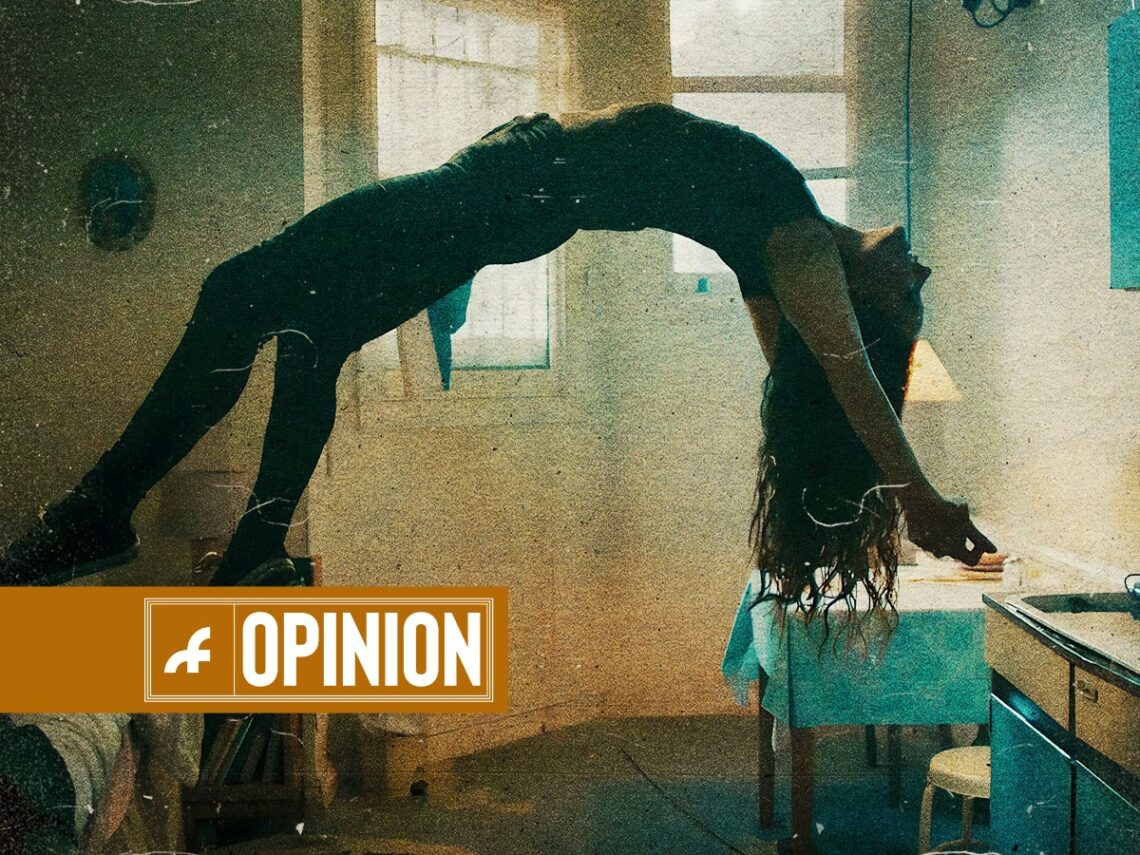
Hear Me Out: ‘St Maud’ is A24’s greatest horror triumph

The horror genre is thriving in contemporary cinema, with such filmmakers as Ti West, Robert Eggers and Ari Aster rising to supremacy in the field thanks to such films as Pearl, The Witch and Hereditary, which have forced the industry to step up its game. This drive for quality in the genre has been undoubtedly encouraged along by the influence of A24, an independent distribution and production company dedicated to investing in the industry’s greatest up-and-coming talents.
Over the course of their contemporary success, it is the aforementioned likes of The Witch and Hereditary that have gained the most plaudits in the field of horror. However, if you scratch beneath the mere surface, there are plenty more gems outside of the obvious. Gaspar Noé’s 2018 film Climax certainly didn’t receive the necessary praise, and the same can be said for Peter Strickland’s In Fabric, but the true triumph of A24’s lesser-known catalogue is Rose Glass’ 2019 horror triumph, Saint Maud.
Set on the wet coastline of Scarborough, Glass’ extraordinary debut feature told the story of Maud (Morfydd Clark), a pious nurse who is sent to look after a dying patient named Amanda (Jennifer Ehle). Polar opposites in their outlook towards life, the outgoing and spontaneous Amanda clashes with Maud’s devout approach to religion, living her own life with strict rigidity and fear of wrongdoing.
But Saint Maud is far more than a traditional coastal ghost story. Glass’ film is closer to a tragedy that speaks to the true loneliness of the human condition, particularly in a modern world that alienates the outsider.
Refusing to give up on the religion that has led her this far in life, Maud shuffles quiet and weightless through the streets and back alleys of the small coastal town, avoiding the bright lights of the seafront. With a fragile stature, Maud is God’s lonely woman, carrying out her duties with a humble brag, silently judging all those she sees before her as sinners destined for the fiery pits of hell.
Yet, her life view is challenged by Amanda, a former dancer and choreographer, whom Maud seems quietly jealous of. Obsessing over her own perceived ability to ‘save’ Amanda and get rid of her sin, Maud’s compulsion morphs into desperate delusion as her inner monologue becomes compromised by an outside other; the voice of God. Now, with this self-created voice of God, she feels compelled and encouraged to carry out any deed she deems necessary for Amanda’s salvation.
Indeed, it is the relationship between Clark’s Maud and Ehle’s Amanda that glues the film together, with the tussle for meaning and platonic companionship being central to the story. Amanda is dying and therefore apathetic to the world she sees around her, seeing Maud as a desperately lonely figure who needs saving herself. Similarly, the protagonist sees her patient in a similar light, believing she’s desperately in need of the guiding light of Christ.
Though quiet and contemplative, don’t be fooled by Glass’ steady approach to her subject, with the film leading to a brutal excavation of faith that remains one of A24’s boldest horror finales to date. Trapped by the tight bounds of her own faith, Maud is detached from reality and forced to contend with her inner demons, with her sheer lack of human contact making her disillusioned with the perceived frivolity of modern life. Saint Maud is indeed so unsettling and so enduring because its central message is so inextricably linked to the terrors of the human condition.
