


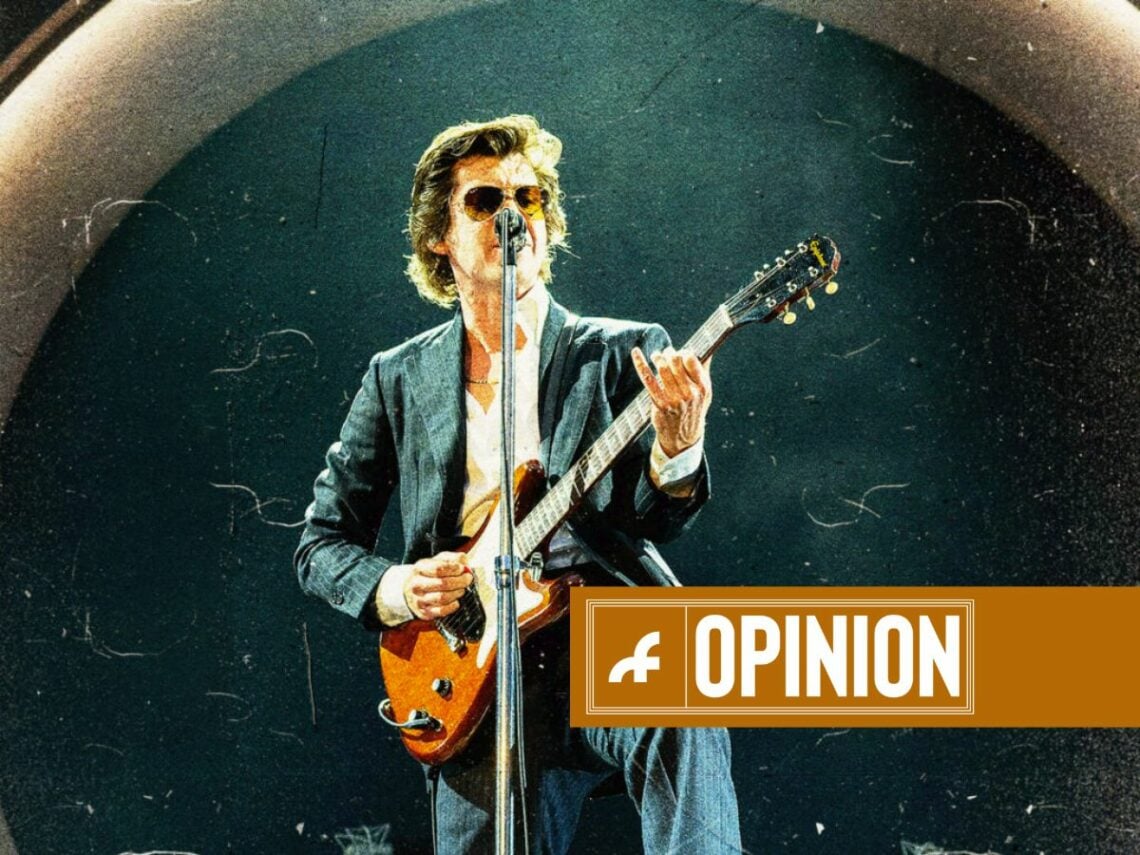
Hear Me Out: Arctic Monkeys’ current divisive status is a sign of their class

Every time a new Arctic Monkeys album comes out, one task I have to set myself while reviewing it is to separate the work from the band’s legacy and imagine it is a release from a new artist. If their latest LP, The Car, had come as a debut album from some new act then it would’ve been heralded as a masterpiece that stands out from the crowd and resides as something that I’ve never truly heard before.
Their own debut, nearly 20 years ago, did just that and reached unparalleled heights. Since its release, not a single album has matched its impact, and that, I would argue, is irrefutable. There have many been records released in the interim years that rival Whatever People Say I Am’ for quality in a technical sense, but they’re very few amidst your record collection that have reached the level of societal transcendence whereby you can say ‘I remember where I was when I first heard that’. And absolutely none where an entire generation can almost recite every word of every tune.
Aside from banger after banger, it is this that singles it out from other indie albums; whether you loved it or loathed, continue to cherish it or have moved on, there is nobody who was left untouched by the record’s impact on youth culture. The group of working-class lads wrestled the zeitgeist towards something recognisably made in their image with the LP. The consequences of that are currently unfurling.
Back in 2006, there wasn’t an old Auntie Jean in Britain that hadn’t heard ‘I Bet You Look Good on the Dancefloor’. Even Koko the signing simian was caught spelling out “over there there’s friends of mine.” The record was an unavoidable triumph, the likes of which you just don’t get from alternative culture today, that’s why they are a legacy act capable of headlining Glastonbury Festival for a third time in their relatively short lifespan. Like many huge bands before them, they enamoured themselves to the lucrative mainstream not just a cult fanbase.
For the most part, even the mainstream-inclined fans who wouldn’t usually venture towards alternative indie have come along for the ride. Meanwhile, the band’s own evolution from ‘A Certain Romance’ to the desert rock of Humbug and the chansonnier stylings of The Car, has expanded the record collection of their more rock-orientated early converts—the young kids like me who they grabbed by the then-nonexistent short and curlies and welcomed into a new bohemian world of culture.
That is a mighty impressive feat—a feat that so few bands have managed to muster in a near two decade career that has sustained them as a headline act. Looking back at previous Glastonbury headliners illuminates this: Kasabian topped the bill back in 2014 when they were at their pomp, but its no slight on their current material to say that their name topping the bill now would be an incongruous sight.
In other words, they might have proved divisive of late, but the fact that nobody has questioned their current status as a headline act and stadium-filling band is indicative of two key tenets of their greatness: a) how truly seismic they were when they broke onto the scene, and b) how successfully they have evolved into almost an entirely new band—but a beloved one at that with plenty of new fans and old ardent ones still enjoying the ride.
This was bound to be a divisive period, they are shedding old skin and seemingly some old fans along with it. That’s unfortunate, but largely a moot point, because those bangers and memories aren’t going anywhere, but as Alex Turner notably proclaimed during their Glastonbury slot, “Let’s leave the past behind.” It’s a remarkable showcase of their continued creativity, quality, and grip on the masses that unlike other comparable acts who crashed onto the scene like Oasis or The Strokes, they remain unified, boundary-pushing and at the peak of alternative popularity while happily putting a few old noses out of joint.
