


‘The Boy and the Heron’ movie review: Miyazaki hands down his legacy with Ghibli homage

The supposed final film of Studio Ghibli head honcho and Japanese cinema icon Hayao Miyazaki is full of narrative ideas that comprised many of his previous works. If The Boy and the Heron really is to be the anime legend’s farewell swansong, a passing down of the torch to his successors, then he’s leaving his undying audience with a homage to his history in the director’s chair.
The film is typically standard fare for Miyazaki and Ghibli. A young boy by the name of Mahito (voiced in the Japanese version by Soma Santoki) leaves Tokyo in the midst of the Pacific War after his mother dies in a hospital fire. In the throes of trauma from his mother’s death, Mahito moves to the countryside with his father, who remarries his late wife’s younger sister, and they begin a new life on her estate with a swathe of doting old maids.
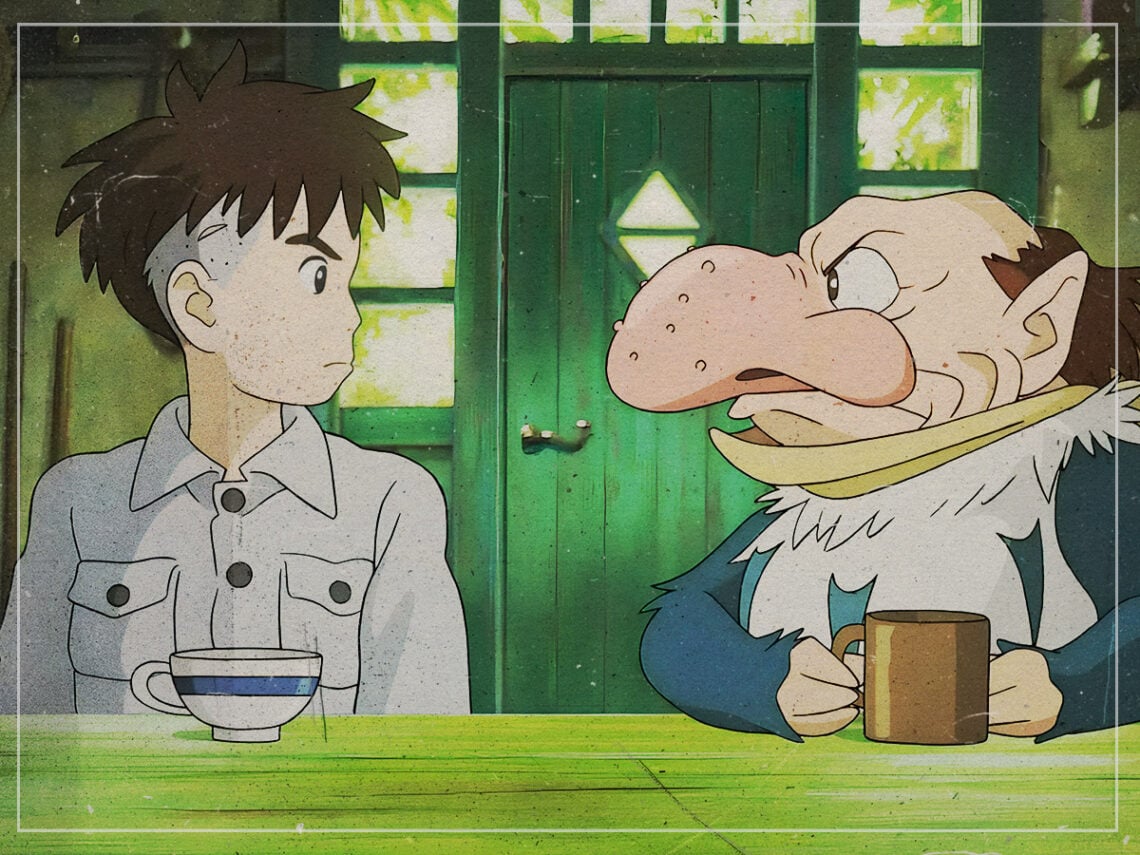
So far, so Miyazaki, but the director cranks it up yet another notch when Mahito is lured by a mysterious grey heron to a ruined and overgrown tower near the estate’s house, to discover that the heron is, in fact, a small man from an alternate and magical reality – a world where his mother is said to still be alive, bringing an emotional pull to proceedings as the filmmaker is wont to do so often.
It’s from this point, though, that the film loses narrative focus somewhat, transpiring instead into an exploration of this other world that’s so damn Ghibli that it can almost feel like a museum tour of Miyazaki’s mind itself, the likes of which has provided so many phenomenal cinematic efforts in the anime genre for the last four decades.
First, there’s a distinct sense of cuteness to a painful degree in the warawara, spirit creatures that are said to ascend to the ordinary world to inhabit human bodies upon birth. Then, there’s Himi, a fire goddess who assists Mahito and Kiriko (a younger version of one of the estate’s maids) as they loosely search for the boy’s mother, Hisako, and a powerful elderly wizard, Mahito’s granduncle, who possesses great powers of creation. So too are there hilarious (The Boy and the Heron is admittedly very funny) man-eating parakeets, a whole legion of them, whose king seeks to take control of the universe from Mahito’s granduncle.
If the story sounds like a bit of a mess, that’s because it is, but remarkably, as is sometimes the case with Ghibli films in general, this tends not to matter. Rather, we’re treated to some of the most breathtaking animations that Miyazaki has ever delivered, not only in action but in the still background too, which features painstakingly and beautifully painted scenery and buildings, matched by a score evoking the sparseness of Nintendo’s The Legend of Zelda: Breath of the Wild, which glides as effortlessly as the warawara do so to the heavens, marking the film as beautifully silent and graceful.
But what The Boy and the Heron lacks in narrative focus, it more than makes up for in symbolic significance and moments of genuinely touching emotion. Take, for instance, Mahito’s granduncle explaining how he wants to pass on his powers of creation and role of maintaining the world to someone in his bloodline, i.e. Mahito – a certain nod to Miyazaki himself handing over the reins to son Goro, with the symbolism of his building blocks and the ability to create entire worlds driving the point home.
There is a story for sure, one that’s resolved at least on a fundamental basis come the film’s conclusion, even if it takes a little more work than is expected of anime, but it’s better to perceive Miyazaki’s potential last offering as a final walk through his ingenuity anyway, rather than as a didactic work with a focused narrative. The Boy and the Heron might not be the Japanese auteur’s best, but it still serves as a touching final farewell to his adoring fans.
